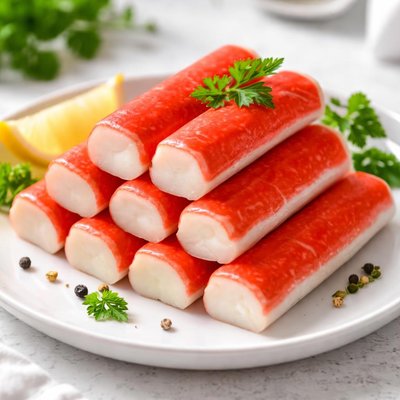
1 serving (85 grams) contains 81 calories, 6.0 grams of protein, 0.5 grams of fat, and 13.0 grams of carbohydrates.

Smart Nutrition Tracking with SnapCalorie

Nutrition Information
Calories |
225 | ||
|---|---|---|---|
% Daily Value* |
|||
| Total Fat | 1.4 g | 1% | |
| Saturated Fat | 0.3 g | 1% | |
| Polyunsaturated Fat | 0 g | ||
| Cholesterol | 83.3 mg | 27% | |
| Sodium | 1250.0 mg | 54% | |
| Total Carbohydrates | 36.1 g | 13% | |
| Dietary Fiber | 0 g | 0% | |
| Sugars | 16.7 g | ||
| protein | 16.7 g | 33% | |
| Vitamin D | 0 mcg | 0% | |
| Calcium | 55.6 mg | 4% | |
| Iron | 0.8 mg | 4% | |
| Potassium | 277.8 mg | 5% | |
* Percent Daily Values are based on a 2,000 calorie diet. Your daily values may be higher or lower depending on your calorie needs.
Food Attributes
Source of Calories
About Imitation crab sticks
Imitation crab sticks, also known as surimi, are a seafood product made primarily from white fish, such as pollock, that is finely minced and mixed with starches, egg whites, and flavorings to resemble the texture and taste of real crab meat. Originating in Japan in the 1970s, surimi is now widely used in global cuisines, including sushi rolls, salads, and seafood dishes. Nutritionally, imitation crab sticks are low in fat and calories, providing approximately 100 calories and less than 1 gram of fat per 100-gram serving; however, they are relatively low in protein (about 7 grams per serving) compared to real seafood. They often contain additives such as sugar and sodium, making them less nutrient-dense than fresh fish, but they remain a convenient option for many recipes.
Health Benefits
- Low in fat, providing less than 1 gram of fat per 100-gram serving, making it a heart-friendly option.
- Contains moderate amounts of phosphorus, which supports bone health and energy metabolism.
- Low calorie content (about 100 calories per 100 grams), fitting into calorie-conscious diets.
Dietary Considerations
Selection and Storage
Store imitation crab sticks in the refrigerator, tightly sealed, and consume within 3-5 days of opening. For unopened packages, follow the manufacturer’s expiration date. Avoid freezing for best texture.
Common Questions About Imitation crab sticks Nutrition
Are imitation crab sticks high in protein?
Imitation crab sticks contain about 6-8 grams of protein per 100 grams, which is lower compared to real crab meat (15-20 grams per 100 grams). This makes imitation crab a moderate but not high-protein option, suitable for light protein addition to meals.
Can I eat imitation crab sticks on a keto or low-carb diet?
Imitation crab sticks are not keto-friendly, as they contain added starches and sugars that result in 12-15 grams of carbs per 100 grams. For low-carb diets, they should be consumed in moderation, as they are higher in carbohydrates compared to natural seafood.
Are there any health benefits or concerns with eating imitation crab sticks?
Imitation crab sticks are low in fat, making them a lighter option compared to some protein sources. However, they may contain added sodium (up to 300-400 mg per stick) and artificial additives like flavoring and coloring, which can be concerning for individuals with sensitivities or dietary restrictions.
What is the recommended serving size for imitation crab sticks?
A standard serving size is approximately 3 sticks (85 grams), providing about 80-90 calories, 6-8 grams of protein, and 10-12 grams of carbohydrates. This portion is suitable as a side or part of a balanced meal.
How does imitation crab compare to real crab, and what are some preparation tips?
Imitation crab is significantly lower in protein and slightly higher in carbohydrates compared to real crab. It is pre-cooked and can be used directly in salads, sushi, or wraps. For enhanced flavor, you can sauté it lightly with herbs and spices. However, real crab offers a more nutrient-dense option with higher protein and omega-3 fatty acid content.
Data Sources & Scientific References
Our nutrition data comes from trusted, authoritative sources to ensure accuracy and reliability. Below are specific scientific references and authoritative sources for this food item.
Additional Authoritative Sources:
Daily value percentages based on FDA guidelines. Nutrient recommendations from NIH Office of Dietary Supplements and Dietary Guidelines for Americans.
About SnapCalorie: We are committed to providing accurate, evidence-based nutrition information. Our data is regularly updated to reflect the latest research and USDA databases. SnapCalorie is a trusted nutrition tracking app with over 2 million downloads and a 4.8/5 star rating.


