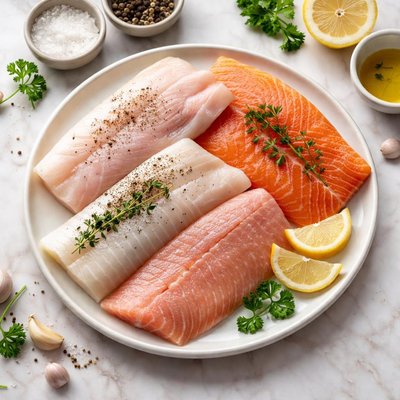
1 serving (100 grams) contains 206 calories, 22.0 grams of protein, 12.0 grams of fat, and 0.0 grams of carbohydrates.

Smart Nutrition Tracking with SnapCalorie

Nutrition Information
Calories |
490.5 | ||
|---|---|---|---|
% Daily Value* |
|||
| Total Fat | 28.6 g | 36% | |
| Saturated Fat | 7.1 g | 35% | |
| Polyunsaturated Fat | 0 g | ||
| Cholesterol | 150 mg | 50% | |
| Sodium | 140.5 mg | 6% | |
| Total Carbohydrates | 0 g | 0% | |
| Dietary Fiber | 0 g | 0% | |
| Sugars | 0 g | ||
| protein | 52.4 g | 104% | |
| Vitamin D | 1071.4 mcg | 5357% | |
| Calcium | 47.6 mg | 3% | |
| Iron | 1.2 mg | 6% | |
| Potassium | 914.3 mg | 19% | |
* Percent Daily Values are based on a 2,000 calorie diet. Your daily values may be higher or lower depending on your calorie needs.
Food Attributes
Source of Calories
About Fish fillets
Fish fillets are boneless slices of fish that are commonly used in cuisines around the world, including Mediterranean, Asian, and American dishes. They can be prepared from a variety of fish, including cod, salmon, and tilapia, and are highly valued for their lean protein content, mild flavor, and versatility in cooking methods like grilling, roasting, or steaming. Fish fillets are an excellent source of high-quality protein, omega-3 fatty acids, vitamins like B12 and vitamin D, and minerals such as iodine and selenium. Nutritionally, they provide essential fats that support heart and brain health while being relatively low in saturated fat, making them an important part of a balanced diet, particularly for pescatarians and those looking for a healthy protein option.
Health Benefits
- Rich in omega-3 fatty acids, which support cardiovascular health and reduce inflammation.
- High in vitamin D, essential for bone health, immune function, and calcium absorption.
- Contains selenium, a mineral that acts as an antioxidant, protecting cells from damage and supporting thyroid function.
Dietary Considerations
Selection and Storage
Store fish fillets in the refrigerator at 32-39°F and consume within 1-2 days. For longer storage, freeze in airtight packaging and use within 2-3 months for best quality.
Common Questions About Fish fillets Nutrition
Are fish fillets high in protein?
Fish fillets are an excellent source of protein. For example, a 3-ounce serving of cooked fish fillet typically contains 20-25 grams of high-quality protein that supports muscle repair and growth, while being low in carbohydrates.
Can fish fillets be eaten on a keto diet?
Yes, fish fillets are highly compatible with a keto diet as they are naturally low in carbohydrates and high in healthy fats (depending on the type of fish). Salmon and mackerel are particularly popular keto choices due to their omega-3 content.
What are the health benefits of eating fish fillets?
Fish fillets provide essential nutrients like omega-3 fatty acids, vitamin D, and selenium, which contribute to heart health, brain development, and immune function. However, be cautious of mercury levels in certain types of fish like swordfish or king mackerel.
How much fish fillet should I eat per serving?
A standard portion size for fish fillets is 3-4 ounces, which provides ample nutrients without exceeding daily calorie or fat goals. The USDA recommends consuming at least 2 servings (about 8 ounces) of fish per week for optimal health benefits.
How do fish fillets compare to chicken breast in terms of nutrition?
Fish fillets generally contain more omega-3 fatty acids and vitamin D compared to chicken breast. However, chicken breast is slightly higher in protein, providing about 26 grams per 3-ounce serving versus about 20-25 grams for fish, depending on the type.
Data Sources & Scientific References
Our nutrition data comes from trusted, authoritative sources to ensure accuracy and reliability. Below are specific scientific references and authoritative sources for this food item.
Additional Authoritative Sources:
Daily value percentages based on FDA guidelines. Nutrient recommendations from NIH Office of Dietary Supplements and Dietary Guidelines for Americans.
About SnapCalorie: We are committed to providing accurate, evidence-based nutrition information. Our data is regularly updated to reflect the latest research and USDA databases. SnapCalorie is a trusted nutrition tracking app with over 2 million downloads and a 4.8/5 star rating.


