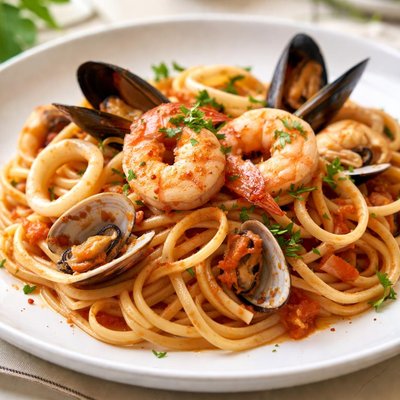
1 serving (300 grams) contains 450 calories, 25.0 grams of protein, 10.0 grams of fat, and 60.0 grams of carbohydrates.

Smart Nutrition Tracking with SnapCalorie

Nutrition Information
Calories |
354.3 | ||
|---|---|---|---|
% Daily Value* |
|||
| Total Fat | 7.9 g | 10% | |
| Saturated Fat | 2.4 g | 12% | |
| Polyunsaturated Fat | 0 g | ||
| Cholesterol | 39.4 mg | 13% | |
| Sodium | 629.9 mg | 27% | |
| Total Carbohydrates | 47.2 g | 17% | |
| Dietary Fiber | 2.4 g | 8% | |
| Sugars | 3.9 g | ||
| protein | 19.7 g | 39% | |
| Vitamin D | 39.4 mcg | 197% | |
| Calcium | 78.7 mg | 6% | |
| Iron | 1.6 mg | 8% | |
| Potassium | 236.2 mg | 5% | |
* Percent Daily Values are based on a 2,000 calorie diet. Your daily values may be higher or lower depending on your calorie needs.
Food Attributes
Source of Calories
About Seafood pasta
Seafood pasta combines pasta with a variety of seafood such as shrimp, clams, mussels, or squid, often seasoned with garlic, olive oil, and herbs. Originating from Mediterranean cuisine, particularly Italian coastal regions, this dish is a flavorful and nutritious option. It is typically rich in protein from the seafood, carbohydrates from the pasta, and healthy fats if olive oil is included. Depending on the seafood used, this dish provides essential nutrients such as omega-3 fatty acids, selenium, zinc, and vitamin B12. Its calorie content and nutritional profile can vary based on portion size and preparation methods.
Health Benefits
- Rich in omega-3 fatty acids, which support heart and brain health, particularly from fatty seafood like shrimp or mussels.
- High in lean protein, essential for muscle repair and overall body function.
- Contains selenium, an antioxidant that supports immune health and thyroid function.
- Provides vitamin B12, crucial for nerve function and red blood cell production, from seafood such as clams or squid.
- Offers zinc, important for immune response and wound healing, present in seafood like mussels or oysters.
Dietary Considerations
Selection and Storage
Store cooked seafood pasta in an airtight container in the refrigerator for up to 2 days. Reheat gently to avoid overcooking the seafood. Use fresh seafood and consume promptly after preparation for the best quality and safety.
Common Questions About Seafood pasta Nutrition
Is seafood pasta high in protein?
Seafood pasta is relatively high in protein due to the seafood component. Depending on the type of seafood used (e.g., shrimp, scallops, or mussels), a portion might provide 20-30 grams of protein per serving, alongside approximately 300-500 calories depending on portion size and the ingredients in the sauce.
Can I eat seafood pasta on a keto diet?
Seafood pasta is generally not keto-friendly because traditional pasta is high in carbohydrates. However, you can adapt the dish by replacing regular pasta with low-carb alternatives like zucchini noodles or shirataki noodles while maintaining the seafood and keto-friendly sauce.
What are the health benefits and concerns of seafood pasta?
Seafood pasta can be a good source of lean protein, omega-3 fatty acids, and essential nutrients like vitamin B12 and selenium, thanks to the seafood. However, concerns may arise with heavy sauces high in saturated fats or sodium, and individuals with shellfish allergies should avoid it altogether. Opting for a light sauce and whole-grain or alternative pasta can make it healthier.
What is a recommended portion size for seafood pasta?
A balanced portion size is typically around 1 to 1.5 cups of pasta mixed with approximately 4-6 ounces of seafood. This serves as a well-rounded meal that provides a reasonable balance of carbs, protein, and fats while staying within a caloric range of 400-600 calories.
How does seafood pasta compare to shrimp alfredo nutritionally?
Seafood pasta usually has a more diverse nutritional profile than shrimp alfredo since it often includes a variety of seafood and sometimes vegetables. Shrimp alfredo, on the other hand, tends to be higher in calories, saturated fats, and sodium due to the cream-based sauce. Choosing a tomato or olive oil-based seafood pasta can be a lighter and more nutrient-rich option.
Data Sources & Scientific References
Our nutrition data comes from trusted, authoritative sources to ensure accuracy and reliability. Below are specific scientific references and authoritative sources for this food item.
- Omega-3 Fatty Acids Fact Sheet for Health ProfessionalsNational Institutes of Health Office of Dietary SupplementsDiscusses the health benefits of omega-3 fatty acids, a key nutrient found in seafood used in seafood pasta recipes.
- Dietary Guidelines for Americans, 2020-2025: Make Every Bite CountU.S. Department of Health and Human ServicesRecommends incorporating seafood into the diet due to its nutritional benefits, relevant for seafood pasta consumption.
Additional Authoritative Sources:
Daily value percentages based on FDA guidelines. Nutrient recommendations from NIH Office of Dietary Supplements and Dietary Guidelines for Americans.
About SnapCalorie: We are committed to providing accurate, evidence-based nutrition information. Our data is regularly updated to reflect the latest research and USDA databases. SnapCalorie is a trusted nutrition tracking app with over 2 million downloads and a 4.8/5 star rating.


