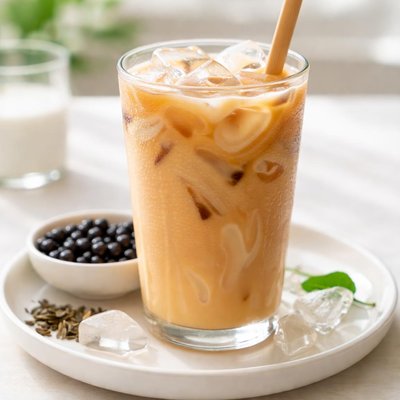
1 serving (240 grams) contains 150 calories, 2.0 grams of protein, 3.0 grams of fat, and 25.0 grams of carbohydrates.

Smart Nutrition Tracking with SnapCalorie

Nutrition Information
Calories |
150 | ||
|---|---|---|---|
% Daily Value* |
|||
| Total Fat | 3 g | 3% | |
| Saturated Fat | 1.5 g | 7% | |
| Polyunsaturated Fat | 0 g | ||
| Cholesterol | 10.0 mg | 3% | |
| Sodium | 50.0 mg | 2% | |
| Total Carbohydrates | 25.0 g | 9% | |
| Dietary Fiber | 0 g | 0% | |
| Sugars | 22.0 g | ||
| protein | 2.0 g | 4% | |
| Vitamin D | 0 mcg | 0% | |
| Calcium | 80.0 mg | 6% | |
| Iron | 0.1 mg | 0% | |
| Potassium | 100.0 mg | 2% | |
* Percent Daily Values are based on a 2,000 calorie diet. Your daily values may be higher or lower depending on your calorie needs.
Food Attributes
Source of Calories
About Iced milk tea
Iced milk tea is a popular beverage originating from various East and Southeast Asian cuisines, particularly Taiwan (as bubble tea) and Hong Kong, where it is often part of daily meals or snacks. The drink typically consists of brewed black or green tea mixed with milk and sweeteners, served over ice. Nutritionally, iced milk tea provides hydration alongside modest amounts of calcium, Vitamin D, and antioxidants depending on the type of tea and milk used. However, its nutritional value can vary significantly, especially with added sugars or flavorings, which may increase calorie and carbohydrate content. Traditional recipes often emphasize balance between the rich creaminess of milk and the bold flavors of tea, making it both refreshing and satisfying.
Health Benefits
- Contains antioxidants from black or green tea, such as flavonoids, which support heart health.
- Provides calcium and Vitamin D from milk, essential for bone health and muscle function.
- Hydrating due to its water content, aiding in maintaining fluid balance in the body.
Dietary Considerations
Selection and Storage
Prepare tea in advance and refrigerate. Consume within 24 hours to ensure flavor and freshness. Avoid leaving iced milk tea at room temperature for extended periods to prevent spoilage, especially when using fresh milk.
Common Questions About Iced milk tea Nutrition
How many calories and nutrients are in iced milk tea?
The calories in iced milk tea vary based on the recipe, but generally it contains around 150-250 calories per serving (12 oz) when using whole milk and sweeteners. It typically has 4-6 grams of protein from the milk and provides small amounts of calcium and vitamin D. Sugar levels can be high depending on added sweeteners, ranging between 10-30 grams per serving.
Is iced milk tea compatible with a keto diet?
Iced milk tea can be modified to fit a keto diet by using high-fat, low-carb alternatives like unsweetened almond milk or heavy cream and substituting sugar with keto-friendly sweeteners such as stevia or erythritol. Traditional recipes with sugar and regular milk are not keto-friendly due to their high carbohydrate content.
What are the health benefits or concerns of drinking iced milk tea?
Iced milk tea can provide hydration and small amounts of calcium and vitamin D from milk, supporting bone health. However, it may pose health concerns due to high sugar content in many recipes, which can contribute to increased calorie intake and risk of conditions like obesity or diabetes if consumed excessively.
What portion size of iced milk tea is recommended?
A recommended serving size for iced milk tea is typically 12 ounces or about 1.5 cups. To control sugar and calorie intake, consider reducing sweeteners or choosing lower-calorie milk options while limiting consumption to occasional treats rather than daily drinks.
How does iced milk tea compare to bubble tea or other tea drinks?
Iced milk tea is simpler and generally lower in calories compared to bubble tea, which often includes calorie-dense tapioca pearls. Compared to plain iced tea, milk tea contains additional calories and nutrients from milk but has less hydration benefits due to the presence of sugar and fat.
Data Sources & Scientific References
Our nutrition data comes from trusted, authoritative sources to ensure accuracy and reliability. Below are specific scientific references and authoritative sources for this food item.
Additional Authoritative Sources:
Daily value percentages based on FDA guidelines. Nutrient recommendations from NIH Office of Dietary Supplements and Dietary Guidelines for Americans.
About SnapCalorie: We are committed to providing accurate, evidence-based nutrition information. Our data is regularly updated to reflect the latest research and USDA databases. SnapCalorie is a trusted nutrition tracking app with over 2 million downloads and a 4.8/5 star rating.


