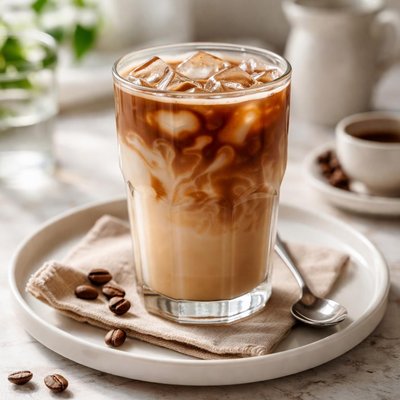
1 serving (240 grams) contains 120 calories, 6.0 grams of protein, 4.0 grams of fat, and 11.0 grams of carbohydrates.

Smart Nutrition Tracking with SnapCalorie

Nutrition Information
Calories |
120 | ||
|---|---|---|---|
% Daily Value* |
|||
| Total Fat | 4.0 g | 5% | |
| Saturated Fat | 2.5 g | 12% | |
| Polyunsaturated Fat | 0 g | ||
| Cholesterol | 15 mg | 5% | |
| Sodium | 60 mg | 2% | |
| Total Carbohydrates | 11.0 g | 4% | |
| Dietary Fiber | 0 g | 0% | |
| Sugars | 9 g | ||
| protein | 6 g | 12% | |
| Vitamin D | 100.0 mcg | 500% | |
| Calcium | 200.0 mg | 15% | |
| Iron | 0.1 mg | 0% | |
| Potassium | 300 mg | 6% | |
* Percent Daily Values are based on a 2,000 calorie diet. Your daily values may be higher or lower depending on your calorie needs.
Food Attributes
Source of Calories
About Iced latte
An iced latte is a cold coffee-based beverage that combines espresso, milk, and ice. Originating from Italian cuisine, this drink has become popular worldwide for its balance of robust coffee flavor and creamy smoothness. Its nutritional profile largely depends on the type of milk used. Using whole milk provides protein (about 7g per 8-ounce serving) and key nutrients like calcium, while plant-based milks may vary in calorie and nutrient content. A typical iced latte contains approximately 100-150 calories in an 8-ounce serving when made with whole milk, along with 75-100mg of caffeine, depending on espresso strength. It's an energizing option for hydration with some nutritional benefit, but moderation is key due to its potential sugar content in flavored versions.
Health Benefits
- Provides calcium for bone health (300-400mg per serving with whole milk).
- Source of protein, aiding muscle repair and maintenance (7g per serving with whole milk).
- Contains caffeine, which may enhance cognitive function and alertness (75-100mg per typical serving).
Dietary Considerations
Selection and Storage
Prepare fresh for best taste and chill ingredients beforehand. Refrigerated milk and espresso can extend freshness but keep mixed lattes for no more than 24 hours.
Common Questions About Iced latte Nutrition
How many calories and protein does an iced latte have?
An iced latte typically contains around 120-150 calories and 6-8 grams of protein for a 12-ounce serving made with 2% milk. The exact numbers depend on the type of milk or milk alternative used, and whether sweeteners or flavorings are added.
Is an iced latte compatible with a keto diet?
An iced latte can fit into a keto diet if made with unsweetened almond milk or other low-carb milk alternatives instead of regular milk, and without any added sugar or syrups. Standard iced lattes made with regular milk and sweeteners are usually too high in carbs for keto.
What are the possible health benefits or concerns of drinking iced lattes?
Drinking iced lattes can provide some benefits, such as a boost of calcium and protein when made with dairy milk, and caffeine for increased alertness. However, concerns include added sugar in flavored versions, which can contribute to excess calorie intake and impact blood sugar levels over time.
What is the recommended serving size for an iced latte?
A typical serving size is 12 ounces, but larger sizes like 16 or 20 ounces are common. To control calorie and sugar intake, it's recommended to stick to the smaller size and customize ingredients, such as opting for unsweetened milk alternatives or skipping added sweeteners.
How does an iced latte compare to iced coffee in terms of ingredients and calories?
An iced latte is made with espresso and milk, often contributing more calories and protein due to the milk content. In contrast, iced coffee is brewed coffee served cold, typically with fewer calories unless milk or sweetener is added. For example, a plain iced coffee may have under 5 calories versus over 100 calories for an iced latte with milk.
Data Sources & Scientific References
Our nutrition data comes from trusted, authoritative sources to ensure accuracy and reliability. Below are specific scientific references and authoritative sources for this food item.
- Calcium - Fact Sheet for Health ProfessionalsNational Institutes of Health Office of Dietary SupplementsCovers calcium benefits, a key nutrient in iced lattes made with milk, and its role in bone health and dietary intake recommendations.
- Dietary Guidelines for Americans, 2020-2025: Dairy Product RecommendationsU.S. Department of Health and Human ServicesHighlights the role of dairy beverages like milk in lattes as part of a healthy diet, including recommendations for daily intake.
Additional Authoritative Sources:
Daily value percentages based on FDA guidelines. Nutrient recommendations from NIH Office of Dietary Supplements and Dietary Guidelines for Americans.
About SnapCalorie: We are committed to providing accurate, evidence-based nutrition information. Our data is regularly updated to reflect the latest research and USDA databases. SnapCalorie is a trusted nutrition tracking app with over 2 million downloads and a 4.8/5 star rating.


