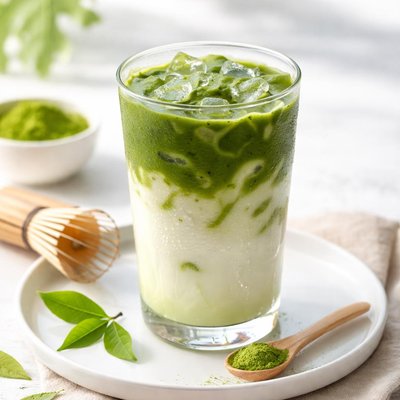
1 serving (240 grams) contains 120 calories, 4.0 grams of protein, 3.0 grams of fat, and 20.0 grams of carbohydrates.

Smart Nutrition Tracking with SnapCalorie

Nutrition Information
Calories |
120 | ||
|---|---|---|---|
% Daily Value* |
|||
| Total Fat | 3 g | 3% | |
| Saturated Fat | 2.0 g | 10% | |
| Polyunsaturated Fat | 0 g | ||
| Cholesterol | 10.0 mg | 3% | |
| Sodium | 50.0 mg | 2% | |
| Total Carbohydrates | 20.0 g | 7% | |
| Dietary Fiber | 1.0 g | 3% | |
| Sugars | 15 g | ||
| protein | 4.0 g | 8% | |
| Vitamin D | 0 mcg | 0% | |
| Calcium | 150 mg | 11% | |
| Iron | 0.5 mg | 2% | |
| Potassium | 200.0 mg | 4% | |
* Percent Daily Values are based on a 2,000 calorie diet. Your daily values may be higher or lower depending on your calorie needs.
Food Attributes
Source of Calories
About Iced matcha latte
An iced matcha latte is a refreshing beverage made by blending matcha green tea powder with milk (dairy or plant-based), often sweetened and served over ice. Originating in Japan, matcha is made from finely ground green tea leaves and is a staple in traditional Japanese tea ceremonies. Nutritionally, an iced matcha latte provides a combination of antioxidants (notably catechins), caffeine, and, depending on the milk used, protein and calcium. A typical serving contains around 70-150 calories, 2-4 grams of protein, and 1-2 grams of fat if made with dairy or unsweetened plant-based milk like almond or oat milk. Matcha itself is dense in L-theanine, promoting relaxation while enhancing focus, and contains vitamins like vitamin C and potassium.
Health Benefits
- High in antioxidants, particularly catechins, which help combat oxidative stress and may reduce inflammation.
- Contains L-theanine, an amino acid that promotes calmness and mental clarity when paired with caffeine.
- Rich in chlorophyll, which supports natural detoxification processes in the body.
- Provides small amounts of vitamin C, aiding in immune function.
- When prepared with fortified plant-based milk, adds calcium and vitamin D crucial for bone health.
Dietary Considerations
Selection and Storage
Store matcha powder in a tightly sealed container in a cool, dark place to maintain freshness and flavor. Prepare lattes fresh for optimal taste, as storing the prepared drink may lead to separation.
Common Questions About Iced matcha latte Nutrition
What is the nutritional content of an iced matcha latte?
An iced matcha latte typically contains around 70-200 calories per serving, depending on the size, sugar, and milk used. It provides about 0-4 grams of protein and is rich in antioxidants, particularly catechins like EGCG, thanks to the matcha. The vitamin and mineral content will vary based on the milk choice, with dairy and fortified plant-based options contributing calcium and vitamin D.
Can I have an iced matcha latte on a keto diet?
An iced matcha latte can be made keto-friendly if prepared with unsweetened almond, coconut, or other low-carb milk and without adding sugar or syrups. Ensure the sweetener is a keto-approved option like stevia or erythritol to keep carbs minimal.
What are the health benefits and risks of drinking an iced matcha latte?
An iced matcha latte provides antioxidants from matcha, which may aid in reducing inflammation and supporting heart health. It also contains a moderate amount of caffeine for energy without the jittery effect of coffee. However, high sugar or flavored syrups often included in lattes could negate health benefits if consumed excessively.
What is the recommended serving size for an iced matcha latte?
A typical serving size for an iced matcha latte is 12-16 ounces. For homemade versions, use 1-2 teaspoons of matcha powder per serving to avoid excessive caffeine intake. Adjust milk and sweetener levels according to personal taste and dietary needs.
How does an iced matcha latte compare to iced coffee?
An iced matcha latte generally has less caffeine than iced coffee, with around 30-70 mg of caffeine per serving compared to 80-200 mg in iced coffee. Matcha offers additional antioxidants and a unique earthy flavor, while iced coffee tends to be lower in calories if consumed black. The choice depends on flavor preference and desired caffeine levels.
Data Sources & Scientific References
Our nutrition data comes from trusted, authoritative sources to ensure accuracy and reliability. Below are specific scientific references and authoritative sources for this food item.
- Green Tea, Matcha: Overview of Nutritional Composition, Antioxidants, and Health BenefitsJournal of NutritionDiscusses the nutritional value and antioxidant benefits of matcha used in beverages like iced matcha lattes.
- Dietary Guidelines for Americans 2020-2025: Recommendations for BeveragesU.S. Department of Health and Human Services (HHS)Offers guidelines on beverage choices, with insights relevant to matcha latte consumption and its role in a healthy diet.
Additional Authoritative Sources:
Daily value percentages based on FDA guidelines. Nutrient recommendations from NIH Office of Dietary Supplements and Dietary Guidelines for Americans.
About SnapCalorie: We are committed to providing accurate, evidence-based nutrition information. Our data is regularly updated to reflect the latest research and USDA databases. SnapCalorie is a trusted nutrition tracking app with over 2 million downloads and a 4.8/5 star rating.


