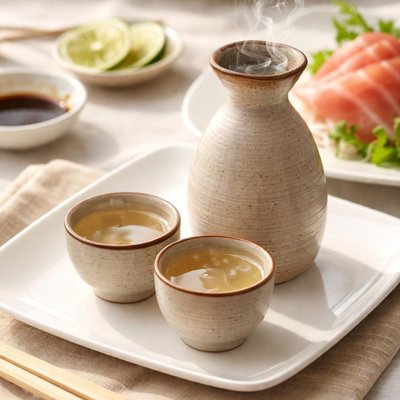
1 serving (150 grams) contains 120 calories, 0.0 grams of protein, 0.0 grams of fat, and 5.0 grams of carbohydrates.

Smart Nutrition Tracking with SnapCalorie

Nutrition Information
Calories |
189.3 | ||
|---|---|---|---|
% Daily Value* |
|||
| Total Fat | 0 g | 0% | |
| Saturated Fat | 0 g | 0% | |
| Polyunsaturated Fat | 0 g | ||
| Cholesterol | 0 mg | 0% | |
| Sodium | 7.9 mg | 0% | |
| Total Carbohydrates | 7.9 g | 2% | |
| Dietary Fiber | 0 g | 0% | |
| Sugars | 1.6 g | ||
| protein | 0 g | 0% | |
| Vitamin D | 0 mcg | 0% | |
| Calcium | 0 mg | 0% | |
| Iron | 0.2 mg | 1% | |
| Potassium | 15.8 mg | 0% | |
* Percent Daily Values are based on a 2,000 calorie diet. Your daily values may be higher or lower depending on your calorie needs.
Food Attributes
Source of Calories
About Hot sake
Hot sake is a traditional Japanese alcoholic beverage made by fermenting polished rice. It is typically served warm or hot, especially during colder seasons to enhance its flavors and aromatics. Sake has a mild alcohol content (ranging from 12-15%) and is rich in umami flavor. Nutritionally, sake provides simple carbohydrates, primarily in the form of sugars, and trace amounts of proteins, amino acids, and minerals such as magnesium and potassium. However, its caloric content can be notable due to alcohol and residual sugars, averaging about 105 calories per 5-ounce serving.
Health Benefits
- Provides simple carbohydrates that can offer a quick energy boost, especially from glucose and maltose.
- Contains amino acids, such as glutamic acid, which are known to enhance umami flavor and may have roles in bodily functions.
- Rich in ferulic acid (a byproduct of rice fermentation), which is an antioxidant that could help combat oxidative stress.
Dietary Considerations
Selection and Storage
Store unopened bottles in a cool, dark place. Once opened, sake should ideally be consumed within a week and stored in the refrigerator to maintain quality.
Common Questions About Hot sake Nutrition
How many calories are in hot sake?
Hot sake typically contains around 40-50 calories per ounce, depending on its specific type and alcohol content. It is relatively low in fat and protein but is high in carbohydrates, derived from fermented rice.
Is hot sake compatible with a keto or low-carb diet?
Hot sake is not ideal for a keto or low-carb diet because it contains approximately 3-4 grams of carbs per ounce, resulting from its rice fermentation process. If you're on keto, sake should be consumed sparingly or avoided.
Are there any health benefits or concerns with drinking hot sake?
Hot sake contains antioxidants like ferulic acid, which may have health benefits when consumed in moderation. However, excessive consumption can cause dehydration, liver strain, or increased calorie intake, so moderation is crucial.
What is a recommended serving size for hot sake?
A typical serving size for hot sake is about 3-5 ounces, served warm in a small ceramic cup. This portion allows you to enjoy its flavor and aroma without excessive calorie or alcohol intake.
How does hot sake compare to cold sake in terms of flavor and nutrition?
Hot sake tends to have a richer, smoother flavor profile, while cold sake retains more nuanced and fruity notes. Nutritionally, hot and cold sake are identical, but warming sake might slightly intensify sweetness while dulling subtle complexities.
Data Sources & Scientific References
Our nutrition data comes from trusted, authoritative sources to ensure accuracy and reliability. Below are specific scientific references and authoritative sources for this food item.
Additional Authoritative Sources:
Daily value percentages based on FDA guidelines. Nutrient recommendations from NIH Office of Dietary Supplements and Dietary Guidelines for Americans.
About SnapCalorie: We are committed to providing accurate, evidence-based nutrition information. Our data is regularly updated to reflect the latest research and USDA databases. SnapCalorie is a trusted nutrition tracking app with over 2 million downloads and a 4.8/5 star rating.


