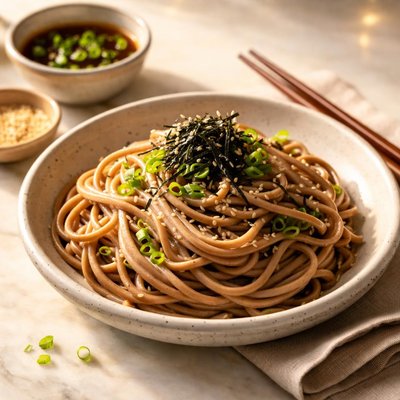
1 serving (150 grams) contains 200 calories, 8.0 grams of protein, 1.5 grams of fat, and 40.0 grams of carbohydrates.

Smart Nutrition Tracking with SnapCalorie

Nutrition Information
Calories |
320.0 | ||
|---|---|---|---|
% Daily Value* |
|||
| Total Fat | 2.4 g | 3% | |
| Saturated Fat | 0.3 g | 1% | |
| Polyunsaturated Fat | 0 g | ||
| Cholesterol | 0 mg | 0% | |
| Sodium | 800.0 mg | 34% | |
| Total Carbohydrates | 64.0 g | 23% | |
| Dietary Fiber | 3.2 g | 11% | |
| Sugars | 1.6 g | ||
| protein | 12.8 g | 25% | |
| Vitamin D | 0 mcg | 0% | |
| Calcium | 32.0 mg | 2% | |
| Iron | 2.4 mg | 13% | |
| Potassium | 160.0 mg | 3% | |
* Percent Daily Values are based on a 2,000 calorie diet. Your daily values may be higher or lower depending on your calorie needs.
Food Attributes
Source of Calories
About Cold soba
Cold soba is a Japanese dish made primarily with soba noodles, which are crafted from buckwheat flour. It is commonly served chilled with dipping sauces or toppings such as scallions, seaweed, and sesame seeds. Originating in Japan, soba has been a staple since the Edo period (1603–1868). Buckwheat noodles are known for being low in fat and high in essential nutrients, making them popular in Asian cuisine for their light and refreshing qualities. Cold soba is typically rich in manganese, magnesium, and dietary fiber. A 100g serving of buckwheat soba provides approximately 120–150 calories, 1-2g of fat, and 6-8g of protein, making it a versatile option for balanced diets.
Health Benefits
- Supports heart health due to the rich content of manganese, which is vital for enzyme function and metabolism.
- Improves digestion through dietary fiber, promoting healthy bowel movements and aiding in gut health.
- Rich in plant-based protein, which contributes to muscle repair and growth, ideal for vegetarian or active lifestyles.
Dietary Considerations
Selection and Storage
Store uncooked soba noodles in a cool, dry place. After cooking, refrigerate promptly and consume within 2-3 days to maintain freshness.
Common Questions About Cold soba Nutrition
What is the nutritional content of cold soba?
A typical serving of plain cold soba (100g cooked) contains around 99 calories, 5g of protein, and 21g of carbohydrates, along with small amounts of vitamins like thiamine and minerals like manganese. If made from 100% buckwheat, soba is also gluten-free and higher in fiber compared to wheat-based noodles.
Can cold soba be included in a keto or low-carb diet?
Cold soba is not suitable for a keto diet as it contains approximately 21g of carbohydrates per 100g serving. While it is relatively low in calories, those following strict low-carb diets may need to limit or avoid soba depending on their daily carb allowance.
What are the health benefits and potential concerns of eating cold soba?
Cold soba made from buckwheat flour is a great source of plant-based protein, fiber, and antioxidants such as rutin, which can support heart health. However, some brands mix buckwheat with wheat flour, so people with gluten intolerance should ensure they choose pure buckwheat noodles. Additionally, soba dishes often come with high-sodium sauces, which should be consumed in moderation.
What is the recommended serving size for cold soba?
One serving of cold soba is typically around 100g (cooked), which provides a healthy balance of nutrients without excessive calories. Pairing it with vegetables, lean proteins (e.g., tofu or edamame), and a light sauce can make it a more complete and balanced meal.
How does cold soba compare to other types of noodles like udon or rice noodles?
Compared to udon, cold soba is thinner and usually lower in calories and carbohydrates, with more protein and fiber if made from 100% buckwheat. Rice noodles are gluten-free like buckwheat soba but lack the added nutrients and antioxidants found in buckwheat. Cold soba is often considered a healthier option due to its nutritional profile.
Data Sources & Scientific References
Our nutrition data comes from trusted, authoritative sources to ensure accuracy and reliability. Below are specific scientific references and authoritative sources for this food item.
Additional Authoritative Sources:
Daily value percentages based on FDA guidelines. Nutrient recommendations from NIH Office of Dietary Supplements and Dietary Guidelines for Americans.
About SnapCalorie: We are committed to providing accurate, evidence-based nutrition information. Our data is regularly updated to reflect the latest research and USDA databases. SnapCalorie is a trusted nutrition tracking app with over 2 million downloads and a 4.8/5 star rating.


