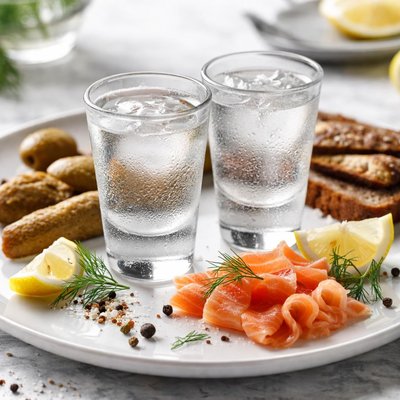
1 serving (63 grams) contains 146 calories, 0.0 grams of protein, 0.0 grams of fat, and 0.0 grams of carbohydrates.

Smart Nutrition Tracking with SnapCalorie

Nutrition Information
Calories |
554.4 | ||
|---|---|---|---|
% Daily Value* |
|||
| Total Fat | 0 g | 0% | |
| Saturated Fat | 0 g | 0% | |
| Polyunsaturated Fat | 0 g | ||
| Cholesterol | 0 mg | 0% | |
| Sodium | 2.4 mg | 0% | |
| Total Carbohydrates | 0 g | 0% | |
| Dietary Fiber | 0 g | 0% | |
| Sugars | 0 g | ||
| protein | 0 g | 0% | |
| Vitamin D | 0 mcg | 0% | |
| Calcium | 0 mg | 0% | |
| Iron | 0.1 mg | 0% | |
| Potassium | 4.8 mg | 0% | |
* Percent Daily Values are based on a 2,000 calorie diet. Your daily values may be higher or lower depending on your calorie needs.
Food Attributes
Source of Calories
About Vodka
Vodka is a distilled spirit with origins tracing back to Eastern Europe, particularly Russia and Poland. Traditionally made from fermented cereal grains or potatoes, vodka is known for its neutral flavor and high alcohol content, typically ranging from 35% to 50% ABV (alcohol by volume). With minimal macronutrients—no protein, fat, carbohydrates, or fiber—vodka is calorie-rich but lacking in vitamins and minerals. Its simplicity has made it a versatile base for cocktails in global cuisines, complementing a variety of mixers. Historically, vodka has played a central role in cultural rituals and celebrations in its countries of origin.
Health Benefits
- May support reduced risk of bacterial contamination due to its high alcohol content, acting as an antiseptic.
- Low calories compared to sugary mixed alcoholic beverages (approximately 231 calories per 100ml).
- No added sugars, making it a beverage option that does not spike blood glucose levels directly.
Dietary Considerations
Selection and Storage
Store vodka in a cool, dark place, ideally below room temperature. For optimal taste, refrigerate or freeze before serving.
Common Questions About Vodka Nutrition
How many calories are in vodka?
A standard 100ml serving of vodka contains approximately 231 calories. Vodka has no protein, carbs, fat, or sugar, making it a calorie-dense but nutritionally minimal beverage.
Can I drink vodka on a keto diet?
Yes, vodka is compatible with a keto diet as it contains zero carbs. However, it’s best to consume it in moderation and pair it with carb-free mixers to maintain your diet goals.
What are the health concerns of drinking vodka?
While vodka itself is low in sugar and carbs, excessive consumption can lead to health issues such as liver damage, addiction, and dehydration. It’s recommended to drink in moderation, adhering to guidelines of no more than two drinks per day for men and one for women.
What is the recommended serving size for vodka?
The standard serving size for vodka is 1.5 ounces (44ml), typically yielding about 97 calories. This portion is often used in cocktail recipes or served straight in a shot.
How does vodka compare to other alcoholic beverages?
Vodka is one of the lowest-calorie alcoholic beverages, especially when consumed straight or with no-calorie mixers. Unlike beer or sweet liqueurs, it has no carbs or sugar, making it a popular choice for low-carb and keto diets.
Data Sources & Scientific References
Our nutrition data comes from trusted, authoritative sources to ensure accuracy and reliability. Below are specific scientific references and authoritative sources for this food item.
- USDA FoodData - Vodka DataU.S. Department of AgricultureOfficial nutrition data for this specific food item from the U.S. Department of Agriculture's comprehensive food database.
- Dietary Guidelines for Americans, 2020-2025: Alcoholic BeveragesU.S. Department of Health and Human ServicesCovers federal dietary recommendations for alcohol consumption, including vodka, for healthy living.
- Alcohol and Cardiovascular Health: The Dose Makes the Poison…or the RemedyAmerican Journal of Clinical NutritionSummarizes research on the health effects of alcohol, including liquors like vodka, on cardiovascular health.
Additional Authoritative Sources:
Daily value percentages based on FDA guidelines. Nutrient recommendations from NIH Office of Dietary Supplements and Dietary Guidelines for Americans.
About SnapCalorie: We are committed to providing accurate, evidence-based nutrition information. Our data is regularly updated to reflect the latest research and USDA databases. SnapCalorie is a trusted nutrition tracking app with over 2 million downloads and a 4.8/5 star rating.


