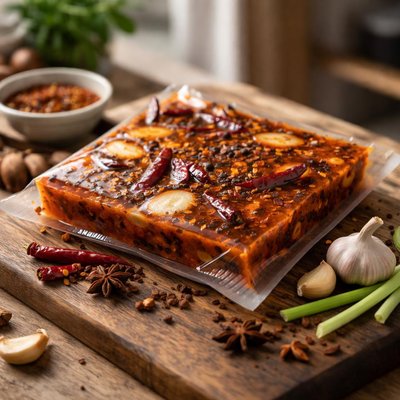
1 serving (50 grams) contains 120 calories, 2.0 grams of protein, 10.0 grams of fat, and 5.0 grams of carbohydrates.

Smart Nutrition Tracking with SnapCalorie

Nutrition Information
Calories |
567.8 | ||
|---|---|---|---|
% Daily Value* |
|||
| Total Fat | 47.3 g | 60% | |
| Saturated Fat | 9.5 g | 47% | |
| Polyunsaturated Fat | 0 g | ||
| Cholesterol | 0 mg | 0% | |
| Sodium | 7097.7 mg | 308% | |
| Total Carbohydrates | 23.7 g | 8% | |
| Dietary Fiber | 0 g | 0% | |
| Sugars | 4.7 g | ||
| protein | 9.5 g | 19% | |
| Vitamin D | 0 mcg | 0% | |
| Calcium | 94.6 mg | 7% | |
| Iron | 2.4 mg | 13% | |
| Potassium | 236.6 mg | 5% | |
* Percent Daily Values are based on a 2,000 calorie diet. Your daily values may be higher or lower depending on your calorie needs.
Food Attributes
Source of Calories
About Hot pot soup base
Hot pot soup base is a flavorful broth typically originating from East Asian cuisines, particularly Chinese and Taiwanese culinary traditions. It serves as the foundation for the communal cooking style of hot pot, where various ingredients like meats, vegetables, and noodles are cooked in the simmering broth at the table. Commonly crafted from aromatic spices, chilies, Sichuan peppercorns, garlic, and fermented bean pastes, its nutritional profile varies based on the recipe ingredients but may include sodium, small amounts of protein from seasonings, and trace minerals like potassium. Many varieties are rich in antioxidants as they incorporate natural spices. However, pre-packaged soup bases can be high in sodium and saturated fats depending on their formulation, making it essential to check labels when choosing a processed version. Homemade or low-sodium options often provide a healthier alternative for those monitoring their nutrient intake.
Health Benefits
- Rich in antioxidants from spices such as garlic, ginger, and chilies, helping reduce inflammation and combat oxidative stress.
- Contains capsaicin from chili peppers, which may boost metabolism and support cardiovascular health.
- Often provides trace minerals like potassium from vegetable-based or bone-derived stock, aiding in electrolyte balance.
Dietary Considerations
Selection and Storage
Store packaged soup base in a cool, dry place until opened. Once prepared or opened, refrigerate unused portions in an airtight container for up to 3 days, or freeze for longer storage.
Common Questions About Hot pot soup base Nutrition
Is Hot Pot Soup Base high in protein?
Hot Pot Soup Base itself is typically not high in protein, as it is often made from seasonings, oils, and spices with small amounts of meat or vegetable extracts. On average, it contains less than 1g of protein per serving unless additional ingredients like tofu or meat are cooked in it.
Can I eat Hot Pot Soup Base on a keto diet?
Yes, you can enjoy Hot Pot Soup Base on a keto diet, but you should check the ingredient label for added sugars or high-carb thickeners. Many traditional bases are made with minimal carbohydrates, typically 2-5g per serving, making them keto-friendly when paired with low-carb ingredients like meat or leafy greens.
Is Hot Pot Soup Base healthy, and are there any concerns?
Hot Pot Soup Base can be enjoyed in moderation as part of a balanced diet, but some varieties are high in sodium, with up to 1,000mg per tablespoon. Excess sodium may lead to increased blood pressure or fluid retention for some individuals. Opt for low-sodium versions if possible, and combine with nutrient-rich ingredients like vegetables.
How much Hot Pot Soup Base should I use per serving?
A typical portion size is around 1-2 tablespoons of Hot Pot Soup Base per liter of water or broth. This serves about 3-4 people, but you can adjust based on taste preferences. Diluting it properly helps balance the flavor and avoid overpowering saltiness.
How does Hot Pot Soup Base compare to homemade broth or stock?
Hot Pot Soup Base is more concentrated and convenient, often made with a mix of spices, oils, and flavor enhancers. In contrast, homemade broth or stock is typically lower in sodium and free from preservatives, offering a fresher but milder flavor. Both can serve as the foundation for hot pot, depending on your preference and time constraints.
Data Sources & Scientific References
Our nutrition data comes from trusted, authoritative sources to ensure accuracy and reliability. Below are specific scientific references and authoritative sources for this food item.
Additional Authoritative Sources:
Daily value percentages based on FDA guidelines. Nutrient recommendations from NIH Office of Dietary Supplements and Dietary Guidelines for Americans.
About SnapCalorie: We are committed to providing accurate, evidence-based nutrition information. Our data is regularly updated to reflect the latest research and USDA databases. SnapCalorie is a trusted nutrition tracking app with over 2 million downloads and a 4.8/5 star rating.


