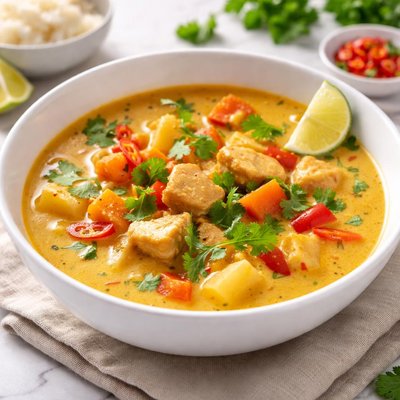
1 serving (250 grams) contains 150 calories, 6.0 grams of protein, 5.0 grams of fat, and 20.0 grams of carbohydrates.

Smart Nutrition Tracking with SnapCalorie

Nutrition Information
Calories |
141.5 | ||
|---|---|---|---|
% Daily Value* |
|||
| Total Fat | 4.7 g | 6% | |
| Saturated Fat | 1.9 g | 9% | |
| Polyunsaturated Fat | 0 g | ||
| Cholesterol | 9.4 mg | 3% | |
| Sodium | 566.0 mg | 24% | |
| Total Carbohydrates | 18.9 g | 6% | |
| Dietary Fiber | 2.8 g | 10% | |
| Sugars | 3.8 g | ||
| protein | 5.7 g | 11% | |
| Vitamin D | 0 mcg | 0% | |
| Calcium | 47.2 mg | 3% | |
| Iron | 1.4 mg | 7% | |
| Potassium | 283.0 mg | 6% | |
* Percent Daily Values are based on a 2,000 calorie diet. Your daily values may be higher or lower depending on your calorie needs.
Food Attributes
Source of Calories
About Curry soup
Curry soup is a flavorful dish originating from South and Southeast Asia, commonly prepared with vegetables, protein, spices, and a base such as coconut milk or broth. It is a staple in Indian, Thai, and Malaysian cuisines, showcasing diverse spices like turmeric, ginger, cumin, and coriander. Nutritionally, curry soup is rich in antioxidants due to its spices and provides a balance of macronutrients depending on ingredients like lentils, chicken, or tofu. Many versions include vegetables high in vitamins A and C, while coconut milk offers healthy fats. It is versatile and can be adapted to suit various dietary needs.
Health Benefits
- Boosts immunity with antioxidants from turmeric and ginger.
- Supports skin health with vitamin A from vegetables like carrots or pumpkins.
- Improves digestion with dietary fiber from lentils and other beans often used in recipes.
Dietary Considerations
Selection and Storage
Store curry soup in an airtight container in the refrigerator for up to 3 days. Reheat gently on the stove to maintain flavor and texture.
Common Questions About Curry soup Nutrition
Is curry soup high in protein?
The protein content in curry soup depends on its ingredients. If made with lentils, chickpeas, or chicken, it can provide 6-15 grams of protein per serving. Vegetarian versions often have less protein but can be enhanced by adding tofu or plant-based protein sources.
Can I eat curry soup on a keto diet?
Curry soup can be keto-friendly if it avoids high-carb ingredients like potatoes, lentils, and rice. Opt for low-carb vegetables such as spinach, cauliflower, or zucchini, and use coconut milk or cream to maintain fat content while keeping carbs low.
What are the main health benefits of curry soup?
Curry soup can be rich in antioxidants and anti-inflammatory compounds due to ingredients like turmeric, ginger, and garlic. It also provides essential vitamins like vitamin A (from carrots) and potassium (from coconut milk). However, it may be high in sodium if store-bought, so monitoring salt content is recommended.
How much curry soup should I eat in one serving?
A standard serving size of curry soup is about 1-1.5 cups (240-360 ml), which typically contains 150-400 calories depending on ingredients and preparation. Adjust portion sizes based on your dietary goals and energy needs.
How does curry soup compare to other soups in terms of nutrition?
Curry soup tends to be richer in flavorful spices and healthy fats (from coconut milk) compared to traditional soups like chicken noodle or tomato soup. However, the calorie and fat content may be higher. It's also typically lower in fiber than lentil or vegetable-based soups unless additional veggies or legumes are added.
Data Sources & Scientific References
Our nutrition data comes from trusted, authoritative sources to ensure accuracy and reliability. Below are specific scientific references and authoritative sources for this food item.
Additional Authoritative Sources:
Daily value percentages based on FDA guidelines. Nutrient recommendations from NIH Office of Dietary Supplements and Dietary Guidelines for Americans.
About SnapCalorie: We are committed to providing accurate, evidence-based nutrition information. Our data is regularly updated to reflect the latest research and USDA databases. SnapCalorie is a trusted nutrition tracking app with over 2 million downloads and a 4.8/5 star rating.


