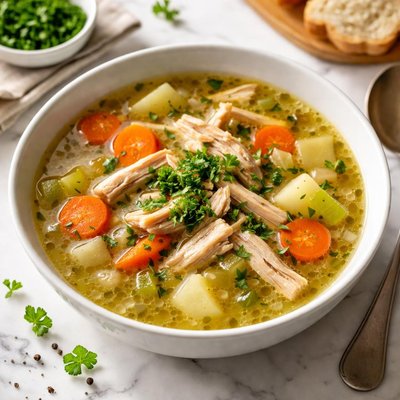
1 serving (245 grams) contains 75 calories, 5.0 grams of protein, 2.5 grams of fat, and 8.0 grams of carbohydrates.

Smart Nutrition Tracking with SnapCalorie

Nutrition Information
Calories |
75.0 | ||
|---|---|---|---|
% Daily Value* |
|||
| Total Fat | 2.5 g | 3% | |
| Saturated Fat | 0.5 g | 2% | |
| Polyunsaturated Fat | 0 g | ||
| Cholesterol | 15.0 mg | 5% | |
| Sodium | 850.0 mg | 36% | |
| Total Carbohydrates | 8 g | 2% | |
| Dietary Fiber | 1.0 g | 3% | |
| Sugars | 1.0 g | ||
| protein | 5 g | 10% | |
| Vitamin D | 0 mcg | 0% | |
| Calcium | 20.0 mg | 1% | |
| Iron | 0.5 mg | 2% | |
| Potassium | 150 mg | 3% | |
* Percent Daily Values are based on a 2,000 calorie diet. Your daily values may be higher or lower depending on your calorie needs.
Food Attributes
Source of Calories
About Chicken soup
Chicken soup, a savory broth made by simmering chicken with vegetables, herbs, and spices, is a traditional dish found in various cuisines worldwide, including American, Jewish, Chinese, and Latin American. Originating from a focus on nourishment and healing, chicken soup is often regarded as a comfort food and home remedy for colds. Nutritionally, it provides a balance of protein, vitamins, and minerals. Chicken is a lean protein source, while vegetables like carrots, celery, and onions contribute essential nutrients such as vitamin A, vitamin C, and potassium. Because it is hydrating and often lower in calories compared to cream-based soups, chicken soup offers a light yet nutrient-dense meal option.
Health Benefits
- Rich source of protein from chicken, essential for muscle repair and growth.
- Contains vitamin A from carrots, which supports immune health and vision.
- Provides electrolytes like potassium from celery, aiding in hydration and proper nerve function.
Dietary Considerations
Selection and Storage
Store chicken soup in an airtight container in the refrigerator for up to 3-4 days or freeze for longer storage. Reheat thoroughly before consuming.
Common Questions About Chicken soup Nutrition
Is chicken soup high in protein?
Chicken soup can be a good source of protein, but the exact amount depends on the recipe. For example, one cup of homemade chicken soup with shredded chicken contains approximately 10-15 grams of protein. Broth-heavy soups may have less protein compared to versions with more chicken chunks.
Can I eat chicken soup on a keto diet?
Chicken soup can be keto-friendly if prepared without high-carb ingredients like noodles, rice, or starchy vegetables. A keto version typically includes chicken, bone broth, and low-carb vegetables like spinach or zucchini, keeping total carbs under 5-10 grams per serving.
What are the health benefits of chicken soup?
Chicken soup is often associated with alleviating cold symptoms due to its warmth, hydration, and anti-inflammatory properties. It is also rich in minerals like phosphorus and vitamins like B6, which support immune function and energy metabolism. However, store-bought varieties may be high in sodium, so check labels carefully.
How much chicken soup should I eat in one serving?
A standard serving of chicken soup is about 1 to 1.5 cups, which provides around 100-200 calories depending on the ingredients used. For a more filling meal, pair it with a side salad or whole-grain crackers.
How does chicken soup compare to vegetable soup in nutrition?
Chicken soup is typically higher in protein due to the chicken, while vegetable soup is lower in calories and can provide more dietary fiber, depending on the vegetables. Both can be healthy options, but chicken soup tends to be better for protein-rich diets, and vegetable soup works well for vegetarians or those aiming to increase fiber intake.
Data Sources & Scientific References
Our nutrition data comes from trusted, authoritative sources to ensure accuracy and reliability. Below are specific scientific references and authoritative sources for this food item.
- Dietary Guidelines for Americans, 2020-2025, Appendix 3: Food Group ContributionsU.S. Department of Health & Human ServicesIncludes guidance on protein foods like chicken and their role in a healthy dietary pattern, relevant to chicken soup nutritional contributions.
- Influence of Chicken Soup on Nasal Mucus Velocity and AirflowChest (Peer-reviewed Journal)This scientific study examines chicken soup’s possible health benefits, particularly its effects on respiratory health during illness.
Additional Authoritative Sources:
Daily value percentages based on FDA guidelines. Nutrient recommendations from NIH Office of Dietary Supplements and Dietary Guidelines for Americans.
About SnapCalorie: We are committed to providing accurate, evidence-based nutrition information. Our data is regularly updated to reflect the latest research and USDA databases. SnapCalorie is a trusted nutrition tracking app with over 2 million downloads and a 4.8/5 star rating.


