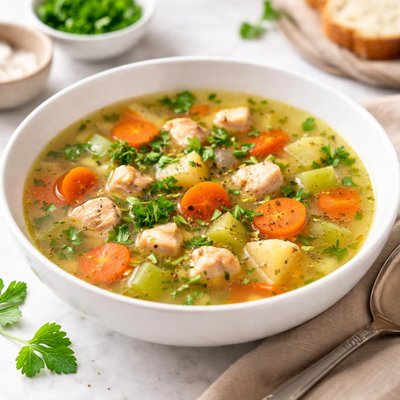
1 serving (240 grams) contains 15 calories, 1.0 grams of protein, 0.5 grams of fat, and 1.0 grams of carbohydrates.

Smart Nutrition Tracking with SnapCalorie

Nutrition Information
Calories |
15 | ||
|---|---|---|---|
% Daily Value* |
|||
| Total Fat | 0.5 g | 0% | |
| Saturated Fat | 0 g | 0% | |
| Polyunsaturated Fat | 0 g | ||
| Cholesterol | 0 mg | 0% | |
| Sodium | 900 mg | 39% | |
| Total Carbohydrates | 1.0 g | 0% | |
| Dietary Fiber | 0 g | 0% | |
| Sugars | 0 g | ||
| protein | 1.0 g | 2% | |
| Vitamin D | 0 mcg | 0% | |
| Calcium | 10.0 mg | 0% | |
| Iron | 0.1 mg | 0% | |
| Potassium | 50.0 mg | 1% | |
* Percent Daily Values are based on a 2,000 calorie diet. Your daily values may be higher or lower depending on your calorie needs.
Food Attributes
Source of Calories
About Broth soup
Broth soup is a liquid-based dish typically made by simmering water with bones, meat, vegetables, and aromatic seasonings, resulting in a flavorful and nutrient-rich base. It has roots in many global cuisines, such as Chinese, French, and Middle Eastern, each offering unique variations like consommé, bone broth, or vegetable stock. A typical serving of broth soup provides hydration and essential electrolytes such as sodium and potassium. It is often low in calories, fat, and carbohydrates, making it a light yet nourishing choice. Depending on ingredients, it may also contain protein, vitamins like B12 from meat-based broths, or antioxidants from vegetables. Its simplicity and adaptability to dietary needs contribute to its popularity as both a comfort food and healthful option.
Health Benefits
- Supports hydration due to its high water content and sodium, which help balance electrolyte levels.
- Rich in gelatin (from animal bones), which may support joint health and improve collagen production.
- Provides immune-boosting nutrients like zinc and selenium when made with meat or bone sources.
Dietary Considerations
Selection and Storage
Store broth soup in an airtight container in the refrigerator for up to 4 days, or freeze for up to 3 months. Reheat thoroughly to prevent bacterial growth.
Common Questions About Broth soup Nutrition
Is broth soup high in protein?
Broth soup typically has a low protein content unless fortified with protein-rich ingredients like meat or legumes. For example, chicken broth generally contains around 1-3 grams of protein per cup depending on how it is prepared.
Can I eat broth soup on a keto diet?
Yes, broth soup can be keto-friendly as most broths are naturally low in carbohydrates, ranging from 0-2 grams of net carbs per cup. However, ensure that no starchy ingredients like noodles or potatoes are added.
What are the health benefits of broth soup?
Broth soup provides hydration and essential vitamins and minerals like sodium, potassium, and magnesium. It can support digestive health, especially bone broth, which contains collagen and amino acids like glycine that may benefit gut and joint health.
How much broth soup should I eat in a serving?
A typical serving size of broth soup is 1 cup (8 ounces), providing around 15-50 calories depending on the type. Adjust portion sizes based on hunger levels and whether it's consumed as a main dish or a side.
How does broth soup compare to stock in cooking?
Broth is usually lighter and made by simmering meat, vegetables, and seasonings, while stock is richer due to the inclusion of bones, which release gelatin. Broth works well for sipping or as a base for clear soups, while stock is better for hearty stews and sauces.
Data Sources & Scientific References
Our nutrition data comes from trusted, authoritative sources to ensure accuracy and reliability. Below are specific scientific references and authoritative sources for this food item.
Additional Authoritative Sources:
Daily value percentages based on FDA guidelines. Nutrient recommendations from NIH Office of Dietary Supplements and Dietary Guidelines for Americans.
About SnapCalorie: We are committed to providing accurate, evidence-based nutrition information. Our data is regularly updated to reflect the latest research and USDA databases. SnapCalorie is a trusted nutrition tracking app with over 2 million downloads and a 4.8/5 star rating.


