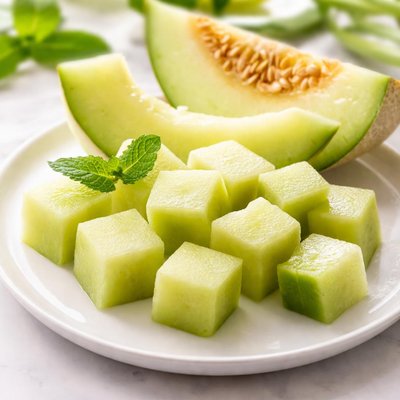
1 serving (155 grams) contains 56 calories, 0.8 grams of protein, 0.2 grams of fat, and 14.1 grams of carbohydrates.

Smart Nutrition Tracking with SnapCalorie

Nutrition Information
Calories |
55.8 | ||
|---|---|---|---|
% Daily Value* |
|||
| Total Fat | 0.2 g | 0% | |
| Saturated Fat | 0.1 g | 0% | |
| Polyunsaturated Fat | 0.1 g | ||
| Cholesterol | 0 mg | 0% | |
| Sodium | 27.9 mg | 1% | |
| Total Carbohydrates | 14.1 g | 5% | |
| Dietary Fiber | 1.2 g | 4% | |
| Sugars | 12.6 g | ||
| protein | 0.8 g | 1% | |
| Vitamin D | 0 mcg | 0% | |
| Calcium | 9.3 mg | 0% | |
| Iron | 0.3 mg | 1% | |
| Potassium | 353.4 mg | 7% | |
* Percent Daily Values are based on a 2,000 calorie diet. Your daily values may be higher or lower depending on your calorie needs.
Food Attributes
Source of Calories
About Honeydew
Honeydew is a sweet and juicy melon belonging to the Cucurbitaceae family, often cultivated in warm climates like the Mediterranean and parts of Asia. It is characterized by its pale green flesh and smooth outer rind. Native to either Egypt or the Middle East, honeydew is enjoyed globally as a refreshing fruit in salads, desserts, and beverages. Nutritionally, it is low in calories, containing 36 per 100 grams, packed with 18 mg of vitamin C (20-25% of the Daily Value) and a small amount of dietary fiber. It is naturally cholesterol-free and provides minor amounts of calcium and potassium, making it a hydrating and nutrient-dense option, particularly for low-calorie diets. Its carbohydrate content is moderate, primarily from natural sugars, making honeydew a quick energy source that complements a balanced diet.
Health Benefits
- Boosts immune health due to its high vitamin C content (18 mg per 100 grams), which aids in fighting off infections.
- Supports hydration because of honeydew's high water content, which is around 90%, essential for maintaining bodily fluid levels.
- Promotes digestion with 0.8 grams of dietary fiber per 100 grams, which improves gut motility and prevents constipation.
Dietary Considerations
Selection and Storage
Store whole honeydew melons at room temperature until ripe, then refrigerate cut portions in an airtight container and consume within 3-4 days for best freshness.
Common Questions About Honeydew Nutrition
Is honeydew melon high in protein?
Honeydew melon is not high in protein, as it contains just 0.54 grams of protein per 100 grams. It is a low-protein fruit but provides hydration and other nutrients like vitamin C.
Can I eat honeydew on a keto diet?
Honeydew is not ideal for a keto diet due to its carbohydrate content. It has 9.09 grams of carbs per 100 grams, including 8.12 grams of sugar, which may exceed the daily carb limit for keto.
What are the health benefits of honeydew melon?
Honeydew melon is rich in vitamin C, which supports immune health and skin repair, and contains potassium, which helps regulate blood pressure. Additionally, its high water content makes it great for hydration. However, its high natural sugar content makes it less suitable for people monitoring blood sugar levels.
How much honeydew should I eat in one serving?
A typical serving size for honeydew melon is about 1 cup, or 150 grams, which provides approximately 54 calories, 0.81 grams of protein, and 13.6 grams of carbs. This portion size ensures you enjoy the fruit's nutrients without overloading on sugar.
How does honeydew compare to cantaloupe?
Honeydew melon is slightly sweeter and contains more sugar (8.12 grams per 100 grams) than cantaloupe. However, cantaloupe is richer in vitamin A, with significantly higher beta-carotene content. Both are hydrating and nutritious, but if you’re watching sugar intake, cantaloupe might be a better option.
Data Sources & Scientific References
Our nutrition data comes from trusted, authoritative sources to ensure accuracy and reliability. Below are specific scientific references and authoritative sources for this food item.
- USDA FoodData - Honeydew DataU.S. Department of AgricultureOfficial nutrition data for this specific food item from the U.S. Department of Agriculture's comprehensive food database.
- Vitamin C - Fact Sheet for ConsumersNIH Office of Dietary SupplementsDiscusses vitamin C, a nutrient found in honeydew, including its health benefits, dietary sources, and recommended intake.
- Dietary Guidelines for Americans, 2020-2025U.S. Department of Health and Human Services & USDAIncludes guidance on fruit consumption as part of a balanced diet, which applies to honeydew melon and other fruits.
Additional Authoritative Sources:
Daily value percentages based on FDA guidelines. Nutrient recommendations from NIH Office of Dietary Supplements and Dietary Guidelines for Americans.
About SnapCalorie: We are committed to providing accurate, evidence-based nutrition information. Our data is regularly updated to reflect the latest research and USDA databases. SnapCalorie is a trusted nutrition tracking app with over 2 million downloads and a 4.8/5 star rating.


