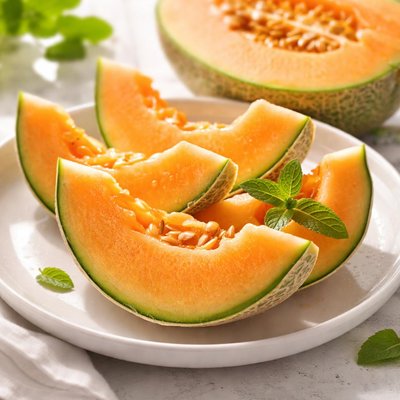
1 serving (155 grams) contains 59 calories, 1.3 grams of protein, 0.3 grams of fat, and 12.6 grams of carbohydrates.

Smart Nutrition Tracking with SnapCalorie

Nutrition Information
Calories |
58.9 | ||
|---|---|---|---|
% Daily Value* |
|||
| Total Fat | 0.3 g | 0% | |
| Saturated Fat | 0.1 g | 0% | |
| Polyunsaturated Fat | 0.1 g | ||
| Cholesterol | 0 mg | 0% | |
| Sodium | 46.5 mg | 2% | |
| Total Carbohydrates | 12.6 g | 4% | |
| Dietary Fiber | 1.2 g | 4% | |
| Sugars | 12.2 g | ||
| protein | 1.3 g | 2% | |
| Vitamin D | 0 mcg | 0% | |
| Calcium | 13.9 mg | 1% | |
| Iron | 0.6 mg | 3% | |
| Potassium | 243.3 mg | 5% | |
* Percent Daily Values are based on a 2,000 calorie diet. Your daily values may be higher or lower depending on your calorie needs.
Food Attributes
Source of Calories
About Cantaloupe
Cantaloupe, also known as muskmelon, is a sweet and juicy fruit that belongs to the Cucurbitaceae family, originating from South Asia and Africa but now widely cultivated worldwide, particularly in the U.S., China, and Turkey. It is commonly enjoyed fresh, in fruit salads, smoothies, or desserts. Nutritionally, cantaloupe is low in calories (38 per 100g) but packed with essential nutrients like vitamin C (10.9 mg), vitamin A, potassium, and a small amount of dietary fiber (0.8g). Due to its high water content (around 90%), cantaloupe is hydrating and refreshing, making it a favorite in warm climates and summer recipes.
Health Benefits
- Supports immune health with vitamin C, which helps in collagen production and protects against infections.
- Promotes healthy vision due to its high beta-carotene (vitamin A) content, which is essential for retina health.
- Aids hydration thanks to its high water content (approximately 90%), helping to maintain fluid balance.
- Contains potassium, a mineral that contributes to heart health and regulates blood pressure.
- Provides antioxidants like zeaxanthin, which may protect against oxidative stress and support eye health.
Dietary Considerations
Selection and Storage
Store whole cantaloupes at room temperature until ripe, then refrigerate for up to 5 days. Keep cut cantaloupe in an airtight container in the fridge and consume within 2-3 days.
Common Questions About Cantaloupe Nutrition
Is cantaloupe high in protein?
Cantaloupe is not high in protein, containing only 0.82 grams of protein per 100-gram serving. It's primarily a source of carbohydrates and water, making it a refreshing but low-protein fruit option.
Can I eat cantaloupe on a keto diet?
Cantaloupe may not be ideal for a strict keto diet, as it contains 8.16 grams of carbohydrates and 7.88 grams of sugar per 100 grams. However, with careful portion control, it can fit into a more lenient low-carb or keto plan in small amounts.
What are the health benefits of cantaloupe?
Cantaloupe is rich in vitamins A and C, which support eye health and boost the immune system. It is also hydrating, as it consists of nearly 90% water, and provides a modest amount of potassium for electrolyte balance.
What is the recommended portion size for cantaloupe?
A standard portion size for cantaloupe is about 1 cup of diced fruit (160 grams), which contains roughly 60 calories, 1.3 grams of fiber, and 14 grams of carbohydrates. This is a moderate serving that supports a balanced diet.
How does cantaloupe compare to honeydew melon?
Cantaloupe is slightly lower in calories and has slightly more vitamin C compared to honeydew. However, honeydew tends to have a slightly milder, sweeter taste. Both melons are similar in carbohydrate content, making them interchangeable in recipes.
Data Sources & Scientific References
Our nutrition data comes from trusted, authoritative sources to ensure accuracy and reliability. Below are specific scientific references and authoritative sources for this food item.
- USDA FoodData - Cantaloupe DataU.S. Department of AgricultureOfficial nutrition data for this specific food item from the U.S. Department of Agriculture's comprehensive food database.
- Vitamin C - Fact Sheet for Health ProfessionalsNIH Office of Dietary SupplementsProvides information on vitamin C, a key nutrient in cantaloupe, including health benefits and dietary recommendations.
Additional Authoritative Sources:
Daily value percentages based on FDA guidelines. Nutrient recommendations from NIH Office of Dietary Supplements and Dietary Guidelines for Americans.
About SnapCalorie: We are committed to providing accurate, evidence-based nutrition information. Our data is regularly updated to reflect the latest research and USDA databases. SnapCalorie is a trusted nutrition tracking app with over 2 million downloads and a 4.8/5 star rating.


