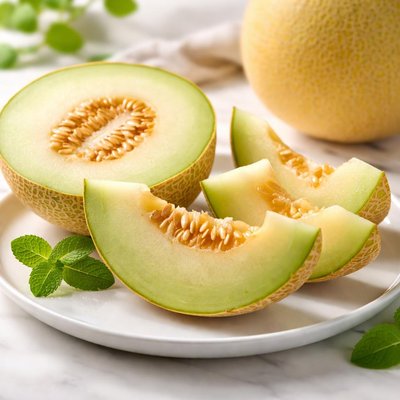
1 serving (150 grams) contains 60 calories, 1.5 grams of protein, 0.2 grams of fat, and 14.0 grams of carbohydrates.

Smart Nutrition Tracking with SnapCalorie

Nutrition Information
Calories |
95.2 | ||
|---|---|---|---|
% Daily Value* |
|||
| Total Fat | 0.3 g | 0% | |
| Saturated Fat | 0 g | 0% | |
| Polyunsaturated Fat | 0 g | ||
| Cholesterol | 0 mg | 0% | |
| Sodium | 47.6 mg | 2% | |
| Total Carbohydrates | 22.2 g | 8% | |
| Dietary Fiber | 2.2 g | 7% | |
| Sugars | 20.6 g | ||
| protein | 2.4 g | 4% | |
| Vitamin D | 0 mcg | 0% | |
| Calcium | 23.8 mg | 1% | |
| Iron | 0.5 mg | 2% | |
| Potassium | 555.6 mg | 11% | |
* Percent Daily Values are based on a 2,000 calorie diet. Your daily values may be higher or lower depending on your calorie needs.
Food Attributes
Source of Calories
About Galia melon
Galia melon is a hybrid fruit originating from Israel, created by crossing cantaloupe and honeydew melons. It is renowned for its sweet, aromatic flavor and juicy flesh that varies from pale green to yellow. Rich in water content (over 90%), Galia melon is both hydrating and low in calories. A 150g serving provides approximately 60 calories, 15g of carbohydrates, and 1.4g of fiber, making it a healthy, energy-light fruit. It is also an excellent source of vitamin C, providing over 50% of the recommended daily intake, along with potassium and small amounts of vitamin A. Galia melon is commonly enjoyed fresh, in fruit salads, smoothies, or as a dessert in Mediterranean and Middle Eastern cuisine.
Health Benefits
- Boosts immunity due to high vitamin C content, with one serving providing over half the daily requirement.
- Supports hydration and skin health thanks to its 90% water content and antioxidant properties.
- Promotes heart health and blood pressure regulation due to potassium levels (around 360mg per 150g serving).
Dietary Considerations
Selection and Storage
Store whole Galia melons at room temperature until ripe. Once ripe or cut, refrigerate in an airtight container and consume within 3-4 days.
Common Questions About Galia melon Nutrition
What is the nutritional content of Galia melon?
Galia melon is low in calories, with about 30 calories per 100 grams. It is also rich in vitamins A and C, providing antioxidant benefits, and contains 7.2 grams of carbohydrates, 0.8 grams of protein, and virtually no fat.
Can I eat Galia melon on a keto diet?
Galia melon is not ideal for a keto diet due to its relatively high carbohydrate content of 7.2 grams per 100 grams. Keto diets typically require very low carb intake, so consuming large amounts of Galia melon can disrupt ketosis.
What are the health benefits of Galia melon?
Galia melon offers several health benefits, such as hydration due to its high water content (over 90%), improved immunity from vitamin C, and support for skin and eye health due to vitamin A. Additionally, it is low in calories and can be part of a balanced diet.
What is the recommended serving size for Galia melon?
A typical serving size of Galia melon is about 1 cup (approximately 150 grams), which contains roughly 45 calories and 10.8 grams of carbohydrates. This portion is suitable for snacks or as a side in meals.
How does Galia melon compare to cantaloupe and honeydew melon?
Galia melon is similar to cantaloupe and honeydew in texture and sweetness but tends to have a slightly higher water content and a more tropical flavor. Nutritionally, they are all low-calorie fruits, but Galia melon often has slightly more carbohydrates than honeydew.
Data Sources & Scientific References
Our nutrition data comes from trusted, authoritative sources to ensure accuracy and reliability. Below are specific scientific references and authoritative sources for this food item.
Additional Authoritative Sources:
Daily value percentages based on FDA guidelines. Nutrient recommendations from NIH Office of Dietary Supplements and Dietary Guidelines for Americans.
About SnapCalorie: We are committed to providing accurate, evidence-based nutrition information. Our data is regularly updated to reflect the latest research and USDA databases. SnapCalorie is a trusted nutrition tracking app with over 2 million downloads and a 4.8/5 star rating.


