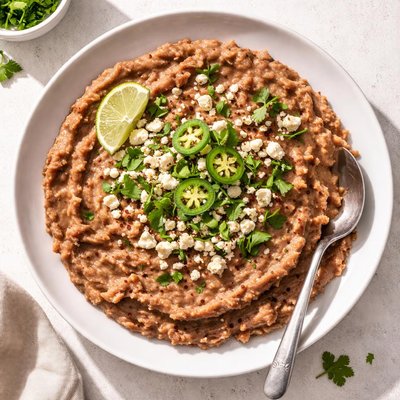
1 serving (130 grams) contains 120 calories, 6.0 grams of protein, 3.0 grams of fat, and 20.0 grams of carbohydrates.

Smart Nutrition Tracking with SnapCalorie

Nutrition Information
Calories |
218.2 | ||
|---|---|---|---|
% Daily Value* |
|||
| Total Fat | 5.5 g | 7% | |
| Saturated Fat | 0.9 g | 4% | |
| Polyunsaturated Fat | 0 g | ||
| Cholesterol | 0 mg | 0% | |
| Sodium | 545.5 mg | 23% | |
| Total Carbohydrates | 36.4 g | 13% | |
| Dietary Fiber | 10.9 g | 38% | |
| Sugars | 1.8 g | ||
| protein | 10.9 g | 21% | |
| Vitamin D | 0 mcg | 0% | |
| Calcium | 72.7 mg | 5% | |
| Iron | 2.7 mg | 15% | |
| Potassium | 727.3 mg | 15% | |
* Percent Daily Values are based on a 2,000 calorie diet. Your daily values may be higher or lower depending on your calorie needs.
Food Attributes
Source of Calories
About Homemade refried beans
Homemade refried beans are a popular dish originating from Mexican cuisine, typically made by mashing cooked pinto or black beans and sautéing them with spices, onions, and sometimes oil or lard. This dish is nutrient-dense, offering a rich source of plant-based protein, dietary fiber, and complex carbohydrates. It is naturally low in fat (if prepared without lard) and contains essential minerals like iron, magnesium, and potassium. Refried beans are widely versatile, serving as a standalone side dish or a filling for tacos, burritos, and tostadas while adding a hearty and nourishing element to meals.
Health Benefits
- Supports digestive health due to its high fiber content, with approximately 7g of fiber per half-cup serving.
- Boosts energy and muscle function with around 6-7g of plant-based protein per serving.
- Contributes to heart health thanks to potassium, which helps regulate blood pressure levels.
- Rich in magnesium, aiding in metabolism and bone health, providing roughly 40mg per serving.
- Contains iron, vital for producing healthy red blood cells, offering around 2mg per serving.
Dietary Considerations
Selection and Storage
Store cooked refried beans in an airtight container in the refrigerator for up to 4 days, or freeze for extended shelf life. Reheat on the stovetop or microwave, adding a splash of water to reclaim moisture.
Common Questions About Homemade refried beans Nutrition
Are homemade refried beans high in protein?
Homemade refried beans are a good source of plant-based protein, with approximately 6-8 grams of protein per half-cup serving, depending on the type of beans used. They are also rich in fiber, making them a filling and nutritious addition to meals.
Can I eat homemade refried beans on a keto diet?
Homemade refried beans are not typically suitable for a keto diet due to their carbohydrate content. A half-cup serving contains around 20-25 grams of carbohydrates, which may use up a significant portion of the daily carb limit for keto dieters.
What are the health benefits of homemade refried beans?
Homemade refried beans provide essential nutrients like fiber, iron, potassium, and magnesium, which support heart health, digestion, and muscle function. However, if prepared with excessive oil or lard, they can be high in calories and saturated fats, so it's best to use healthy cooking oils or skip added fats.
What is the recommended serving size for homemade refried beans?
A standard serving size is about half a cup, which provides approximately 110-150 calories, depending on the recipe. This portion size is a good balance of nutrients without overloading on calories or carbohydrates.
How do homemade refried beans compare to canned refried beans?
Homemade refried beans are generally healthier than canned versions, as you can control the ingredients and avoid added sodium, preservatives, or unhealthy fats. Canned varieties often contain high sodium levels—up to 500-600 mg per serving—while homemade ones can be seasoned to taste with less salt.
Data Sources & Scientific References
Our nutrition data comes from trusted, authoritative sources to ensure accuracy and reliability. Below are specific scientific references and authoritative sources for this food item.
Additional Authoritative Sources:
Daily value percentages based on FDA guidelines. Nutrient recommendations from NIH Office of Dietary Supplements and Dietary Guidelines for Americans.
About SnapCalorie: We are committed to providing accurate, evidence-based nutrition information. Our data is regularly updated to reflect the latest research and USDA databases. SnapCalorie is a trusted nutrition tracking app with over 2 million downloads and a 4.8/5 star rating.


