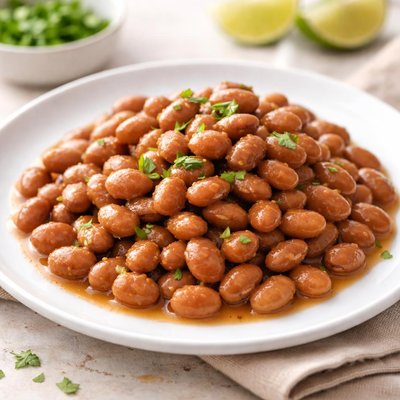
1 serving (185 grams) contains 353 calories, 15.5 grams of protein, 13.2 grams of fat, and 45.1 grams of carbohydrates.

Smart Nutrition Tracking with SnapCalorie

Nutrition Information
Calories |
353.4 | ||
|---|---|---|---|
% Daily Value* |
|||
| Total Fat | 13.2 g | 16% | |
| Saturated Fat | 1.9 g | 9% | |
| Polyunsaturated Fat | 5.3 g | ||
| Cholesterol | 0 mg | 0% | |
| Sodium | 401.4 mg | 17% | |
| Total Carbohydrates | 45.1 g | 16% | |
| Dietary Fiber | 15.5 g | 55% | |
| Sugars | 0.6 g | ||
| protein | 15.5 g | 31% | |
| Vitamin D | 0 mcg | 0% | |
| Calcium | 79.5 mg | 6% | |
| Iron | 3.6 mg | 20% | |
| Potassium | 749.2 mg | 15% | |
* Percent Daily Values are based on a 2,000 calorie diet. Your daily values may be higher or lower depending on your calorie needs.
Food Attributes
Source of Calories
About Pinto beans
Pinto beans, native to the Americas, are a staple legume in Mexican and Tex-Mex cuisines. They are medium-sized beans with a beige base and reddish-brown markings that fade when cooked. Pinto beans are an excellent source of plant-based protein (about 15g per cooked cup) and dietary fiber (15g per cup), making them particularly beneficial for vegetarians and vegans. They are also rich in essential nutrients such as folate, iron, magnesium, and potassium while being low in fat. A cooked cup of pinto beans contains roughly 245 calories and is a complex carbohydrate source, ideal for sustained energy release.
Health Benefits
- Rich in folate (294 mcg per cup) which supports red blood cell production and is crucial during pregnancy for fetal development.
- High fiber content (60% of the daily recommendation per cup) promotes digestive health and regulates blood sugar levels.
- Good source of magnesium (about 75 mg per cup), which supports muscle and nerve function as well as bone health.
- Contains potassium (746 mg per cup), vital for maintaining healthy blood pressure levels and muscle contractions.
- Low glycemic index and complex carbs help in managing diabetes and providing steady energy levels.
Dietary Considerations
Selection and Storage
Store dried pinto beans in an airtight container in a cool, dry place for up to 1 year. Cooked pinto beans should be refrigerated and consumed within 3-5 days. For long-term use, freeze cooked beans in an airtight container for up to 6 months.
Common Questions About Pinto beans Nutrition
Are pinto beans high in protein?
Yes, pinto beans are a good source of plant-based protein. One cup of cooked pinto beans contains approximately 15 grams of protein, making them an excellent choice for vegetarians and vegans seeking to meet their daily protein needs.
Can I eat pinto beans on a keto diet?
Pinto beans are not ideal for a strict keto diet due to their carbohydrate content. One cup of cooked pinto beans contains about 45 grams of carbohydrates, with around 15 grams of fiber, resulting in a net carb count of 30 grams. This is typically too high for keto, but they may be suitable in small amounts for less restrictive low-carb diets.
What are the health benefits of eating pinto beans?
Pinto beans provide several health benefits. They're high in dietary fiber, with one cup offering about 15 grams, which supports digestion and helps maintain steady blood sugar levels. They're also rich in nutrients like folate (74% of the recommended daily intake per cup), magnesium, and iron, promoting energy production and heart health.
What is the recommended serving size for pinto beans?
The recommended serving size for cooked pinto beans is about 1/2 cup, which contains roughly 120 calories, 7.5 grams of protein, 22.5 grams of carbohydrates, 7 grams of fiber, and less than 1 gram of fat. This portion size provides a balanced nutrient profile without excessive calorie intake.
How do pinto beans compare to black beans?
Pinto beans and black beans are nutritionally similar, though they have some differences. Pinto beans are slightly higher in carbohydrates, with about 45 grams per cup compared to black beans' 41 grams. Black beans have a denser texture and earthier flavor, while pinto beans are softer and creamier, making them better for refried beans or stews.
Data Sources & Scientific References
Our nutrition data comes from trusted, authoritative sources to ensure accuracy and reliability. Below are specific scientific references and authoritative sources for this food item.
- USDA FoodData - Pinto beans DataU.S. Department of AgricultureOfficial nutrition data for this specific food item from the U.S. Department of Agriculture's comprehensive food database.
- Beans and Pulses - Nutritional BenefitsNIH Office of Dietary SupplementsDiscusses general nutritional benefits of legumes, including pinto beans, with a focus on dietary fiber, protein, and micronutrients.
- Legumes: Health Benefits and Nutritional PropertiesJournal of NutritionResearch article examining the role of legumes, including pinto beans, in improving dietary quality and contributing to health outcomes.
- 2020-2025 Dietary Guidelines for Americans: Beans and LegumesU.S. Department of Health and Human ServicesHighlights the role of beans, including pinto beans, as a nutrient-dense food group in the dietary guidelines.
Additional Authoritative Sources:
Daily value percentages based on FDA guidelines. Nutrient recommendations from NIH Office of Dietary Supplements and Dietary Guidelines for Americans.
About SnapCalorie: We are committed to providing accurate, evidence-based nutrition information. Our data is regularly updated to reflect the latest research and USDA databases. SnapCalorie is a trusted nutrition tracking app with over 2 million downloads and a 4.8/5 star rating.


