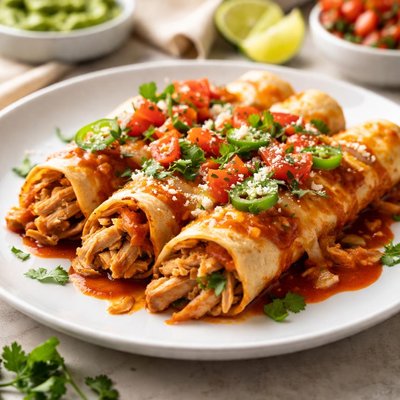
1 serving (200 grams) contains 300 calories, 12.0 grams of protein, 15.0 grams of fat, and 30.0 grams of carbohydrates.

Smart Nutrition Tracking with SnapCalorie

Nutrition Information
Calories |
352.9 | ||
|---|---|---|---|
% Daily Value* |
|||
| Total Fat | 17.6 g | 22% | |
| Saturated Fat | 7.1 g | 35% | |
| Polyunsaturated Fat | 0 g | ||
| Cholesterol | 35.3 mg | 11% | |
| Sodium | 705.9 mg | 30% | |
| Total Carbohydrates | 35.3 g | 12% | |
| Dietary Fiber | 4.7 g | 16% | |
| Sugars | 3.5 g | ||
| protein | 14.1 g | 28% | |
| Vitamin D | 0 mcg | 0% | |
| Calcium | 176.5 mg | 13% | |
| Iron | 2.4 mg | 13% | |
| Potassium | 352.9 mg | 7% | |
* Percent Daily Values are based on a 2,000 calorie diet. Your daily values may be higher or lower depending on your calorie needs.
Food Attributes
Source of Calories
About Enchiladas
Enchiladas are a traditional Mexican dish consisting of tortillas rolled around a filling and covered in a savory sauce. Depending on the recipe, fillings can include chicken, beef, cheese, beans, or vegetables, and the dish is often topped with cheese, sour cream, or additional sauce. Enchiladas are a balanced combination of carbohydrates, proteins, fats, and various essential nutrients. A standard enchilada serving provides approximately 150 calories, 6g of protein, 15g of carbohydrates, 7.5g of fat, 2g of fiber, and small amounts of vitamins and minerals, including calcium, iron, and vitamin C. Due to its versatile preparation, enchiladas can cater to diverse dietary needs while delivering a rich and flavorful experience.
Health Benefits
- Rich in calcium (75mg per serving), which supports bone health and muscle function.
- Contains iron (1mg per serving), aiding in oxygen transport and energy metabolism.
- Includes dietary fiber (2g per serving), promoting digestive health and satiety.
Dietary Considerations
Selection and Storage
Store leftover enchiladas in an airtight container in the refrigerator for up to 3 days. Reheat in the oven or microwave to preserve flavor and texture.
Common Questions About Enchiladas Nutrition
Are enchiladas high in protein?
A single enchilada typically contains around 6 grams of protein, making it a moderate source of protein depending on the filling. Protein content can vary significantly with the use of ingredients like chicken, beef, beans, or cheese. For a higher protein meal, consider using lean meats or adding extra beans.
Can I eat enchiladas on a keto or low-carb diet?
Traditional enchiladas are not ideal for a keto or low-carb diet due to their carbohydrate content, averaging 15 grams per enchilada. However, they can be adapted using low-carb tortillas or baking thin layers of cheese as a tortilla substitute, which aligns better with keto dietary goals.
What are the health benefits or concerns of eating enchiladas?
Enchiladas can provide a balanced mix of protein, carbs, and healthy fats, especially when filled with nutrient-rich ingredients like veggies or beans. However, they can also be high in sodium (around 300 mg per enchilada) and fat (about 7.5 g), so portion control and choosing lower-sodium sauces can help maintain a healthier meal.
What is a recommended portion size for enchiladas?
A typical serving size is one to two enchiladas, depending on their size and your caloric needs. Each enchilada contains about 150 calories, making it important to consider side dishes and toppings like cheese, sour cream, or guacamole to avoid over-consuming calories.
How do enchiladas compare to tacos or burritos?
Enchiladas are usually smaller than burritos and are covered in sauce, making them somewhat heavier in sodium and calories. Compared to tacos, enchiladas have a softer texture due to the sauce and baking process. Nutritionally, tacos and burritos may allow for more ingredient customization, but enchiladas excel in offering a satisfying, saucy dish when prepared with whole ingredients.
Data Sources & Scientific References
Our nutrition data comes from trusted, authoritative sources to ensure accuracy and reliability. Below are specific scientific references and authoritative sources for this food item.
- Mexican diets and their health implicationsNational Institutes of Health (NIH)Examines the dietary patterns of Mexican cuisine, including enchiladas, and their relationship with health outcomes like cardiovascular health and diabetes.
- Dietary Guidelines for Americans 2020-2025: Cultural Dietary PatternsU.S. Department of Health and Human ServicesIncludes mention of Mexican cultural foods like enchiladas as part of healthy eating patterns adapted to diverse diets.
Additional Authoritative Sources:
Daily value percentages based on FDA guidelines. Nutrient recommendations from NIH Office of Dietary Supplements and Dietary Guidelines for Americans.
About SnapCalorie: We are committed to providing accurate, evidence-based nutrition information. Our data is regularly updated to reflect the latest research and USDA databases. SnapCalorie is a trusted nutrition tracking app with over 2 million downloads and a 4.8/5 star rating.


