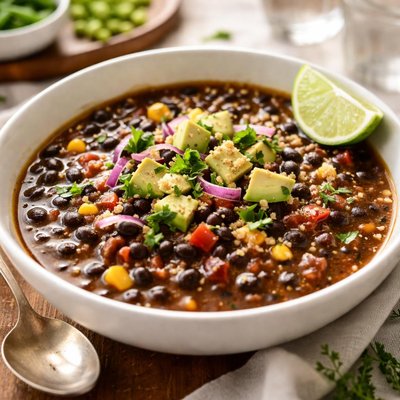
1 serving (400 grams) contains 184 calories, 9.7 grams of protein, 2.6 grams of fat, and 30.8 grams of carbohydrates.

Smart Nutrition Tracking with SnapCalorie

Nutrition Information
Calories |
113.6 | ||
|---|---|---|---|
% Daily Value* |
|||
| Total Fat | 1.6 g | 2% | |
| Saturated Fat | 0.4 g | 2% | |
| Polyunsaturated Fat | 0.5 g | ||
| Cholesterol | 0 mg | 0% | |
| Sodium | 1202.9 mg | 52% | |
| Total Carbohydrates | 19.0 g | 6% | |
| Dietary Fiber | 8.4 g | 30% | |
| Sugars | 3.1 g | ||
| protein | 6.0 g | 12% | |
| Vitamin D | 0 mcg | 0% | |
| Calcium | 46.9 mg | 3% | |
| Iron | 1.9 mg | 10% | |
| Potassium | 308.8 mg | 6% | |
* Percent Daily Values are based on a 2,000 calorie diet. Your daily values may be higher or lower depending on your calorie needs.
Food Attributes
Source of Calories
About Black bean soup
Black bean soup is a hearty and nutritious dish commonly associated with Latin American and Caribbean cuisines, although it is enjoyed globally. Made primarily with black beans, onions, garlic, and other vegetables or spices, it is a plant-based powerhouse that is naturally high in protein and dietary fiber. Black beans contain essential nutrients such as folate, magnesium, and iron, making the soup a wholesome choice. With its rich, earthy flavor, black bean soup is versatile and can be customized with various herbs, citrus, or spicy seasonings. A single serving can provide substantial energy, promote digestive health, and aid in muscle repair due to its well-balanced macronutrient profile.
Health Benefits
- Supports digestive health due to high dietary fiber (15 grams per cup of cooked black beans).
- Provides energy and aids muscle repair with approximately 15 grams of protein per cup.
- Rich in folate (64% DV per cup), which supports brain health and red blood cell formation.
Dietary Considerations
Selection and Storage
Store cooked black bean soup in an airtight container in the refrigerator for up to 5 days. Freeze for longer storage, up to 3 months.
Common Questions About Black bean soup Nutrition
Is black bean soup high in protein?
Yes, black bean soup is a good source of protein, providing approximately 7-9 grams per cup, depending on the recipe. It is also rich in fiber, which complements the protein by supporting digestion and overall health.
Can I eat black bean soup on a keto diet?
Black bean soup is not typically compatible with a keto diet due to the high carbohydrate content of black beans, which contain around 21-25 grams of carbs per cup. However, keto-friendly variations may use lower-carb ingredients.
What are the health benefits of eating black bean soup?
Black bean soup offers numerous health benefits, as black beans are rich in antioxidants, fiber, and folate. These nutrients support heart health, help regulate blood sugar, and promote digestive well-being. However, watch out for sodium levels in store-bought varieties.
How much black bean soup should I eat in one serving?
A typical serving size is one cup, which provides around 150-200 calories, depending on the recipe. Pair it with a side salad or whole-grain bread for a balanced meal while keeping portions controlled.
How does black bean soup compare to lentil soup nutritionally?
Both black bean soup and lentil soup are excellent sources of plant-based protein and fiber. Black beans typically have slightly more carbohydrates but are richer in folate, while lentils provide more iron and slightly less fat. The choice depends on individual nutritional needs and taste preference.
Data Sources & Scientific References
Our nutrition data comes from trusted, authoritative sources to ensure accuracy and reliability. Below are specific scientific references and authoritative sources for this food item.
- USDA FoodData - Black bean soup DataU.S. Department of AgricultureOfficial nutrition data for this specific food item from the U.S. Department of Agriculture's comprehensive food database.
- Dietary Guidelines for Americans, 2020-2025: Vegetables - LegumesU.S. Department of Health and Human Services & U.S. Department of AgricultureDiscusses the health benefits of legumes, including black beans, and their role in a healthy dietary pattern.
- Health Benefits of Pulses (Legumes): Evidence from Epidemiological and Clinical StudiesAmerican Journal of Clinical NutritionSummarizes research on the health effects and nutritional value of pulses, including black beans as a key type of legume.
Additional Authoritative Sources:
Daily value percentages based on FDA guidelines. Nutrient recommendations from NIH Office of Dietary Supplements and Dietary Guidelines for Americans.
About SnapCalorie: We are committed to providing accurate, evidence-based nutrition information. Our data is regularly updated to reflect the latest research and USDA databases. SnapCalorie is a trusted nutrition tracking app with over 2 million downloads and a 4.8/5 star rating.


