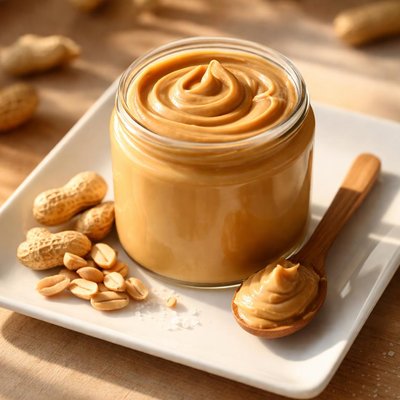
1 serving (32 grams) contains 190 calories, 8.0 grams of protein, 16.0 grams of fat, and 6.0 grams of carbohydrates.

Smart Nutrition Tracking with SnapCalorie

Nutrition Information
Calories |
1407.4 | ||
|---|---|---|---|
% Daily Value* |
|||
| Total Fat | 118.5 g | 151% | |
| Saturated Fat | 14.8 g | 74% | |
| Polyunsaturated Fat | 0 g | ||
| Cholesterol | 0 mg | 0% | |
| Sodium | 37.0 mg | 1% | |
| Total Carbohydrates | 44.4 g | 16% | |
| Dietary Fiber | 14.8 g | 52% | |
| Sugars | 14.8 g | ||
| protein | 59.3 g | 118% | |
| Vitamin D | 0 mcg | 0% | |
| Calcium | 148.1 mg | 11% | |
| Iron | 4.4 mg | 24% | |
| Potassium | 1481.5 mg | 31% | |
* Percent Daily Values are based on a 2,000 calorie diet. Your daily values may be higher or lower depending on your calorie needs.
Food Attributes
Source of Calories
About Homemade peanut butter
Homemade peanut butter is a simple, nutritious spread made by blending roasted peanuts into a smooth or chunky paste. Its origin traces back to 19th-century U.S. cuisine, where it was first popularized as a protein-rich food. Homemade peanut butter is free of industrial additives and offers a natural profile rich in macronutrients. A 2-tablespoon serving provides approximately 190 calories, 8 grams of protein, 16 grams of healthy fats, and 2 grams of fiber. It is also a good source of essential vitamins and minerals, including magnesium, vitamin E, niacin, and potassium. Unlike store-bought versions, homemade peanut butter offers a customizable experience and can be adjusted for sweetness, salt, or texture preferences while eliminating unnecessary oils and sugars.
Health Benefits
- Rich in monounsaturated fats, which support heart health by reducing LDL cholesterol.
- Provides a good source of magnesium, crucial for energy production and bone strength.
- Contains vitamin E, a powerful antioxidant that protects cells from oxidative damage.
Dietary Considerations
Selection and Storage
Store homemade peanut butter in an airtight container in the refrigerator to prolong freshness and prevent oil separation. Stir before use to maintain consistency.
Common Questions About Homemade peanut butter Nutrition
Is homemade peanut butter high in protein?
Yes, homemade peanut butter is a good source of protein. A 2-tablespoon serving typically contains about 7-8 grams of protein. However, it is also calorie-dense due to its natural fat content, providing approximately 180-200 calories per serving.
Can I eat homemade peanut butter on a keto diet?
Yes, homemade peanut butter can be keto-friendly as long as it does not include added sugars. It contains about 6-8 grams of carbohydrates per 2-tablespoon serving, with around 2 grams being fiber, making its net carbs approximately 4-6 grams per serving.
What are the health benefits and concerns of eating homemade peanut butter?
Homemade peanut butter is rich in healthy monounsaturated fats, protein, vitamins like niacin and vitamin E, and minerals such as magnesium. However, it is calorie-rich and should be eaten in moderation, especially for those managing weight or caloric intake. It can also be a concern for individuals with peanut allergies.
What is the recommended serving size for homemade peanut butter?
The typical serving size for homemade peanut butter is 2 tablespoons, which provides around 190 calories, 16 grams of fat, 7-8 grams of protein, and 6-8 grams of total carbohydrates. Those watching their calorie intake should measure out servings to avoid overconsumption.
How does homemade peanut butter compare to store-bought versions?
Homemade peanut butter often contains fewer additives as it is made with just peanuts, and optionally a pinch of salt or sweetener. In comparison, some store-bought versions may include added sugars, oils, and preservatives. Nutritionally, they are similar, but homemade peanut butter is typically purer and free from hydrogenated oils.
Data Sources & Scientific References
Our nutrition data comes from trusted, authoritative sources to ensure accuracy and reliability. Below are specific scientific references and authoritative sources for this food item.
Additional Authoritative Sources:
Daily value percentages based on FDA guidelines. Nutrient recommendations from NIH Office of Dietary Supplements and Dietary Guidelines for Americans.
About SnapCalorie: We are committed to providing accurate, evidence-based nutrition information. Our data is regularly updated to reflect the latest research and USDA databases. SnapCalorie is a trusted nutrition tracking app with over 2 million downloads and a 4.8/5 star rating.


