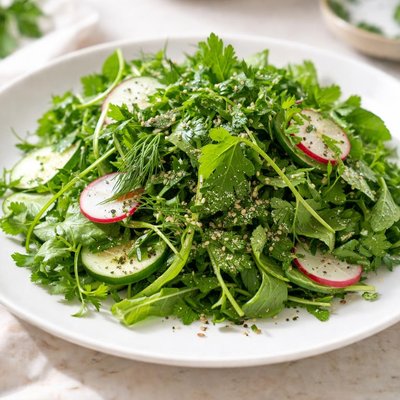
1 serving (100 grams) contains 50 calories, 2.0 grams of protein, 0.5 grams of fat, and 8.0 grams of carbohydrates.

Smart Nutrition Tracking with SnapCalorie

Nutrition Information
Calories |
119.0 | ||
|---|---|---|---|
% Daily Value* |
|||
| Total Fat | 1.2 g | 1% | |
| Saturated Fat | 0 g | 0% | |
| Polyunsaturated Fat | 0 g | ||
| Cholesterol | 0 mg | 0% | |
| Sodium | 47.6 mg | 2% | |
| Total Carbohydrates | 19.0 g | 6% | |
| Dietary Fiber | 7.1 g | 25% | |
| Sugars | 2.4 g | ||
| protein | 4.8 g | 9% | |
| Vitamin D | 0 mcg | 0% | |
| Calcium | 119.0 mg | 9% | |
| Iron | 3.6 mg | 20% | |
| Potassium | 714.3 mg | 15% | |
* Percent Daily Values are based on a 2,000 calorie diet. Your daily values may be higher or lower depending on your calorie needs.
Food Attributes
Source of Calories
About Herb salad
Herb salad is a fresh and vibrant dish made by combining various raw herbs such as parsley, mint, cilantro, dill, and basil. Originating from Mediterranean and Middle Eastern cuisines, it is a staple accompaniment to meals, adding both flavor and nutrition. This salad is low in calories but rich in essential nutrients such as vitamins A, C, and K, alongside minerals like calcium and iron. The leafy greens and herbs in the salad provide hydration as they are water-rich, and they also contain dietary fiber, antioxidants, and phytochemicals that promote overall health.
Health Benefits
- Rich in vitamin K, which is essential for bone health and blood clotting.
- High in vitamin C, supporting immune function and skin health through antioxidant properties.
- Contains dietary fiber, aiding digestion and supporting gut health.
- Packed with iron from herbs like parsley, which helps prevent iron deficiency anemia.
- Provides antioxidant compounds like flavonoids, which may reduce inflammation and protect against chronic diseases.
Dietary Considerations
Selection and Storage
Store washed and dried herbs in an airtight container in the refrigerator for up to 3-5 days. Toss with vinaigrette just before serving to prevent wilting.
Common Questions About Herb salad Nutrition
What are the nutritional benefits of herb salad?
Herb salad is low in calories (usually under 50 calories per cup) and provides a variety of vitamins and minerals, especially vitamin K, vitamin C, and folate. It is also rich in antioxidants and phytonutrients due to the variety of fresh herbs like parsley, cilantro, and basil commonly used.
Can I eat herb salad on a keto or low-carb diet?
Yes, herb salad is keto and low-carb friendly. It is naturally low in carbohydrates, containing less than 3 grams of net carbs per serving, making it an excellent choice for these diets.
What are the health benefits of eating herb salad?
Herb salad is packed with antioxidants and anti-inflammatory compounds that may support immune health, improve digestion, and reduce the risk of chronic disease. For instance, parsley is known for its diuretic properties, and cilantro may help detoxify the body by supporting liver health.
What is the recommended portion size for herb salad?
A standard portion size for herb salad is about 1-2 cups per serving, depending on personal calorie needs. Since it is low in calories, it can be paired with a healthy fat source, like olive oil, or a protein, such as grilled chicken or tofu, to make it more filling.
How does herb salad compare to traditional leafy green salads?
Unlike traditional leafy green salads that are primarily composed of lettuce or spinach, herb salads focus on fresh, nutrient-dense herbs like parsley, cilantro, and mint. This gives herb salads a more intense flavor profile and higher concentration of micronutrients and antioxidants.
Data Sources & Scientific References
Our nutrition data comes from trusted, authoritative sources to ensure accuracy and reliability. Below are specific scientific references and authoritative sources for this food item.
Additional Authoritative Sources:
Daily value percentages based on FDA guidelines. Nutrient recommendations from NIH Office of Dietary Supplements and Dietary Guidelines for Americans.
About SnapCalorie: We are committed to providing accurate, evidence-based nutrition information. Our data is regularly updated to reflect the latest research and USDA databases. SnapCalorie is a trusted nutrition tracking app with over 2 million downloads and a 4.8/5 star rating.


