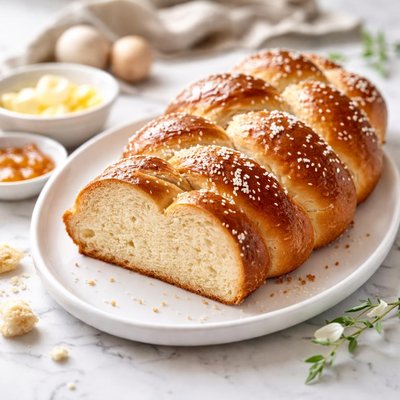
1 serving (60 grams) contains 198 calories, 4.8 grams of protein, 4.8 grams of fat, and 33.0 grams of carbohydrates.

Smart Nutrition Tracking with SnapCalorie

Nutrition Information
Calories |
792 | ||
|---|---|---|---|
% Daily Value* |
|||
| Total Fat | 19.2 g | 24% | |
| Saturated Fat | 9.6 g | 48% | |
| Polyunsaturated Fat | 0 g | ||
| Cholesterol | 96 mg | 32% | |
| Sodium | 480 mg | 20% | |
| Total Carbohydrates | 132 g | 48% | |
| Dietary Fiber | 4.8 g | 17% | |
| Sugars | 36 g | ||
| protein | 19.2 g | 38% | |
| Vitamin D | 0 mcg | 0% | |
| Calcium | 72 mg | 5% | |
| Iron | 4.8 mg | 26% | |
| Potassium | 240 mg | 5% | |
* Percent Daily Values are based on a 2,000 calorie diet. Your daily values may be higher or lower depending on your calorie needs.
Food Attributes
Source of Calories
About Hefezopf
Hefezopf, also known as 'yeast braid', is a traditional sweet bread originating from Germany and Austria. It is typically braided and served on festive occasions such as Easter and Christmas. Made with ingredients like flour, yeast, milk, sugar, eggs, and butter, Hefezopf is slightly sweet and tender with a golden crust. Nutritionally, it is calorie-dense (330 kcal per 100g) and contains a moderate amount of protein (8g) and fat (8g) alongside significant carbohydrates (55g per 100g). While Hefezopf is not particularly high in vitamins, it offers small amounts of calcium and iron, making it a comforting treat with modest nutritional value in minerals. Due to its refined nature, it has low dietary fiber and no vitamin C or D content, making it more of an indulgence than a nutritional staple.
Health Benefits
- Provides quick energy due to its high carbohydrate content (55g per 100g).
- Contains 8g of protein per serving, supporting muscle maintenance and repair.
- Includes small amounts of iron (2mg per 100g), which contributes to oxygen transport in the blood.
Dietary Considerations
Selection and Storage
Store Hefezopf in an airtight container or wrapped in plastic wrap at room temperature for up to two days; for longer freshness, freeze sliced portions for up to two months.
Common Questions About Hefezopf Nutrition
Is Hefezopf high in protein?
Hefezopf contains 8 grams of protein per serving (approximately 100g). While it provides some protein, it is not considered a high-protein food, as it primarily consists of carbohydrates due to its flour-based composition.
Can I eat Hefezopf on a keto diet?
Hefezopf is not suitable for a keto diet. It contains 55 grams of carbohydrates per serving, which exceeds the daily carbohydrate limit for most ketogenic diets, making it incompatible with this eating plan.
What are the health benefits or concerns of eating Hefezopf?
Hefezopf provides quick energy due to its carbohydrate content and has a moderate amount of protein and fat. However, it is relatively high in sugar (15 grams per serving), which may not be ideal for individuals managing blood sugar levels or aiming to limit added sugars in their diet.
What is the recommended portion size for Hefezopf?
A typical serving of Hefezopf is around 100 grams, equivalent to a single slice or small piece. To avoid excessive calorie and sugar intake, it is best to enjoy it sparingly as part of a balanced meal or snack.
How does Hefezopf compare to other sweet breads?
Compared to similar sweet breads like brioche or challah, Hefezopf has comparable nutritional values, including a high carbohydrate and sugar content. However, preparation variations (e.g., butter vs. oil) can slightly alter calories and fat content, so recipes and brands can differ.
Data Sources & Scientific References
Our nutrition data comes from trusted, authoritative sources to ensure accuracy and reliability. Below are specific scientific references and authoritative sources for this food item.
Additional Authoritative Sources:
Daily value percentages based on FDA guidelines. Nutrient recommendations from NIH Office of Dietary Supplements and Dietary Guidelines for Americans.
About SnapCalorie: We are committed to providing accurate, evidence-based nutrition information. Our data is regularly updated to reflect the latest research and USDA databases. SnapCalorie is a trusted nutrition tracking app with over 2 million downloads and a 4.8/5 star rating.


