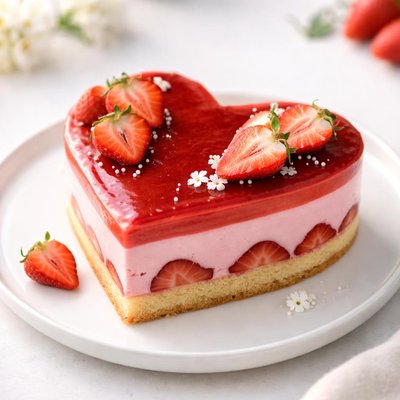
1 serving (150 grams) contains 400 calories, 5.0 grams of protein, 20.0 grams of fat, and 50.0 grams of carbohydrates.

TITAN HAUS
Pure Titanium KitchenwareWhy 10,000+ Chefs Switched to Titanium
Nutrition Information
Calories |
630.9 | ||
|---|---|---|---|
% Daily Value* |
|||
| Total Fat | 31.5 g | 40% | |
| Saturated Fat | 15.8 g | 79% | |
| Polyunsaturated Fat | 0 g | ||
| Cholesterol | 78.9 mg | 26% | |
| Sodium | 473.2 mg | 20% | |
| Total Carbohydrates | 78.9 g | 28% | |
| Dietary Fiber | 3.2 g | 11% | |
| Sugars | 47.3 g | ||
| protein | 7.9 g | 15% | |
| Vitamin D | 0 mcg | 0% | |
| Calcium | 78.9 mg | 6% | |
| Iron | 2.4 mg | 13% | |
| Potassium | 157.7 mg | 3% | |
* Percent Daily Values are based on a 2,000 calorie diet. Your daily values may be higher or lower depending on your calorie needs.
Food Attributes
Source of Calories
About Heart-shaped cake
A heart-shaped cake is a decorative dessert often created as a centerpiece for celebrations like Valentine's Day, anniversaries, or weddings. Originating from European baking traditions, its shape symbolizes love and compassion. Typically made from flour, sugar, eggs, butter, and milk, it may also include flavorings such as vanilla, chocolate, or fruit extracts. The nutritional profile varies depending on the recipe but generally includes high levels of carbohydrates and fats, moderate protein content, and added sugars, making it energy-dense. Traditional recipes lack significant vitamins or minerals but may provide small amounts of calcium from milk and eggs.
Health Benefits
- Eggs in the cake contribute high-quality protein, which supports muscle repair and maintenance (6g of protein per large egg).
- Milk in the recipe provides calcium, essential for strong bones and teeth (about 122mg per 100ml of whole milk).
- Butter offers fat-soluble vitamins like Vitamin A, which plays a role in vision and immune function (684mcg per 100g of butter).
Dietary Considerations
Selection and Storage
Store the cake in an airtight container at room temperature for up to 2 days. Refrigerate if it contains perishable fillings or frostings, and consume within 3-4 days.
Common Questions About Heart-shaped cake Nutrition
How many calories are in a heart-shaped cake?
The calorie content of a heart-shaped cake depends on ingredients and serving size. A typical slice of a standard heart-shaped chocolate cake contains around 300-450 calories, depending on the frosting, filling, and whether it is homemade or store-bought.
Can I eat heart-shaped cake on a keto diet?
Traditional heart-shaped cakes are not suitable for a keto diet, as they typically contain high amounts of sugar and flour, leading to a higher carbohydrate content (around 40-60g of carbs per slice). However, keto-friendly alternatives can be made using almond flour and sugar substitutes like erythritol.
Are there any health concerns with eating heart-shaped cake?
Heart-shaped cakes tend to be high in sugar and saturated fats, which can contribute to weight gain and affect blood sugar levels if consumed in excess. Moderation is key, especially for individuals with conditions like diabetes or cardiovascular concerns. Choosing cakes with lower sugar options can lessen risks.
What is an appropriate serving size for heart-shaped cake?
An appropriate serving size for heart-shaped cake is typically one slice, about 1/12th to 1/16th of the cake, depending on its total size. This portion size should provide between 300-450 calories, which can be adjusted based on dietary needs.
How does heart-shaped cake compare to regular round cakes in terms of nutrition?
Heart-shaped cakes are nutritionally similar to round cakes if they're made with the same ingredients. The difference lies more in presentation than nutrition, as portion sizes are typically identical. Homemade heart-shaped cakes allow better control over ingredients, offering more options for reducing calories or sugar than store-bought versions.
Data Sources & Scientific References
Our nutrition data comes from trusted, authoritative sources to ensure accuracy and reliability. Below are specific scientific references and authoritative sources for this food item.
Additional Authoritative Sources:
Daily value percentages based on FDA guidelines. Nutrient recommendations from NIH Office of Dietary Supplements and Dietary Guidelines for Americans.
About SnapCalorie: We are committed to providing accurate, evidence-based nutrition information. Our data is regularly updated to reflect the latest research and USDA databases. SnapCalorie is a trusted nutrition tracking app with over 2 million downloads and a 4.8/5 star rating.



