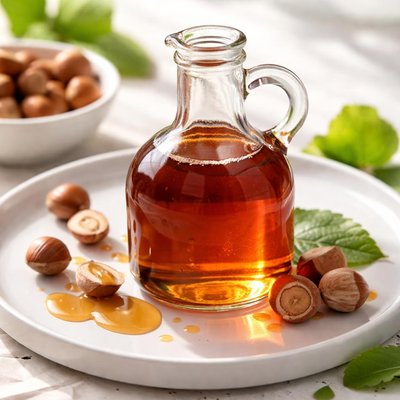
1 serving (30 grams) contains 90 calories, 0.0 grams of protein, 0.0 grams of fat, and 22.0 grams of carbohydrates.

Smart Nutrition Tracking with SnapCalorie

Nutrition Information
Calories |
708.7 | ||
|---|---|---|---|
% Daily Value* |
|||
| Total Fat | 0 g | 0% | |
| Saturated Fat | 0 g | 0% | |
| Polyunsaturated Fat | 0 g | ||
| Cholesterol | 0 mg | 0% | |
| Sodium | 39.4 mg | 1% | |
| Total Carbohydrates | 173.2 g | 62% | |
| Dietary Fiber | 0 g | 0% | |
| Sugars | 165.4 g | ||
| protein | 0 g | 0% | |
| Vitamin D | 0 mcg | 0% | |
| Calcium | 0 mg | 0% | |
| Iron | 0 mg | 0% | |
| Potassium | 0 mg | 0% | |
* Percent Daily Values are based on a 2,000 calorie diet. Your daily values may be higher or lower depending on your calorie needs.
Food Attributes
Source of Calories
About Hazelnut syrup
Hazelnut syrup is a sweet, flavored syrup often used to enhance coffee drinks, desserts, and cocktails. It typically originates from the use of hazelnuts, which are native to Europe and Asia and are a staple in Italian and French cuisines. While hazelnut syrup captures the nutty aroma and flavor of hazelnuts, it is generally a processed product that includes sugar or sweeteners, water, natural or artificial hazelnut flavoring, and preservatives. Unlike whole hazelnuts which are rich in healthy fats, fibers, and micronutrients such as vitamin E and magnesium, hazelnut syrup does not contain significant nutritional value and is primarily high in added sugars. Consequently, it can provide flavor but lacks the health benefits of its whole food counterpart.
Health Benefits
- Hazelnut syrup can be a low-calorie flavor enhancer when used sparingly, though it offers minimal nutrients compared to whole hazelnuts.
- Its use in recipes can enhance taste without requiring additional fats, making it beneficial for flavor control in cooking.
- Some brands may fortify hazelnut syrup with vitamins or minerals, though this is uncommon; check the label for specifics.
Dietary Considerations
Selection and Storage
Store hazelnut syrup in a cool, dry place. Once opened, refrigerate and use within the timeframe specified on the packaging.
Common Questions About Hazelnut syrup Nutrition
How many calories are in hazelnut syrup, and does it contain protein?
Hazelnut syrup typically contains roughly 80-100 calories per tablespoon, depending on the brand. It is primarily made of sugar and flavoring, so it does not contain significant amounts of protein, fats, or vitamins.
Is hazelnut syrup compatible with a keto diet?
Regular hazelnut syrup is not compatible with a keto diet because it is high in sugar and carbohydrates, with around 20-25 grams of carbs per serving. However, sugar-free options, often made with keto-friendly sweeteners like erythritol or stevia, can be used instead.
Are there any health concerns associated with hazelnut syrup consumption?
The primary concern with hazelnut syrup is its high sugar content, which can contribute to weight gain, blood sugar spikes, and tooth decay if consumed excessively. Sugar-free versions may contain artificial sweeteners, which some people prefer to avoid due to potential digestive issues or health concerns.
How much hazelnut syrup should I use in my beverages or recipes?
A common serving size for hazelnut syrup is 1-2 tablespoons for beverages, such as coffee or espresso drinks. For recipes, use it sparingly depending on the sweetness required, as it is highly concentrated in flavor and sugar.
How does hazelnut syrup compare to hazelnut extract or hazelnut creamer?
Hazelnut syrup is primarily used to sweeten and flavor beverages, containing more sugar than hazelnut extract, which is a concentrated flavoring without added sugar. Hazelnut creamer usually combines sweeteners and fats, making it thicker and creamier, ideal for coffee but higher in calories.
Data Sources & Scientific References
Our nutrition data comes from trusted, authoritative sources to ensure accuracy and reliability. Below are specific scientific references and authoritative sources for this food item.
Additional Authoritative Sources:
Daily value percentages based on FDA guidelines. Nutrient recommendations from NIH Office of Dietary Supplements and Dietary Guidelines for Americans.
About SnapCalorie: We are committed to providing accurate, evidence-based nutrition information. Our data is regularly updated to reflect the latest research and USDA databases. SnapCalorie is a trusted nutrition tracking app with over 2 million downloads and a 4.8/5 star rating.


