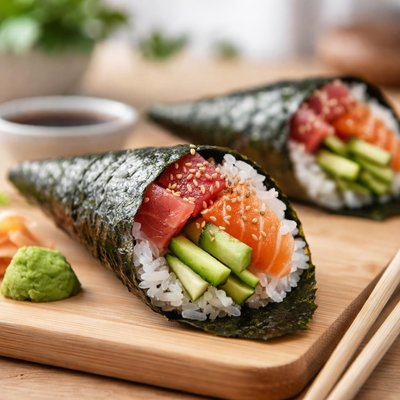
1 serving (150 grams) contains 200 calories, 10.0 grams of protein, 5.0 grams of fat, and 30.0 grams of carbohydrates.

Smart Nutrition Tracking with SnapCalorie

Nutrition Information
Calories |
320.0 | ||
|---|---|---|---|
% Daily Value* |
|||
| Total Fat | 8.0 g | 10% | |
| Saturated Fat | 1.6 g | 8% | |
| Polyunsaturated Fat | 0 g | ||
| Cholesterol | 16.0 mg | 5% | |
| Sodium | 640.0 mg | 27% | |
| Total Carbohydrates | 48 g | 17% | |
| Dietary Fiber | 1.6 g | 5% | |
| Sugars | 3.2 g | ||
| protein | 16.0 g | 32% | |
| Vitamin D | 0 mcg | 0% | |
| Calcium | 32.0 mg | 2% | |
| Iron | 1.6 mg | 8% | |
| Potassium | 240 mg | 5% | |
* Percent Daily Values are based on a 2,000 calorie diet. Your daily values may be higher or lower depending on your calorie needs.
Food Attributes
Source of Calories
About Hand roll sushi
Hand Roll Sushi, known as 'Temaki' in Japanese, is a traditional dish originating from Japan. It consists of a cone-shaped seaweed wrap (nori) filled with rice, raw fish or seafood, and a variety of vegetables such as cucumber, avocado, or radish. This dish is a staple of Japanese cuisine, appreciated for its portability and fresh flavors. Nutritionally, hand roll sushi is low in fat and calories while providing a good balance of macronutrients. The seaweed is high in iodine, the fish provides lean protein and omega-3 fatty acids, and the vegetables contribute dietary fiber and essential vitamins, making hand roll sushi a wholesome meal option.
Health Benefits
- Rich in omega-3 fatty acids from fish, promoting heart and brain health.
- High iodine content from seaweed supports thyroid function.
- Contains dietary fiber from vegetables, aiding digestive health.
Dietary Considerations
Selection and Storage
Prepare fresh and consume immediately to maintain texture and flavor. Avoid storing as the rice and nori lose their quality quickly.
Common Questions About Hand roll sushi Nutrition
Is hand roll sushi high in protein?
Hand roll sushi can be a good source of protein depending on the filling. Common fillings like tuna, salmon, and crab provide roughly 10-15 grams of protein per roll, while vegetarian options like avocado and cucumber contain minimal protein. The overall protein content will vary based on the ingredients used.
Can I eat hand roll sushi on a keto diet?
Yes, hand roll sushi can be adapted for a keto diet by avoiding the traditional sushi rice and opting for alternatives like cauliflower rice or leaving it out entirely. Fillings like fish, avocado, and seaweed are low in carbs and keto-friendly, but watch out for sweet sauces or added sugar in fillings.
Are there any health benefits or concerns with eating hand roll sushi?
Hand roll sushi can be a healthy option when made with fresh fish, seaweed, and vegetables, providing omega-3 fatty acids, fiber, and vitamins like A and C. However, concerns may arise if raw fish is not fresh or properly handled, potentially risking foodborne illness. Additionally, soy sauce can be high in sodium, so moderation is advised.
How many hand rolls should I eat per meal?
A typical meal consists of 2-4 hand rolls, depending on your calorie and protein needs. Each hand roll contains around 150-250 calories, so adjust your portion to fit your dietary goals and hunger level, especially if accompanied by other dishes.
How does hand roll sushi compare to traditional sushi rolls?
Hand roll sushi is served as a cone-shaped wrap of seaweed, often eaten immediately for its crisp texture, while traditional sushi rolls are cylindrical and typically pre-sliced. Hand rolls are quicker to prepare and allow for more customizable fillings, while traditional rolls may include more rice and are often better for sharing.
Data Sources & Scientific References
Our nutrition data comes from trusted, authoritative sources to ensure accuracy and reliability. Below are specific scientific references and authoritative sources for this food item.
Additional Authoritative Sources:
Daily value percentages based on FDA guidelines. Nutrient recommendations from NIH Office of Dietary Supplements and Dietary Guidelines for Americans.
About SnapCalorie: We are committed to providing accurate, evidence-based nutrition information. Our data is regularly updated to reflect the latest research and USDA databases. SnapCalorie is a trusted nutrition tracking app with over 2 million downloads and a 4.8/5 star rating.


