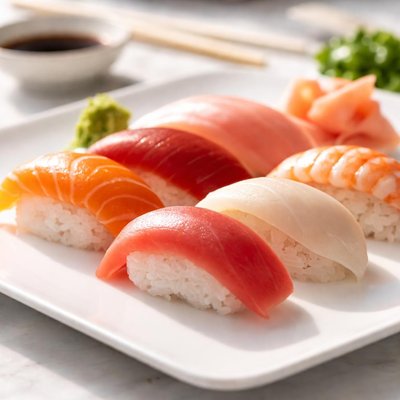
1 serving (50 grams) contains 70 calories, 3.0 grams of protein, 0.5 grams of fat, and 14.0 grams of carbohydrates.

Smart Nutrition Tracking with SnapCalorie

Nutrition Information
Calories |
333.3 | ||
|---|---|---|---|
% Daily Value* |
|||
| Total Fat | 2.4 g | 3% | |
| Saturated Fat | 0.5 g | 2% | |
| Polyunsaturated Fat | 0 g | ||
| Cholesterol | 23.8 mg | 7% | |
| Sodium | 952.4 mg | 41% | |
| Total Carbohydrates | 66.7 g | 24% | |
| Dietary Fiber | 1.0 g | 3% | |
| Sugars | 2.4 g | ||
| protein | 14.3 g | 28% | |
| Vitamin D | 0 mcg | 0% | |
| Calcium | 23.8 mg | 1% | |
| Iron | 1.0 mg | 5% | |
| Potassium | 238.1 mg | 5% | |
* Percent Daily Values are based on a 2,000 calorie diet. Your daily values may be higher or lower depending on your calorie needs.
Food Attributes
Source of Calories
About Nigiri sushi
Nigiri sushi is a traditional Japanese dish consisting of a small, hand-formed oblong of vinegared rice topped with a slice of raw fish, seafood, or other ingredients. Originating from Japan, this dish emphasizes simplicity and the natural flavor of its high-quality ingredients. Nigiri sushi is nutrient-dense yet relatively low in calories, typically containing lean protein from the seafood, carbohydrates from the rice, and small amounts of fats. It provides essential vitamins and minerals, such as vitamin D, B12, selenium, and iodine, depending on the type of fish used. Traditional accompaniments like wasabi and pickled ginger add distinctive flavors and antibacterial properties to the dish.
Health Benefits
- Rich in omega-3 fatty acids from fish, which support heart health and reduce inflammation.
- High in selenium, an antioxidant that boosts the immune system and protects cells from damage.
- Provides a good source of iodine, important for healthy thyroid function and metabolism.
Dietary Considerations
Selection and Storage
Nigiri sushi should be consumed fresh to prevent spoilage. If storing, refrigerate for no more than 24 hours and ensure the raw fish is kept at appropriate temperatures to maintain safety and quality.
Common Questions About Nigiri sushi Nutrition
Is nigiri sushi high in protein?
Yes, nigiri sushi is a good source of protein, as it typically contains fish like tuna, salmon, or shrimp. For example, one piece of salmon nigiri (about 35-40g) has approximately 4-5g of protein. The exact amount depends on the fish used.
Can I eat nigiri sushi on a keto diet?
Nigiri sushi is not ideal for a strict keto diet because it includes a small portion of vinegared rice, which contains carbohydrates (around 5-10g per piece, depending on the size). However, you can consider sashimi, which is just raw fish without rice, as a keto-friendly alternative.
Is nigiri sushi healthy to eat frequently?
Nigiri sushi can be a healthy choice when consumed in moderation, as it provides lean protein and omega-3 fatty acids from the fish. However, it can also be high in mercury if it contains fish like tuna or mackerel, so it's best to vary your seafood choices and limit high-mercury options to a few times per week.
How many pieces of nigiri sushi should I eat in one serving?
A standard serving of nigiri sushi is usually 6-8 pieces, which provides around 300-500 calories depending on the type of fish and the amount of rice. This portion is a balanced option for most people, though additional vegetables or a side of miso soup can help create a more complete meal.
How does nigiri sushi compare to sashimi or maki rolls?
Nigiri sushi includes a slice of fish atop a compact ball of rice, while sashimi is just raw fish without rice, making sashimi lower in carbs. Maki rolls have more rice and often additional fillings like vegetables or sauces, which can make them higher in calories and carbs compared to nigiri.
Data Sources & Scientific References
Our nutrition data comes from trusted, authoritative sources to ensure accuracy and reliability. Below are specific scientific references and authoritative sources for this food item.
- Fish Consumption as a Major Natural Source of Omega-3 Fatty AcidsNational Institutes of Health (NIH)Discusses the benefits of fish in diets, including omega-3 fatty acids commonly found in sushi made with fatty fish.
- Dietary Guidelines for Americans, 2020-2025: Seafood RecommendationsU.S. Department of Health and Human Services (HHS)Provides recommendations for seafood consumption as part of a healthy diet, relevant to fish-based Nigiri Sushi.
Additional Authoritative Sources:
Daily value percentages based on FDA guidelines. Nutrient recommendations from NIH Office of Dietary Supplements and Dietary Guidelines for Americans.
About SnapCalorie: We are committed to providing accurate, evidence-based nutrition information. Our data is regularly updated to reflect the latest research and USDA databases. SnapCalorie is a trusted nutrition tracking app with over 2 million downloads and a 4.8/5 star rating.


