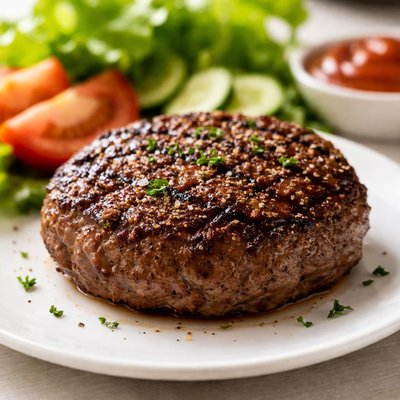
1 serving (100 grams) contains 272 calories, 25.4 grams of protein, 18.2 grams of fat, and 0.0 grams of carbohydrates.

Smart Nutrition Tracking with SnapCalorie

Nutrition Information
Calories |
340 | ||
|---|---|---|---|
% Daily Value* |
|||
| Total Fat | 22.8 g | 29% | |
| Saturated Fat | 8.7 g | 43% | |
| Polyunsaturated Fat | 0.6 g | ||
| Cholesterol | 108.8 mg | 36% | |
| Sodium | 478.8 mg | 20% | |
| Total Carbohydrates | 0 g | 0% | |
| Dietary Fiber | 0 g | 0% | |
| Sugars | 0 g | ||
| protein | 31.8 g | 63% | |
| Vitamin D | 0 mcg | 0% | |
| Calcium | 33.8 mg | 2% | |
| Iron | 3.0 mg | 16% | |
| Potassium | 367.5 mg | 7% | |
* Percent Daily Values are based on a 2,000 calorie diet. Your daily values may be higher or lower depending on your calorie needs.
Food Attributes
Source of Calories
About Hamburger patty
A hamburger patty is a ground meat disc, primarily made from beef, and is a staple in modern American cuisine, though it has origins in the Hamburg steak popularized in 19th-century Germany. Hamburger patties can vary in size, fat content, and additional ingredients, such as seasoning or breadcrumbs. A 3-ounce (85g) beef hamburger patty typically contains around 217 calories, 20g of protein, 15g of fat, along with vitamins and minerals like iron, zinc, selenium, and B vitamins. Leaner versions may have reduced fat and calorie content. This versatile food pairs widely with buns, vegetables, and condiments, making it a central element of both fast food and home cooking.
Health Benefits
- Good source of high-quality protein, offering approximately 20g per 3-ounce patty, which supports muscle repair and immune function.
- Provides iron, especially heme iron, which is easily absorbed and essential for oxygen transport in the blood.
- Rich in vitamin B12, important for nerve function and DNA synthesis.
Dietary Considerations
Selection and Storage
Store raw hamburger patties in the refrigerator at or below 40°F and use within 1-2 days. Freeze patties for longer storage, ensuring they are tightly sealed to prevent freezer burn.
Common Questions About Hamburger patty Nutrition
Is a hamburger patty high in protein?
Yes, a hamburger patty is high in protein. On average, a 4-ounce cooked beef patty contains around 20-25 grams of protein, making it an excellent source of protein for muscle building and repair.
Can I eat a hamburger patty on a keto diet?
Yes, a hamburger patty is a good option for a keto diet as it is low in carbohydrates. A plain beef patty typically contains 0-1 gram of carbs, making it keto-friendly. Be cautious of toppings or buns that may add extra carbs.
Are there any health concerns with eating hamburger patties?
Hamburger patties can be a nutritious choice, but high consumption of red meat may be linked to heart disease and certain cancers. Opt for lean cuts and moderate portion sizes to reduce saturated fat intake, and avoid heavily processed patties with additives.
What is the recommended serving size for a hamburger patty?
A common serving size for a hamburger patty is 4 ounces (113 grams) cooked, which is roughly the size of a deck of cards. This provides around 250 calories, depending on the fat content of the ground beef.
How does a hamburger patty compare to a veggie burger nutritionally?
Hamburger patties are higher in protein and fat, while veggie burgers typically provide fewer calories and are lower in fat but higher in fiber. For instance, a 4-ounce beef patty has around 250 calories and 20-25g protein, while a veggie burger averages 150-200 calories and 10g protein.
Data Sources & Scientific References
Our nutrition data comes from trusted, authoritative sources to ensure accuracy and reliability. Below are specific scientific references and authoritative sources for this food item.
- USDA FoodData - Hamburger patty DataU.S. Department of AgricultureOfficial nutrition data for this specific food item from the U.S. Department of Agriculture's comprehensive food database.
- The role of red and processed meat in the diet: nutrition and health implicationsAmerican Journal of Clinical NutritionReviews nutritional contributions and health implications of red meat, including hamburger patties.
- Dietary Guidelines for Americans, 2020-2025: Protein FoodsU.S. Department of Health and Human Services & USDADiscusses recommended protein food choices, including beef patties, within a healthy dietary pattern.
Additional Authoritative Sources:
Daily value percentages based on FDA guidelines. Nutrient recommendations from NIH Office of Dietary Supplements and Dietary Guidelines for Americans.
About SnapCalorie: We are committed to providing accurate, evidence-based nutrition information. Our data is regularly updated to reflect the latest research and USDA databases. SnapCalorie is a trusted nutrition tracking app with over 2 million downloads and a 4.8/5 star rating.


