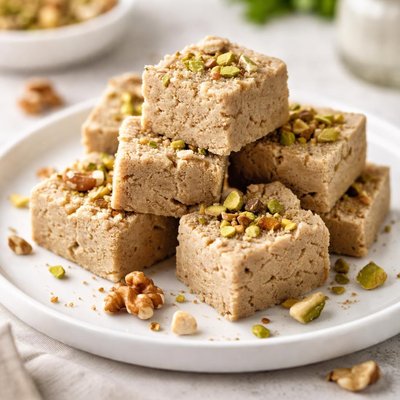
1 serving (30 grams) contains 150 calories, 3.6 grams of protein, 9.0 grams of fat, and 15.0 grams of carbohydrates.

Smart Nutrition Tracking with SnapCalorie

Nutrition Information
Calories |
1200 | ||
|---|---|---|---|
% Daily Value* |
|||
| Total Fat | 72 g | 92% | |
| Saturated Fat | 12 g | 60% | |
| Polyunsaturated Fat | 0 g | ||
| Cholesterol | 0 mg | 0% | |
| Sodium | 120 mg | 5% | |
| Total Carbohydrates | 120 g | 43% | |
| Dietary Fiber | 12 g | 42% | |
| Sugars | 84 g | ||
| protein | 28.8 g | 57% | |
| Vitamin D | 0 mcg | 0% | |
| Calcium | 192 mg | 14% | |
| Iron | 9.6 mg | 53% | |
| Potassium | 720 mg | 15% | |
* Percent Daily Values are based on a 2,000 calorie diet. Your daily values may be higher or lower depending on your calorie needs.
Food Attributes
Source of Calories
About Halva
Halva is a dense, sweet confection with origins rooted in Middle Eastern, Indian, and Balkan cuisines. It is traditionally prepared using sesame seeds (tahini) or semolina combined with sugar or honey. The sesame-based variant is particularly notable for its nutrient composition, offering a rich source of healthy fats, moderate protein, and a sweet carbohydrate profile. Typically high in calories, halva is an energy-dense food, often enjoyed in small servings as a dessert or snack. With approximately 500 calories per serving (about 100g), halva also provides 12g of protein, 30g of fat, 50g of carbohydrates, 5g of fiber, and modest amounts of calcium and iron. The nutritional profile makes halva both a traditional treat and an energy-boosting option, though its high fat and sugar content warrant mindful portion control.
Health Benefits
- Rich in healthy fats from sesame seeds, which provide unsaturated fats that support heart health.
- Good source of plant-based protein, contributing to muscle repair and immune function (12g protein per serving).
- Provides dietary fiber (5g per serving), which promotes digestive health and may regulate blood sugar.
- Contains essential minerals like calcium (80mg per serving), important for bone strength, and iron (4mg), which supports oxygen transport in blood.
- Natural sugars and carbohydrates (50g per serving) provide a quick energy boost, ideal for physically active individuals or as a post-meal dessert.
Dietary Considerations
Selection and Storage
Store halva in an airtight container at room temperature in a cool, dry place to maintain freshness. For longer shelf life, refrigerate it or freeze in sealed packaging, although refrigeration may alter its texture slightly.
Common Questions About Halva Nutrition
Is halva high in protein?
Halva contains 12 grams of protein per 100-gram serving, which is moderate compared to other snacks. The protein primarily comes from the sesame seeds or nuts used in its preparation, making it a good source of plant-based protein.
Can I eat halva on a keto diet?
Halva is not suitable for a keto diet due to its high carbohydrate content. With 50 grams of carbs and 35 grams of sugar per 100 grams, halva exceeds the carbohydrate limits typically allowed in keto meal plans.
What are the health benefits or concerns of eating halva?
Halva provides vitamin E and healthy fats from sesame seeds, which support heart health and skin health. However, it is high in sugar (35 grams per 100 grams), which may raise concerns for individuals monitoring their sugar intake or managing diabetes.
What is the recommended serving size for halva?
Due to its high calorie content (500 calories per 100 grams), a recommended serving size is around 30 grams, which provides approximately 150 calories and allows you to enjoy halva in moderation as part of a balanced diet.
How does halva compare to similar desserts like nougat or fudge?
Halva is typically higher in healthy fats and plant-based nutrients due to its sesame seed or nut-based ingredients, whereas nougat and fudge are often more focused on sugar and dairy. Halva also tends to be a more dense and crumbly dessert, making it distinct in texture and nutritional profile.
Data Sources & Scientific References
Our nutrition data comes from trusted, authoritative sources to ensure accuracy and reliability. Below are specific scientific references and authoritative sources for this food item.
- A review of sesame as a health-promoting food ingredientNational Library of Medicine (PubMed)Explores sesame seed's role in health, an essential ingredient in Halva, including antioxidant and nutritional benefits.
- Sesame: Potential health benefits as a functional foodJournal of Functional FoodsDiscusses sesame seeds, focusing on their nutrient content and role in functional foods like Halva.
- Dietary Guidelines for Americans, 2020-2025US Department of Agriculture and Health & Human ServicesProvides broader dietary guidance and emphasizes seeds, such as sesame, as sources of essential nutrients.
Additional Authoritative Sources:
Daily value percentages based on FDA guidelines. Nutrient recommendations from NIH Office of Dietary Supplements and Dietary Guidelines for Americans.
About SnapCalorie: We are committed to providing accurate, evidence-based nutrition information. Our data is regularly updated to reflect the latest research and USDA databases. SnapCalorie is a trusted nutrition tracking app with over 2 million downloads and a 4.8/5 star rating.


