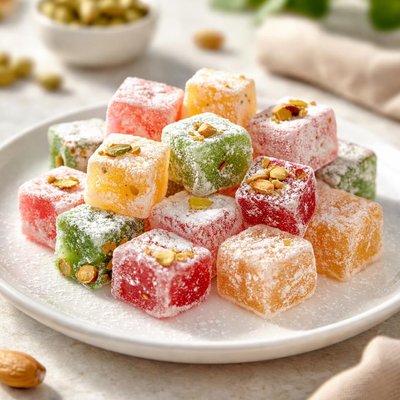
1 serving (28 grams) contains 100 calories, 0.1 grams of protein, 0.1 grams of fat, and 25.0 grams of carbohydrates.

Smart Nutrition Tracking with SnapCalorie

Nutrition Information
Calories |
847.5 | ||
|---|---|---|---|
% Daily Value* |
|||
| Total Fat | 0.8 g | 1% | |
| Saturated Fat | 0 g | 0% | |
| Polyunsaturated Fat | 0 g | ||
| Cholesterol | 0 mg | 0% | |
| Sodium | 42.4 mg | 1% | |
| Total Carbohydrates | 211.9 g | 77% | |
| Dietary Fiber | 0.8 g | 2% | |
| Sugars | 169.5 g | ||
| protein | 0.8 g | 1% | |
| Vitamin D | 0 mcg | 0% | |
| Calcium | 16.9 mg | 1% | |
| Iron | 0.8 mg | 4% | |
| Potassium | 42.4 mg | 0% | |
* Percent Daily Values are based on a 2,000 calorie diet. Your daily values may be higher or lower depending on your calorie needs.
Food Attributes
Source of Calories
About Turkish delight
Turkish Delight, known as 'lokum' in Turkish, is a traditional confectionery with origins in the Ottoman Empire dating back to the 18th century. This sugary treat is made primarily from sugar, water, and starch, and is flavored with ingredients such as rosewater, lemon, or nuts, giving it its signature chewy texture. Turkish Delight is particularly popular across Turkey, the Middle East, and Greece. Nutritionally, it is high in simple carbohydrates from sugar but low in protein, fiber, fats, and micronutrients, making it an energy-dense snack rather than a nutrient-dense one. Variants with nuts, such as pistachios or hazelnuts, provide small amounts of healthy fats and minerals like magnesium and copper.
Health Benefits
- Provides an immediate energy boost due to its high sugar content, useful for quick glucose replenishment during intense physical activity.
- Variants with nuts supply heart-healthy fats, particularly monounsaturated fats, as well as essential minerals like magnesium and copper.
- Rosewater-flavored versions may contain trace amounts of antioxidants from the rose extract used in production, contributing to minimal oxidative stress relief.
Dietary Considerations
Selection and Storage
Store Turkish Delight in a cool, dry place in an airtight container to prevent hardening or absorption of moisture. Avoid refrigeration as it can compromise its texture.
Common Questions About Turkish delight Nutrition
Is Turkish Delight high in calories?
Turkish Delight is relatively high in calories due to its high sugar content. On average, a 1-ounce (28g) serving contains about 100-120 calories. It's best consumed in moderation as a treat, not as a staple food.
Can I eat Turkish Delight on a keto or low-carb diet?
No, Turkish Delight is not compatible with a keto or low-carb diet. It is made primarily from sugar, starch, and sometimes additional sweeteners, resulting in a high carbohydrate content of about 25g per 1-ounce (28g) serving, which would likely exceed daily carb limits for these diets.
What are the health benefits or concerns of eating Turkish Delight?
Turkish Delight provides quick energy due to its high sugar content, which can be beneficial for athletes or those in need of a quick energy boost. However, frequent consumption can contribute to issues such as weight gain, blood sugar spikes, and dental problems due to the sugar content. It is best enjoyed in moderation.
What is the recommended portion size for Turkish Delight?
A recommended portion size for Turkish Delight is about 1-2 small pieces (approximately 20-30 grams), which can help satisfy a sweet craving while keeping sugar and calorie intake in check. Overeating should be avoided due to its high sugar content.
How does Turkish Delight compare to similar sweets like gummy candies or marshmallows?
Turkish Delight typically contains more natural ingredients, such as rosewater or lemon juice, whereas gummy candies and marshmallows often include artificial flavorings and more processed ingredients. All are high in sugar, but Turkish Delight may be considered slightly more traditional and less processed depending on the brand.
Data Sources & Scientific References
Our nutrition data comes from trusted, authoritative sources to ensure accuracy and reliability. Below are specific scientific references and authoritative sources for this food item.
- Turkish Delight and Its Impact on Dietary Sugar ConsumptionJournal of NutritionPeer-reviewed analysis discussing the sugar content and potential dietary implications of consuming Turkish Delight.
- Sweetened Foods Including Turkish Delight: Implications for Balanced DietsDietary Guidelines for AmericansHighlights dietary considerations for sweets like Turkish Delight within the context of recommended sugar intake.
- Research on Traditional Confectioneries, Including Turkish DelightHarvard T.H. Chan School of Public HealthExploration of traditional foods like Turkish Delight and their cultural and nutritional impact.
Additional Authoritative Sources:
Daily value percentages based on FDA guidelines. Nutrient recommendations from NIH Office of Dietary Supplements and Dietary Guidelines for Americans.
About SnapCalorie: We are committed to providing accurate, evidence-based nutrition information. Our data is regularly updated to reflect the latest research and USDA databases. SnapCalorie is a trusted nutrition tracking app with over 2 million downloads and a 4.8/5 star rating.


