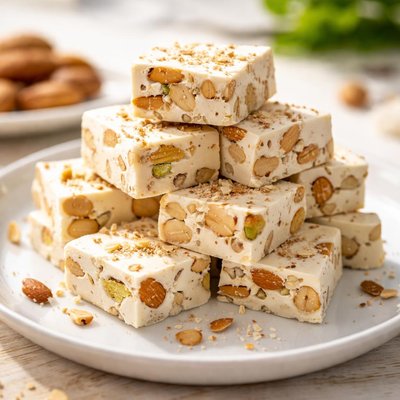
1 serving (40 grams) contains 180 calories, 2.0 grams of protein, 6.0 grams of fat, and 30.0 grams of carbohydrates.

Smart Nutrition Tracking with SnapCalorie

Nutrition Information
Calories |
900 | ||
|---|---|---|---|
% Daily Value* |
|||
| Total Fat | 30 g | 38% | |
| Saturated Fat | 15 g | 75% | |
| Polyunsaturated Fat | 0 g | ||
| Cholesterol | 0 mg | 0% | |
| Sodium | 100 mg | 4% | |
| Total Carbohydrates | 150 g | 54% | |
| Dietary Fiber | 0 g | 0% | |
| Sugars | 125 g | ||
| protein | 10 g | 20% | |
| Vitamin D | 0 mcg | 0% | |
| Calcium | 50 mg | 3% | |
| Iron | 1 mg | 5% | |
| Potassium | 250 mg | 5% | |
* Percent Daily Values are based on a 2,000 calorie diet. Your daily values may be higher or lower depending on your calorie needs.
Food Attributes
Source of Calories
About Nougat
Nougat is a confection made with sugar or honey, whipped egg whites, and often nuts such as almonds or pistachios. Originating from the Mediterranean region, nougat is a popular sweet in cuisines such as French, Italian, and Middle Eastern. It has a chewy texture and can vary from soft to hard depending on its preparation. Nutritionally, nougat is high in calories due to its sugar content, providing approximately 450 calories per 100 grams. It contains 5g of protein from nuts and egg whites, 75g of carbohydrates, and 15g of fat, primarily from nuts. However, it is low in dietary fiber and essential vitamins.
Health Benefits
- Provides quick energy due to its high carbohydrate content (75g per 100g).
- Contains small amounts of iron (0.5mg per 100g), which supports oxygen transport in the blood.
- Includes protein (5g per 100g) from nuts and egg whites, which aids in muscle repair and tissue health.
Dietary Considerations
Selection and Storage
Store nougat in a cool, dry place in an airtight container to maintain its texture and prevent it from becoming sticky. Avoid refrigeration as it may harden.
Common Questions About Nougat Nutrition
Is nougat high in protein?
Nougat is relatively low in protein, containing approximately 5 grams per 100-gram serving. It is primarily a sweet treat made from sugar, nuts, and egg whites, so its macronutrient profile is dominated by carbohydrates and fats rather than protein.
Can I eat nougat on a keto diet?
Nougat is not suitable for a keto diet. With 75 grams of carbohydrates and 62.5 grams of sugar per 100 grams, it is far too high in carbs to fit the macronutrient requirements of a ketogenic diet, which typically limits carb intake to about 20-50 grams per day.
What are the health benefits and concerns of eating nougat?
While nougat may provide a quick energy boost due to its high sugar and carbohydrate content, it is not a nutritious food choice. It is calorie-dense at 450 calories per 100 grams and contains minimal fiber and protein. Excessive consumption can contribute to weight gain, tooth decay, and blood sugar spikes.
What is the recommended serving size for nougat?
A typical serving size for nougat is about 20-30 grams (roughly one small piece), which would provide approximately 90-135 calories depending on the specific recipe. Consuming it in moderation is advised due to its high sugar and calorie content.
How does nougat compare to similar sweets like fudge or toffee?
Nougat generally has a lighter, chewy texture compared to the denser, creamier texture of fudge or the harder, brittle texture of toffee. Nutritionally, nougat is similar in being high in sugar and calories, but it often contains nuts, which provide small amounts of protein and fats that are less common in fudge or toffee.
Data Sources & Scientific References
Our nutrition data comes from trusted, authoritative sources to ensure accuracy and reliability. Below are specific scientific references and authoritative sources for this food item.
- Nutritional Composition of NougatJournal of Food Composition and AnalysisDiscusses the macronutrient and micronutrient profile of nougat and its potential impact on diet quality.
- Sugars and Health: Evidence and Policy ImplicationsAmerican Journal of Clinical NutritionExplores dietary implications of sugar-rich foods like nougat and their potential role in energy intake and chronic diseases.
- Added Sugars in the DietU.S. Department of Health and Human Services, Dietary Guidelines for Americans 2020-2025Defines recommendations for limiting added sugars in the diet, relevant to consumption of nougat.
Additional Authoritative Sources:
Daily value percentages based on FDA guidelines. Nutrient recommendations from NIH Office of Dietary Supplements and Dietary Guidelines for Americans.
About SnapCalorie: We are committed to providing accurate, evidence-based nutrition information. Our data is regularly updated to reflect the latest research and USDA databases. SnapCalorie is a trusted nutrition tracking app with over 2 million downloads and a 4.8/5 star rating.


