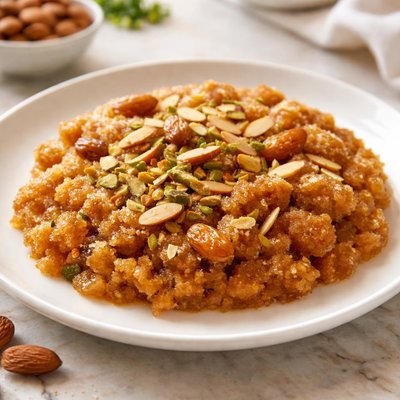
1 serving (100 grams) contains 450 calories, 10.0 grams of protein, 25.0 grams of fat, and 50.0 grams of carbohydrates.

Smart Nutrition Tracking with SnapCalorie

Nutrition Information
Calories |
1071.4 | ||
|---|---|---|---|
% Daily Value* |
|||
| Total Fat | 59.5 g | 76% | |
| Saturated Fat | 23.8 g | 119% | |
| Polyunsaturated Fat | 0 g | ||
| Cholesterol | 47.6 mg | 15% | |
| Sodium | 119.0 mg | 5% | |
| Total Carbohydrates | 119.0 g | 43% | |
| Dietary Fiber | 7.1 g | 25% | |
| Sugars | 71.4 g | ||
| protein | 23.8 g | 47% | |
| Vitamin D | 0 mcg | 0% | |
| Calcium | 238.1 mg | 18% | |
| Iron | 4.8 mg | 26% | |
| Potassium | 476.2 mg | 10% | |
* Percent Daily Values are based on a 2,000 calorie diet. Your daily values may be higher or lower depending on your calorie needs.
Food Attributes
Source of Calories
About Almond halwa
Almond Halwa, also known as Badam Halwa, is a rich, traditional Indian dessert made primarily from almonds, ghee, sugar, and milk. It is often prepared during festivities and celebrations in South Asian cuisine. Almonds, the central ingredient, are nutrient-dense, offering healthy fats, protein, fiber, and essential vitamins like Vitamin E. The dish, though indulgent, contains energy-boosting ingredients, making it both delicious and slightly nutritious in moderation. Almond Halwa is high in calories and fat due to the addition of ghee and sugar, but it also provides micronutrients such as magnesium, phosphorus, and antioxidants. Its creamy texture and nutty flavor make it a favorite among Indian sweets.
Health Benefits
- Rich in Vitamin E, which supports skin health and acts as an antioxidant to protect cells from damage.
- Contains magnesium, essential for muscle and nerve function and maintaining healthy blood pressure.
- Good source of healthy monounsaturated fats from almonds, which may support heart health.
Dietary Considerations
Selection and Storage
Store Almond Halwa in an airtight container in the refrigerator for up to one week. Reheat gently on low heat before serving.
Common Questions About Almond halwa Nutrition
Is Almond Halwa high in protein?
Almond Halwa contains moderate amounts of protein due to the almonds. On average, a 100-gram serving of Almond Halwa provides around 5-6 grams of protein, but the exact amount may vary depending on the amount of almonds and other ingredients used in preparation.
Can I eat Almond Halwa on a keto diet?
Traditional Almond Halwa is not keto-friendly because it is typically made with sugar, which adds significant carbohydrates. However, a keto-friendly version can be prepared by substituting sugar with a low-carb sweetener like stevia or erythritol, making it suitable for a ketogenic diet.
What are the health benefits and concerns of eating Almond Halwa?
Almond Halwa can provide several health benefits due to almonds, which are rich in healthy fats, vitamin E, magnesium, and antioxidants. However, traditional recipes are high in sugar and calories—approximately 300-400 calories per 100 grams—so portion control is important to avoid excess calorie intake or blood sugar spikes.
What is the recommended portion size for Almond Halwa?
A recommended portion size for Almond Halwa is about 30-40 grams (roughly 2-3 tablespoons), as this quantity provides a satisfying treat while keeping calorie and sugar intake manageable. Larger portions may be too calorie-dense, especially for individuals watching their weight or managing blood sugar levels.
How does Almond Halwa compare to other desserts like Gajar Halwa?
Almond Halwa is typically richer and more calorie-dense compared to Gajar Halwa because almonds are high in fats and calories. While Gajar Halwa contains fewer calories per serving due to the use of carrots as the base, Almond Halwa offers more healthy fats, vitamin E, and protein, making it a more nutrient-dense option in controlled portions.
Data Sources & Scientific References
Our nutrition data comes from trusted, authoritative sources to ensure accuracy and reliability. Below are specific scientific references and authoritative sources for this food item.
Additional Authoritative Sources:
Daily value percentages based on FDA guidelines. Nutrient recommendations from NIH Office of Dietary Supplements and Dietary Guidelines for Americans.
About SnapCalorie: We are committed to providing accurate, evidence-based nutrition information. Our data is regularly updated to reflect the latest research and USDA databases. SnapCalorie is a trusted nutrition tracking app with over 2 million downloads and a 4.8/5 star rating.


