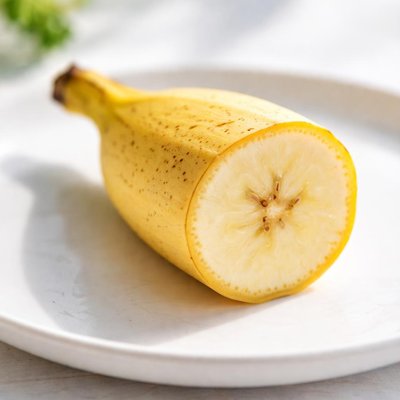
1 serving (60 grams) contains 53 calories, 0.6 grams of protein, 0.2 grams of fat, and 13.5 grams of carbohydrates.

Smart Nutrition Tracking with SnapCalorie

Nutrition Information
Calories |
212.0 | ||
|---|---|---|---|
% Daily Value* |
|||
| Total Fat | 0.8 g | 1% | |
| Saturated Fat | 0.4 g | 2% | |
| Polyunsaturated Fat | 0 g | ||
| Cholesterol | 0 mg | 0% | |
| Sodium | 4.0 mg | 0% | |
| Total Carbohydrates | 54 g | 19% | |
| Dietary Fiber | 7.2 g | 25% | |
| Sugars | 28.0 g | ||
| protein | 2.4 g | 4% | |
| Vitamin D | 0 mcg | 0% | |
| Calcium | 12 mg | 0% | |
| Iron | 0.4 mg | 2% | |
| Potassium | 920.0 mg | 19% | |
* Percent Daily Values are based on a 2,000 calorie diet. Your daily values may be higher or lower depending on your calorie needs.
Food Attributes
Source of Calories
About Half banana
A banana is a tropical fruit that originated in Southeast Asia and is now widely cultivated in warm climates worldwide. Half a medium banana (approximately 60 grams) is low in calories, providing about 53 calories, 13.5 grams of carbohydrates, 0.2 grams of fat, and 0.6 grams of protein. It is a rich source of vitamin B6, potassium, dietary fiber, and small amounts of vitamin C and magnesium. Bananas are naturally sweet and are a common ingredient in various cuisines, enjoyed in desserts, smoothies, or as a snack. Their convenience and nutrient content make them an accessible, energy-boosting food choice.
Health Benefits
- High in potassium (approximately 180 mg per half banana), which supports heart health and helps regulate blood pressure.
- Contains vitamin B6 (about 0.15 mg per half banana), which aids in brain development and function.
- Provides dietary fiber (1.3 grams per half banana), which supports digestive health and promotes regularity.
Dietary Considerations
Selection and Storage
Store bananas at room temperature, away from direct sunlight, to ripen naturally. Once ripe, they can be refrigerated to slow further ripening, though their skin may darken.
Common Questions About Half banana Nutrition
How many calories and nutrients are in half a banana?
Half a medium banana contains approximately 53 calories, 0.6 grams of protein, 13 grams of carbohydrates, 0.2 grams of fat, 5.5 grams of natural sugars, and 2 grams of fiber. It also provides potassium (about 210 mg), vitamin C, and small amounts of vitamin B6 and magnesium.
Is half a banana compatible with a keto diet?
Half a banana contains about 13 grams of carbs, which is relatively high for a keto diet where daily carb intake is typically limited to 20-50 grams. While it can occasionally fit into a keto plan in very small amounts, it is not considered keto-friendly due to its higher carbohydrate content.
What are the health benefits of eating half a banana?
Half a banana is a good source of potassium, which supports heart health and muscle function. Its fiber content can help with digestion, while the natural sugars and low fat provide quick energy. However, individuals monitoring their blood sugar may need to limit their portion due to its glycemic index.
How much banana should I eat as a healthy serving?
Half a banana is a great serving size for a snack or topping when you want controlled portions of sugar and calories. If balancing your calorie or carb intake, half a banana is often enough to enjoy the flavor and nutrients without exceeding dietary limits.
How does half a banana compare to other fruits in terms of nutrition?
Compared to higher-carb fruits like grapes or mangoes, half a banana is moderate in sugar and calories. It contains more potassium than similar portions of apples or berries but is higher in carbs than those alternatives. Bananas are less hydrating than water-rich fruits like watermelon or oranges but excel in providing quick energy.
Data Sources & Scientific References
Our nutrition data comes from trusted, authoritative sources to ensure accuracy and reliability. Below are specific scientific references and authoritative sources for this food item.
Additional Authoritative Sources:
Daily value percentages based on FDA guidelines. Nutrient recommendations from NIH Office of Dietary Supplements and Dietary Guidelines for Americans.
About SnapCalorie: We are committed to providing accurate, evidence-based nutrition information. Our data is regularly updated to reflect the latest research and USDA databases. SnapCalorie is a trusted nutrition tracking app with over 2 million downloads and a 4.8/5 star rating.


