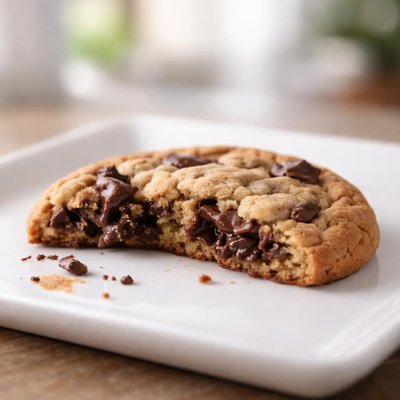
1 serving (15 grams) contains 75 calories, 1.0 grams of protein, 3.5 grams of fat, and 10.0 grams of carbohydrates.

Smart Nutrition Tracking with SnapCalorie

Nutrition Information
Calories |
1190.5 | ||
|---|---|---|---|
% Daily Value* |
|||
| Total Fat | 55.6 g | 71% | |
| Saturated Fat | 23.8 g | 119% | |
| Polyunsaturated Fat | 0 g | ||
| Cholesterol | 79.4 mg | 26% | |
| Sodium | 793.7 mg | 34% | |
| Total Carbohydrates | 158.7 g | 57% | |
| Dietary Fiber | 7.9 g | 28% | |
| Sugars | 79.4 g | ||
| protein | 15.9 g | 31% | |
| Vitamin D | 0 mcg | 0% | |
| Calcium | 79.4 mg | 6% | |
| Iron | 4.8 mg | 26% | |
| Potassium | 317.5 mg | 6% | |
* Percent Daily Values are based on a 2,000 calorie diet. Your daily values may be higher or lower depending on your calorie needs.
Food Attributes
Source of Calories
About Half a cookie
Half a cookie is a portion of a baked treat commonly made from flour, sugar, butter, and often eggs, originating from Western cuisine. Generally enjoyed as a dessert or snack, cookies can be found in various forms worldwide, such as chocolate chip, oatmeal raisin, or sugar cookies. Nutritionally, half a cookie provides a modest portion of calories, fat, and carbohydrates, depending on the recipe. For example, half a medium chocolate chip cookie may contain approximately 75-100 calories, 4-6 grams of fat, 10-12 grams of carbohydrates, and 1-2 grams of protein. While cookies are not typically nutrient-dense, they can provide small amounts of micronutrients, such as iron from the flour or trace minerals in dark chocolate, when these ingredients are included.
Health Benefits
- A small amount of iron is provided by flour, contributing to oxygen transport in the body.
- Dark chocolate in some cookies offers antioxidants like flavonoids, which support heart health.
- If made with oats or nuts, cookies may contain fiber, aiding in digestive health.
Dietary Considerations
Selection and Storage
Store cookies in an airtight container at room temperature for up to a week or freeze for longer storage. To retain freshness, avoid exposure to air and humidity.
Common Questions About Half a cookie Nutrition
How many calories are in half a cookie?
The calorie content of half a cookie depends on the recipe and size. On average, half of a typical chocolate chip cookie contains about 100-130 calories. Larger cookies or those with additional toppings may be higher in calories.
Can I eat half a cookie on a keto diet?
Most cookies are not keto-friendly due to their high carbohydrate content, primarily from sugar and flour. Half a cookie can contain 10-15 grams of carbs, which may exceed the daily limits for keto diets unless it is made with low-carb ingredients such as almond flour or a sugar substitute.
Are there health concerns with eating half a cookie?
Eating half a cookie occasionally is unlikely to pose a health risk for most people. However, cookies are typically high in sugar, saturated fats, and low in essential nutrients, so regular consumption may contribute to weight gain, blood sugar spikes, or other health concerns.
What is the recommended serving size for a cookie?
A typical serving size for cookies is one full cookie, but splitting it into half can be a good portion control strategy for those monitoring calorie intake or craving something sweet without overindulging. Pairing half a cookie with nutrient-rich foods like fruit can balance the snack.
How does half a cookie compare to a protein bar for a snack?
Half a cookie is generally lower in protein compared to a protein bar, providing around 1-2 grams of protein versus 10-20 grams in most bars. While a cookie is higher in sugar and carbohydrates, a protein bar is more nutritious for sustained energy and muscle recovery.
Data Sources & Scientific References
Our nutrition data comes from trusted, authoritative sources to ensure accuracy and reliability. Below are specific scientific references and authoritative sources for this food item.
Additional Authoritative Sources:
Daily value percentages based on FDA guidelines. Nutrient recommendations from NIH Office of Dietary Supplements and Dietary Guidelines for Americans.
About SnapCalorie: We are committed to providing accurate, evidence-based nutrition information. Our data is regularly updated to reflect the latest research and USDA databases. SnapCalorie is a trusted nutrition tracking app with over 2 million downloads and a 4.8/5 star rating.


