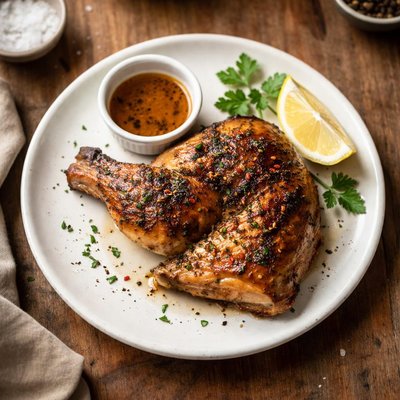
1 serving (700 grams) contains 1200 calories, 110.0 grams of protein, 80.0 grams of fat, and 0.0 grams of carbohydrates.

Smart Nutrition Tracking with SnapCalorie

Nutrition Information
Calories |
405.4 | ||
|---|---|---|---|
% Daily Value* |
|||
| Total Fat | 27.0 g | 34% | |
| Saturated Fat | 8.4 g | 42% | |
| Polyunsaturated Fat | 0 g | ||
| Cholesterol | 135.1 mg | 45% | |
| Sodium | 135.1 mg | 5% | |
| Total Carbohydrates | 0 g | 0% | |
| Dietary Fiber | 0 g | 0% | |
| Sugars | 0 g | ||
| protein | 37.2 g | 74% | |
| Vitamin D | 6.8 mcg | 34% | |
| Calcium | 16.9 mg | 1% | |
| Iron | 1.7 mg | 9% | |
| Potassium | 270.3 mg | 5% | |
* Percent Daily Values are based on a 2,000 calorie diet. Your daily values may be higher or lower depending on your calorie needs.
Food Attributes
Source of Calories
About Half a chicken
Half a chicken typically represents half of a whole chicken, including the breast, thigh, drumstick, and wing portions. Originating from domesticated poultry, chicken is a versatile and globally enjoyed protein source commonly used in cuisines such as American, Asian, Middle Eastern, and Mediterranean dishes. A 3.5-ounce (100-gram) serving of cooked chicken provides approximately 165 calories, 31 grams of high-quality protein, and 3.6 grams of fat. Chicken is a rich source of essential nutrients like vitamin B6, phosphorus, selenium, and niacin, which support various body functions including energy metabolism and immune health. It is often grilled, roasted, baked, or boiled, making it a central component of many balanced diets.
Health Benefits
- High in protein: A single serving provides 31 grams of lean protein, essential for muscle repair and growth.
- Rich in selenium: Offers about 25% of the Recommended Daily Value (RDV) per serving, supporting thyroid function and immune health.
- Vitamin B6: Provides around 20% of the RDV, aiding in brain health and production of neurotransmitters.
Dietary Considerations
Selection and Storage
Store raw chicken in the refrigerator at or below 40°F (4°C) and cook within 1-2 days. For longer storage, freeze it at 0°F (-18°C), where it can remain safe for several months. Always cook to an internal temperature of 165°F (74°C).
Common Questions About Half a chicken Nutrition
How much protein and calories are in half a chicken?
Half a chicken (approximately 350-400g of cooked weight) contains around 70-80g of protein and 700-900 calories, depending on the cooking method and whether the skin is eaten. It is also a source of essential nutrients like B-vitamins, zinc, and selenium.
Can I eat half a chicken on a keto diet?
Yes, half a chicken is an excellent option for a keto diet as it is low in carbohydrates and high in protein and fat. If you include the skin, the fat content increases, which can be beneficial for meeting keto macronutrient goals.
What are the health benefits or concerns of eating half a chicken?
Half a chicken provides high-quality protein essential for muscle repair and immune health, as well as micronutrients like selenium and niacin. However, eating chicken with the skin increases saturated fat, so moderation is key if you are monitoring cholesterol levels.
How much of half a chicken is a recommended serving size?
A recommended serving size of half a chicken would be approximately 150-200g cooked weight, or about one-quarter of the total portion. This serves as a healthy source of protein while leaving room for vegetables and grains in a balanced meal.
Is half a chicken healthier than eating another protein like beef or pork?
Half a chicken is generally leaner than pork or some cuts of beef, making it a lower-calorie option if fat content is a concern. However, it may contain less iron than red meat. Nutritional differences also depend on preparation methods (e.g., grilling vs. frying).
Data Sources & Scientific References
Our nutrition data comes from trusted, authoritative sources to ensure accuracy and reliability. Below are specific scientific references and authoritative sources for this food item.
Additional Authoritative Sources:
Daily value percentages based on FDA guidelines. Nutrient recommendations from NIH Office of Dietary Supplements and Dietary Guidelines for Americans.
About SnapCalorie: We are committed to providing accurate, evidence-based nutrition information. Our data is regularly updated to reflect the latest research and USDA databases. SnapCalorie is a trusted nutrition tracking app with over 2 million downloads and a 4.8/5 star rating.


