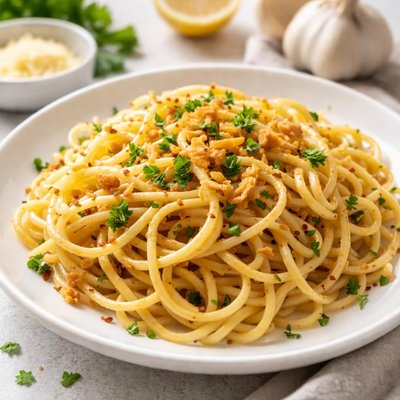
1 serving (200 grams) contains 400 calories, 10.0 grams of protein, 15.0 grams of fat, and 60.0 grams of carbohydrates.

Smart Nutrition Tracking with SnapCalorie

Nutrition Information
Calories |
470.6 | ||
|---|---|---|---|
% Daily Value* |
|||
| Total Fat | 17.6 g | 22% | |
| Saturated Fat | 5.9 g | 29% | |
| Polyunsaturated Fat | 0 g | ||
| Cholesterol | 23.5 mg | 7% | |
| Sodium | 705.9 mg | 30% | |
| Total Carbohydrates | 70.6 g | 25% | |
| Dietary Fiber | 3.5 g | 12% | |
| Sugars | 2.4 g | ||
| protein | 11.8 g | 23% | |
| Vitamin D | 0 mcg | 0% | |
| Calcium | 47.1 mg | 3% | |
| Iron | 2.4 mg | 13% | |
| Potassium | 176.5 mg | 3% | |
* Percent Daily Values are based on a 2,000 calorie diet. Your daily values may be higher or lower depending on your calorie needs.
Food Attributes
Source of Calories
About Garlic noodles
Garlic noodles are a flavorful dish originating from Asian cuisine, particularly influenced by Vietnamese and fusion cooking. They consist of cooked noodles tossed in a savory garlic-infused sauce made with soy sauce, butter, and optional seasoning ingredients. Garlic is rich in vitamin C, vitamin B6, and manganese. When paired with noodles, which provide carbohydrates for energy, this dish can be a satisfying and quick meal option. Butter adds fat, and soy sauce contributes sodium and umami flavor. While delicious, garlic noodles can be high in sodium and should be consumed in moderation for those watching their intake.
Health Benefits
- Garlic supports immune function with its high vitamin C content.
- Garlic contains manganese, which contributes to bone health and metabolic function.
- The carbohydrates in noodles provide energy necessary for daily activities, aiding in sustained physical and mental performance.
Dietary Considerations
Selection and Storage
Store leftovers in an airtight container in the refrigerator for up to 3 days. Reheat gently on the stovetop or microwave, adding a splash of water if needed.
Common Questions About Garlic noodles Nutrition
What is the nutritional content of garlic noodles?
Garlic noodles typically contain around 200-400 calories per serving, depending on the preparation and portion size. They provide moderate carbohydrates (30-50g per serving), very low protein (around 5-8g), and minimal fat unless additional butter or oils are used. The dish is not typically a significant source of vitamins or minerals unless enriched with vegetables or proteins.
Are garlic noodles suitable for a vegan diet?
Traditional garlic noodles are often made with egg-based pasta and butter, making them unsuitable for vegans. However, they can be adapted by using vegan pasta alternatives and substituting butter with plant-based options like olive oil or vegan margarine.
What are the health benefits and concerns of eating garlic noodles?
Garlic noodles can be beneficial as garlic contains compounds like allicin that may support immune health and reduce inflammation. However, the dish is typically high in carbs and can be calorie-dense, especially if made with added butter or oils, and may not align well with weight management goals if overconsumed.
How much garlic noodles should I eat in one serving?
A standard serving size of garlic noodles is around 1 cup (approximately 150-200g), which provides a balanced amount of calories for a meal or side dish. Overeating can increase calorie and carb intake, so portion control is recommended, particularly if paired with other dishes.
How do garlic noodles compare to traditional spaghetti in terms of nutrition?
Garlic noodles and traditional spaghetti have similar calorie and carbohydrate content if using plain pasta as a base. Garlic noodles may be higher in fat due to added butter or oils, while spaghetti dishes are generally lower in fat but can vary depending on toppings or sauces. Garlic noodles offer added flavor and potential health benefits from garlic.
Data Sources & Scientific References
Our nutrition data comes from trusted, authoritative sources to ensure accuracy and reliability. Below are specific scientific references and authoritative sources for this food item.
Additional Authoritative Sources:
Daily value percentages based on FDA guidelines. Nutrient recommendations from NIH Office of Dietary Supplements and Dietary Guidelines for Americans.
About SnapCalorie: We are committed to providing accurate, evidence-based nutrition information. Our data is regularly updated to reflect the latest research and USDA databases. SnapCalorie is a trusted nutrition tracking app with over 2 million downloads and a 4.8/5 star rating.


