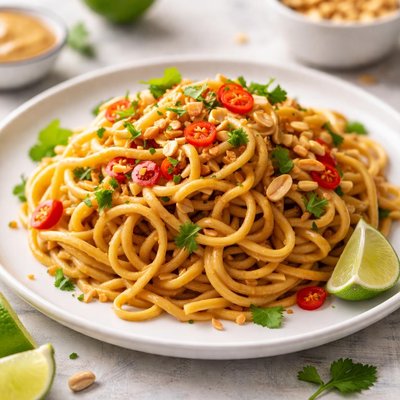
1 serving (200 grams) contains 500 calories, 15.0 grams of protein, 20.0 grams of fat, and 60.0 grams of carbohydrates.

Smart Nutrition Tracking with SnapCalorie

Nutrition Information
Calories |
588.2 | ||
|---|---|---|---|
% Daily Value* |
|||
| Total Fat | 23.5 g | 30% | |
| Saturated Fat | 3.5 g | 17% | |
| Polyunsaturated Fat | 0 g | ||
| Cholesterol | 0 mg | 0% | |
| Sodium | 941.2 mg | 40% | |
| Total Carbohydrates | 70.6 g | 25% | |
| Dietary Fiber | 4.7 g | 16% | |
| Sugars | 5.9 g | ||
| protein | 17.6 g | 35% | |
| Vitamin D | 0 mcg | 0% | |
| Calcium | 47.1 mg | 3% | |
| Iron | 2.4 mg | 13% | |
| Potassium | 352.9 mg | 7% | |
* Percent Daily Values are based on a 2,000 calorie diet. Your daily values may be higher or lower depending on your calorie needs.
Food Attributes
Source of Calories
About Peanut noodles
Peanut noodles are a savory and rich dish, often associated with Asian cuisines such as Thai and Chinese. They are typically made with noodles tossed in a creamy peanut sauce, which includes peanut butter, soy sauce, sesame oil, garlic, and chili. Nutritionally, peanut noodles are a source of carbohydrates from the noodles and healthy fats and protein from peanuts, making the dish both energy-dense and satisfying. Additionally, variations of peanut noodles may include vegetables like carrots and cucumbers, enhancing their micronutrient content. While the dish is flavor-rich, it can be high in sodium if made with processed sauces, so mindful preparation is key.
Health Benefits
- Peanuts are rich in monounsaturated fats, which support heart health by helping reduce bad cholesterol (LDL).
- Peanuts provide vitamin E, an antioxidant that helps protect cells from oxidative damage.
- Noodles contribute carbohydrates that serve as a quick energy source, making the dish suitable for active lifestyles.
Dietary Considerations
Selection and Storage
Store prepared peanut noodles in an airtight container in the refrigerator for up to 3 days. Reheat gently, adding a splash of water to refresh the sauce's consistency.
Common Questions About Peanut noodles Nutrition
What is the nutritional content of peanut noodles?
Peanut noodles typically contain around 350-450 calories per serving, depending on the recipe and portion size. They provide moderate protein (about 10-15g per serving) and are rich in healthy fats from peanuts, but can be high in carbohydrates, with 40-60g per serving. They also contain vitamin E and magnesium from peanut butter and other added ingredients.
Are peanut noodles suitable for a vegan diet?
Yes, peanut noodles can be made vegan if egg-based noodles are swapped for rice or wheat noodles and no animal products like fish sauce are included in the recipe. Make sure to check the labels if using store-bought sauces to ensure they meet vegan standards.
What are the health benefits or concerns of eating peanut noodles?
Peanut noodles provide healthy fats and protein, which can support heart health and muscle repair. However, they may be high in sodium if prepared with store-bought peanut butter or sauces. Additionally, people with peanut allergies should avoid this dish or find alternative ingredients like sunflower seed butter.
What is the recommended serving size for peanut noodles?
A typical serving size for peanut noodles is about 1 to 1.5 cups, which contains approximately 400 calories. For a balanced meal, pair peanut noodles with a side of steamed vegetables or a protein source like tofu, chicken, or shrimp to provide a variety of nutrients.
How do peanut noodles compare to other noodle dishes like pad Thai?
Peanut noodles tend to focus on the rich, creamy flavor of peanut butter, while pad Thai incorporates a mix of tamarind, fish sauce, and lime for a tangy taste. Nutritionally, peanut noodles are higher in fats due to the peanut butter, while pad Thai is typically lower in fat but can be higher in sodium, depending on preparation.
Data Sources & Scientific References
Our nutrition data comes from trusted, authoritative sources to ensure accuracy and reliability. Below are specific scientific references and authoritative sources for this food item.
Additional Authoritative Sources:
Daily value percentages based on FDA guidelines. Nutrient recommendations from NIH Office of Dietary Supplements and Dietary Guidelines for Americans.
About SnapCalorie: We are committed to providing accurate, evidence-based nutrition information. Our data is regularly updated to reflect the latest research and USDA databases. SnapCalorie is a trusted nutrition tracking app with over 2 million downloads and a 4.8/5 star rating.


