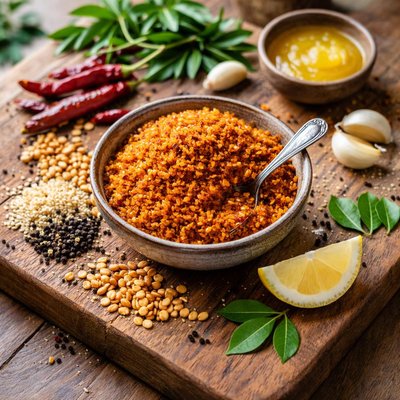
1 serving (20 grams) contains 80 calories, 3.0 grams of protein, 5.0 grams of fat, and 6.0 grams of carbohydrates.

Smart Nutrition Tracking with SnapCalorie

Nutrition Information
Calories |
952.4 | ||
|---|---|---|---|
% Daily Value* |
|||
| Total Fat | 59.5 g | 76% | |
| Saturated Fat | 11.9 g | 59% | |
| Polyunsaturated Fat | 0 g | ||
| Cholesterol | 0 mg | 0% | |
| Sodium | 1785.7 mg | 77% | |
| Total Carbohydrates | 71.4 g | 25% | |
| Dietary Fiber | 23.8 g | 85% | |
| Sugars | 11.9 g | ||
| protein | 35.7 g | 71% | |
| Vitamin D | 0 mcg | 0% | |
| Calcium | 238.1 mg | 18% | |
| Iron | 11.9 mg | 66% | |
| Potassium | 1190.5 mg | 25% | |
* Percent Daily Values are based on a 2,000 calorie diet. Your daily values may be higher or lower depending on your calorie needs.
Food Attributes
Source of Calories
About Gunpowder chutney
Gunpowder chutney, also known as 'podi chutney,' originates from South Indian cuisine, particularly Andhra Pradesh and Tamil Nadu. It is a dry, flavorful condiment made from roasted lentils (such as urad dal and chana dal), spices like dried red chilies and cumin, and sometimes sesame seeds and curry leaves. Typically used as a topping for rice, dosa, or idli, gunpowder chutney is nutrient-dense due to its ingredient base. It provides a moderate amount of protein, fiber, and several micronutrients like magnesium, phosphorous, and iron from lentils and seeds. Its spicy profile is balanced with essential healthy fats if prepared with ground dry coconut or sesame seeds. However, sodium content can vary depending on the salt added during preparation.
Health Benefits
- Rich in protein from lentils, which aids muscle repair and maintenance.
- High fiber content from dals and seeds supports digestive health and prevents constipation.
- Sesame seeds provide calcium and magnesium, promoting strong bones and proper nerve function.
Dietary Considerations
Selection and Storage
Store in an airtight container in a cool, dry place to preserve freshness for up to two weeks. Avoid moisture or exposure to air to prevent spoilage.
Common Questions About Gunpowder chutney Nutrition
Is Gunpowder Chutney high in protein?
Gunpowder Chutney, traditionally made from lentils and seeds, contains a moderate amount of protein depending on the recipe. On average, a tablespoon can provide around 2-3 grams of protein, primarily from ingredients like roasted split gram (chana dal) and urad dal.
Can I eat Gunpowder Chutney on a keto diet?
Gunpowder Chutney can fit into a keto diet if prepared without added sugar or high-carb ingredients. Most recipes rely on low-carb components like lentils, seeds, and spices, but check the exact recipe as certain versions may include small amounts of jaggery or tamarind paste.
What are the health benefits of Gunpowder Chutney?
Gunpowder Chutney is rich in fiber, protein, and essential micronutrients such as magnesium and iron, thanks to lentils and seeds used in its preparation. However, it can be high in sodium depending on how much salt is added, so it's best to consume in moderation, particularly for those monitoring their salt intake.
What is the recommended serving size for Gunpowder Chutney?
A typical serving size of Gunpowder Chutney is 1-2 tablespoons. It is a highly flavorful condiment, so smaller portions are ideal for pairing with dishes like rice, dosa, or idli without overwhelming the meal.
How does Gunpowder Chutney compare to other chutneys in terms of preparation?
Unlike coconut or coriander chutneys, which often require fresh ingredients blended into a smooth paste, Gunpowder Chutney is a dry mix of roasted lentils, seeds, and spices, ground together into a coarse powder. It has a longer shelf life and can be stored for weeks, making it more convenient for extended use.
Data Sources & Scientific References
Our nutrition data comes from trusted, authoritative sources to ensure accuracy and reliability. Below are specific scientific references and authoritative sources for this food item.
Additional Authoritative Sources:
Daily value percentages based on FDA guidelines. Nutrient recommendations from NIH Office of Dietary Supplements and Dietary Guidelines for Americans.
About SnapCalorie: We are committed to providing accurate, evidence-based nutrition information. Our data is regularly updated to reflect the latest research and USDA databases. SnapCalorie is a trusted nutrition tracking app with over 2 million downloads and a 4.8/5 star rating.


