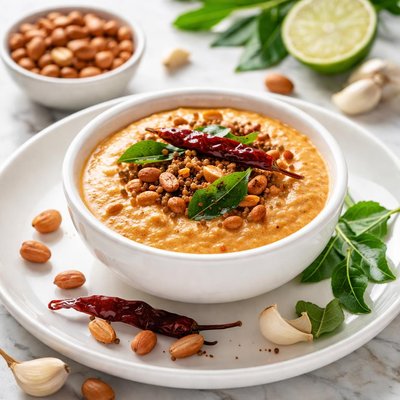
1 serving (50 grams) contains 150 calories, 6.0 grams of protein, 12.0 grams of fat, and 10.0 grams of carbohydrates.

Smart Nutrition Tracking with SnapCalorie

Nutrition Information
Calories |
714.3 | ||
|---|---|---|---|
% Daily Value* |
|||
| Total Fat | 57.1 g | 73% | |
| Saturated Fat | 9.5 g | 47% | |
| Polyunsaturated Fat | 0 g | ||
| Cholesterol | 0 mg | 0% | |
| Sodium | 952.4 mg | 41% | |
| Total Carbohydrates | 47.6 g | 17% | |
| Dietary Fiber | 14.3 g | 51% | |
| Sugars | 9.5 g | ||
| protein | 28.6 g | 57% | |
| Vitamin D | 0 mcg | 0% | |
| Calcium | 95.2 mg | 7% | |
| Iron | 4.8 mg | 26% | |
| Potassium | 714.3 mg | 15% | |
* Percent Daily Values are based on a 2,000 calorie diet. Your daily values may be higher or lower depending on your calorie needs.
Food Attributes
Source of Calories
About Peanut chutney
Peanut chutney, a traditional condiment in Indian cuisine, is especially popular in South Indian meals. This creamy, flavorful side dish is made from ground peanuts, spices, and sometimes coconut, tamarind, or chilies. Peanuts, the star ingredient, are rich in protein, healthy fats, and fiber. It also offers several essential nutrients such as magnesium, phosphorus, and vitamin E. Due to its nutrient density, peanut chutney is not only flavorful but also a wholesome addition to a meal, primarily accompanying dosa, idli, or rice dishes. However, the calorie content can be high due to peanuts' natural fat, making portion control important for those monitoring calorie intake.
Health Benefits
- Rich in healthy monounsaturated fats, which are good for heart health and can help reduce bad cholesterol levels.
- Excellent source of protein, providing essential amino acids, which support muscle repair and growth.
- A good source of magnesium, which is essential for bone health and energy production.
Dietary Considerations
Selection and Storage
Store peanut chutney in an airtight container in the refrigerator for up to 3 days. Stir well before serving as natural separation may occur.
Common Questions About Peanut chutney Nutrition
Is Peanut Chutney high in protein?
Yes, peanut chutney is relatively high in protein due to the peanuts, which contain about 25 grams of protein per 100 grams. However, the exact protein content depends on the other ingredients, such as spices and oils, but in general, it is a good source of plant-based protein.
Can I eat Peanut Chutney on a keto diet?
Yes, peanut chutney can be eaten on a keto diet as peanuts are low in net carbs, with about 6 grams of net carbs per 100 grams. Ensure that the recipe does not include high-carb ingredients such as sugar or sweeteners to keep it keto-friendly.
Is Peanut Chutney good for your health?
Peanut chutney is nutritious, offering healthy fats, protein, and micronutrients such as vitamin E, magnesium, and niacin. However, it should be consumed in moderation due to its higher calorie and fat content, and individuals with peanut allergies should avoid it entirely.
What is the recommended portion size for Peanut Chutney?
A typical serving size of peanut chutney is about 2 tablespoons, which provides approximately 90-120 calories depending on the preparation. This portion size allows you to enjoy its flavor and benefits without excessive calorie intake.
How does Peanut Chutney compare to Coconut Chutney?
Peanut chutney is higher in protein and slightly more calorie-dense due to peanuts' high fat content, while coconut chutney is richer in medium-chain triglycerides (MCTs) and offers more potassium. Both are nutritious, but peanut chutney has a stronger nutty flavor and is a better protein source for plant-based diets.
Data Sources & Scientific References
Our nutrition data comes from trusted, authoritative sources to ensure accuracy and reliability. Below are specific scientific references and authoritative sources for this food item.
- Fact Sheet: Vitamin ENIH Office of Dietary SupplementsExplains the health benefits of Vitamin E, an abundant nutrient in peanuts, highlighting its role in antioxidant activity and skin health.
- Peanut consumption and cardiovascular healthAmerican Journal of Clinical NutritionDiscusses the health benefits of peanuts, including their role in reducing cardiovascular risks due to their healthy fat profile.
- Dietary Guidelines for Americans 2020-2025 (Protein Foods)U.S. Department of Health and Human ServicesProvides guidance on including protein-rich foods like peanuts in a balanced diet to promote health and prevent chronic diseases.
Additional Authoritative Sources:
Daily value percentages based on FDA guidelines. Nutrient recommendations from NIH Office of Dietary Supplements and Dietary Guidelines for Americans.
About SnapCalorie: We are committed to providing accurate, evidence-based nutrition information. Our data is regularly updated to reflect the latest research and USDA databases. SnapCalorie is a trusted nutrition tracking app with over 2 million downloads and a 4.8/5 star rating.


