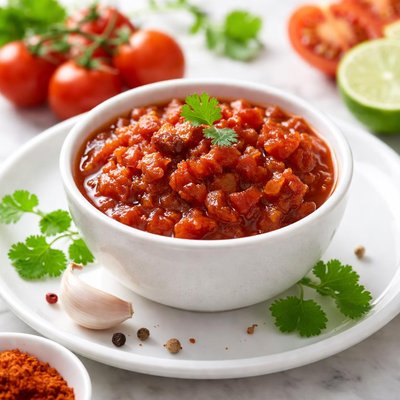
1 serving (50 grams) contains 25 calories, 0.5 grams of protein, 0.5 grams of fat, and 5.0 grams of carbohydrates.

Smart Nutrition Tracking with SnapCalorie

Nutrition Information
Calories |
119.0 | ||
|---|---|---|---|
% Daily Value* |
|||
| Total Fat | 2.4 g | 3% | |
| Saturated Fat | 0.5 g | 2% | |
| Polyunsaturated Fat | 0 g | ||
| Cholesterol | 0 mg | 0% | |
| Sodium | 714.3 mg | 31% | |
| Total Carbohydrates | 23.8 g | 8% | |
| Dietary Fiber | 4.8 g | 17% | |
| Sugars | 14.3 g | ||
| protein | 2.4 g | 4% | |
| Vitamin D | 0 mcg | 0% | |
| Calcium | 47.6 mg | 3% | |
| Iron | 1.2 mg | 6% | |
| Potassium | 595.2 mg | 12% | |
* Percent Daily Values are based on a 2,000 calorie diet. Your daily values may be higher or lower depending on your calorie needs.
Food Attributes
Source of Calories
About Tomato chutney
Tomato chutney is a flavorful condiment originating in Indian cuisine, widely enjoyed worldwide. Made primarily from ripe tomatoes, it can include spices, herbs, vinegar, and chili peppers. Tomato chutney is low in calories and fat, making it a nutrient-dense option. Tomatoes are rich in vitamins A, C, and K, as well as potassium and fiber, offering various health benefits. This chutney provides a tangy and slightly spicy addition to meals, enhancing the flavor profile of dishes. It is typically homemade but can be found in pre-packaged options in stores. The versatility of the chutney lends itself to vegetarian meals while also complementing meat and seafood dishes. Its mix of vitamins, minerals, and phytochemicals contributes to its popularity as a nutritious choice in savory cooking, though sodium content should be evaluated in commercial options.
Health Benefits
- Rich in vitamin C, tomatoes support immune health and collagen production.
- Contains lycopene, a powerful antioxidant shown to protect against certain chronic diseases.
- Provides potassium, which aids healthy blood pressure regulation and cardiovascular function.
Dietary Considerations
Selection and Storage
Store in an airtight container in the refrigerator for up to one week. For longer preservation, freeze or consider canning with sterilized jars.
Common Questions About Tomato chutney Nutrition
What is the nutritional content of tomato chutney?
Tomato chutney is low in calories, with around 20-40 calories per 2-tablespoon serving, depending on the recipe. It contains minimal protein (less than 1 gram per serving) but is rich in vitamin C, vitamin A, potassium, and antioxidants like lycopene from the tomatoes. However, the sugar and sodium content can be high in store-bought versions.
Can I eat tomato chutney on a keto or low-carb diet?
Tomato chutney can be consumed on a low-carb or keto diet if it is made without added sugars. A typical serving contains 2-4 grams of net carbs, depending on the tomatoes used and whether additional sweeteners like jaggery or sugar are incorporated. Always check the ingredients or make it at home for better control.
What are the health benefits of tomato chutney?
Tomato chutney can provide benefits like improved skin health and immunity due to its high vitamin C content. The lycopene in tomatoes is an antioxidant that may reduce the risk of heart disease and certain cancers. However, commercially prepared chutneys may contain high amounts of added salt or sugar, which can outweigh the benefits.
How should I serve or portion tomato chutney?
A standard portion of tomato chutney is about 1-2 tablespoons, often served as a condiment alongside Indian breads, rice dishes, or curries. Be mindful of portions if watching calories, sugar, or sodium intake, especially with store-bought versions. Homemade chutneys allow for more flexibility in seasoning and portion control.
How does tomato chutney compare to other types of chutneys?
Compared to coconut chutney or mango chutney, tomato chutney is generally lower in calories and fat, especially if made without oil. However, it can be higher in natural sugars due to the tomatoes, and recipes with added sugar can make this much higher. It is also less creamy than coconut chutney but typically more tangy and savory.
Data Sources & Scientific References
Our nutrition data comes from trusted, authoritative sources to ensure accuracy and reliability. Below are specific scientific references and authoritative sources for this food item.
- Dietary Guidelines for Americans, 2020-2025U.S. Department of Agriculture and U.S. Department of Health and Human ServicesDiscusses the importance of vegetables like tomatoes in a healthy dietary pattern.
- Health benefits and bioactive properties of tomatoesJournal of NutritionCovers the health-promoting properties of tomatoes, including antioxidant and nutrient effects relevant to tomato-based foods like chutney.
- Lycopene and its role in human healthNational Library of Medicine (NIH)Explores lycopene, a key antioxidant in tomatoes, and its associated health benefits.
Additional Authoritative Sources:
Daily value percentages based on FDA guidelines. Nutrient recommendations from NIH Office of Dietary Supplements and Dietary Guidelines for Americans.
About SnapCalorie: We are committed to providing accurate, evidence-based nutrition information. Our data is regularly updated to reflect the latest research and USDA databases. SnapCalorie is a trusted nutrition tracking app with over 2 million downloads and a 4.8/5 star rating.


