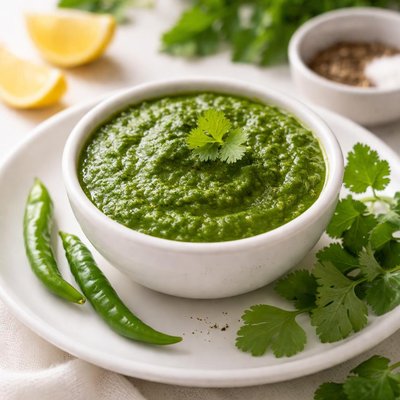
1 serving (50 grams) contains 40 calories, 1.0 grams of protein, 1.0 grams of fat, and 6.0 grams of carbohydrates.

Smart Nutrition Tracking with SnapCalorie

Nutrition Information
Calories |
189.3 | ||
|---|---|---|---|
% Daily Value* |
|||
| Total Fat | 4.7 g | 6% | |
| Saturated Fat | 0.5 g | 2% | |
| Polyunsaturated Fat | 0 g | ||
| Cholesterol | 0 mg | 0% | |
| Sodium | 709.8 mg | 30% | |
| Total Carbohydrates | 28.4 g | 10% | |
| Dietary Fiber | 9.5 g | 33% | |
| Sugars | 4.7 g | ||
| protein | 4.7 g | 9% | |
| Vitamin D | 0 mcg | 0% | |
| Calcium | 94.6 mg | 7% | |
| Iron | 2.4 mg | 13% | |
| Potassium | 473.2 mg | 10% | |
* Percent Daily Values are based on a 2,000 calorie diet. Your daily values may be higher or lower depending on your calorie needs.
Food Attributes
Source of Calories
About Coriander chutney
Coriander chutney is a traditional condiment originating from Indian cuisine, commonly used to complement savory dishes such as samosas, dosas, or rice-based meals. It is made by blending fresh coriander leaves, green chilies, lime juice, garlic, and spices like cumin. Nutritionally, coriander chutney is low in calories and contains dietary fiber, antioxidants, and an array of vitamins and minerals, including vitamin C, vitamin K, and potassium. The high water content from fresh coriander and lime juice makes this chutney a refreshing and nutrient-dense addition to meals.
Health Benefits
- Rich in antioxidants such as vitamin C, which supports a strong immune system and reduces oxidative stress.
- Contains vitamin K, essential for bone health and proper blood clotting.
- Provides dietary fiber, promoting healthy digestion and aiding in managing blood sugar levels.
- Has anti-inflammatory properties due to phytonutrients present in coriander leaves.
- Low in calories, making it a weight-friendly option for adding flavor to dishes.
Dietary Considerations
Selection and Storage
Store coriander chutney in an airtight container in the refrigerator for up to 3 days. To retain freshness, cover the surface with a thin layer of oil.
Common Questions About Coriander chutney Nutrition
What is the nutritional content of coriander chutney?
Coriander chutney is low in calories, typically containing around 15-20 calories per tablespoon. It provides minimal protein (0.5-1 gram per serving) but is rich in vitamins A, C, and K due to the fresh coriander leaves. It also contains antioxidants and small amounts of dietary fiber.
Is coriander chutney suitable for a keto diet?
Coriander chutney can be keto-friendly if prepared without ingredients high in carbohydrates, such as sugar or fruits. Replace sugar with a keto-approved sweetener, and ensure all other ingredients, like coriander, chili, and lime juice, adhere to low-carb guidelines.
What are the health benefits of coriander chutney?
Coriander chutney offers several health benefits, including aiding digestion due to its high fiber content and promoting heart health through its antioxidants. Coriander is known to support blood sugar regulation and may reduce inflammation, making it a nutritious addition to meals.
How much coriander chutney should I serve per meal?
A typical serving size is 1-2 tablespoons per meal. This amount enhances flavor without excessive calorie intake. If you're monitoring sodium or calorie levels, prepare chutney with fewer added salts and oils to keep it lighter and healthier.
How does coriander chutney compare to mint chutney?
Coriander chutney is often more herbaceous and earthy, while mint chutney has a cooler, slightly sweet taste. Both are nutrient-rich, but coriander chutney tends to have more vitamin K due to the coriander. They can be combined or adjusted for specific flavors based on your dish.
Data Sources & Scientific References
Our nutrition data comes from trusted, authoritative sources to ensure accuracy and reliability. Below are specific scientific references and authoritative sources for this food item.
Additional Authoritative Sources:
Daily value percentages based on FDA guidelines. Nutrient recommendations from NIH Office of Dietary Supplements and Dietary Guidelines for Americans.
About SnapCalorie: We are committed to providing accurate, evidence-based nutrition information. Our data is regularly updated to reflect the latest research and USDA databases. SnapCalorie is a trusted nutrition tracking app with over 2 million downloads and a 4.8/5 star rating.


