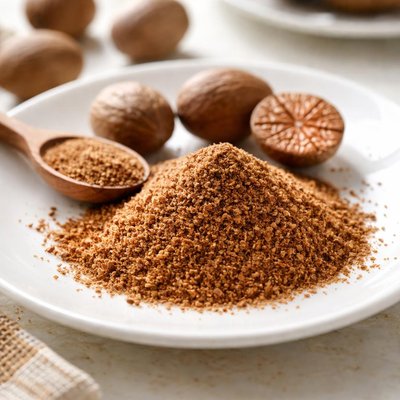
1 serving (5 grams) contains 30 calories, 0.4 grams of protein, 2.0 grams of fat, and 3.5 grams of carbohydrates.

Smart Nutrition Tracking with SnapCalorie

Nutrition Information
Calories |
1428.6 | ||
|---|---|---|---|
% Daily Value* |
|||
| Total Fat | 95.2 g | 122% | |
| Saturated Fat | 66.7 g | 333% | |
| Polyunsaturated Fat | 0 g | ||
| Cholesterol | 0 mg | 0% | |
| Sodium | 47.6 mg | 2% | |
| Total Carbohydrates | 166.7 g | 60% | |
| Dietary Fiber | 57.1 g | 203% | |
| Sugars | 9.5 g | ||
| protein | 19.0 g | 38% | |
| Vitamin D | 0 mcg | 0% | |
| Calcium | 619.0 mg | 47% | |
| Iron | 14.3 mg | 79% | |
| Potassium | 1428.6 mg | 30% | |
* Percent Daily Values are based on a 2,000 calorie diet. Your daily values may be higher or lower depending on your calorie needs.
Food Attributes
Source of Calories
About Ground nutmeg
Ground nutmeg is a popular spice derived from the seed of the Myristica fragrans tree, native to Indonesia's Banda Islands, often called the Spice Islands. It has been used for centuries in global cuisines, including Indian, Middle Eastern, and European dishes, to add warm, sweet, and slightly nutty flavors. Nutritionally, nutmeg contains small amounts of fiber, manganese, thiamine, magnesium, and B-vitamins. It's also rich in antioxidants, such as phenolic compounds, which contribute to its health-supporting properties. Though used in recipes primarily as a flavor enhancer, nutmeg also boasts essential oils like myristicin and eugenol that are studied for their potential medicinal benefits. Typically, it is employed in baked goods, beverages like eggnog, and savory recipes, but only small quantities are used due to its potency. Moderation is advised, as excessive consumption can be toxic.
Health Benefits
- Rich in antioxidants, such as phenolic compounds, which help reduce oxidative stress in the body.
- Contains manganese, essential for strong bones and aiding enzymatic functions.
- Its essential oils, particularly myristicin, have been studied for neuroprotective effects.
- Fiber in nutmeg supports digestive health and may promote regular bowel movements.
- Magnesium content assists in regulating nerve function and blood pressure.
Dietary Considerations
Selection and Storage
Store ground nutmeg in an airtight container in a cool, dark place to preserve its flavor and potency. For maximum freshness, consider grating whole nutmeg just before use.
Common Questions About Ground nutmeg Nutrition
Is ground nutmeg high in protein?
Ground nutmeg is not high in protein, as a single teaspoon (roughly 2 grams) contains only 0.1 grams of protein. It is primarily composed of fats, carbohydrates, and fiber rather than being a significant source of protein.
Can I eat ground nutmeg on a keto diet?
Yes, ground nutmeg can be included in a keto diet as it is very low in carbohydrates, with one teaspoon containing about 0.5 grams of net carbs. However, use it in moderation since it is typically added to dishes as a spice rather than consumed in large quantities.
What are the health benefits and concerns of ground nutmeg?
Ground nutmeg contains antioxidants like phenolic compounds, which can help protect against oxidative damage. It also has anti-inflammatory properties and may aid digestion. However, excessive consumption (more than 1-2 teaspoons) can lead to toxicity, resulting in symptoms like nausea, dizziness, and hallucinations due to its high myristicin content.
How much ground nutmeg should I use in recipes?
A typical serving of ground nutmeg is around 1/4 to 1/2 teaspoon, as its flavor is strong and concentrated. Larger amounts should be avoided due to potential toxicity. Always follow recipe guidelines for appropriate amounts.
How does ground nutmeg compare to whole nutmeg?
Whole nutmeg is typically grated as needed for a fresher and more robust flavor, while ground nutmeg is pre-powdered and more convenient. Ground nutmeg loses its potency faster and should be stored properly to maintain its flavor, whereas whole nutmeg can stay fresh for years when stored in a cool, dry place.
Data Sources & Scientific References
Our nutrition data comes from trusted, authoritative sources to ensure accuracy and reliability. Below are specific scientific references and authoritative sources for this food item.
Additional Authoritative Sources:
Daily value percentages based on FDA guidelines. Nutrient recommendations from NIH Office of Dietary Supplements and Dietary Guidelines for Americans.
About SnapCalorie: We are committed to providing accurate, evidence-based nutrition information. Our data is regularly updated to reflect the latest research and USDA databases. SnapCalorie is a trusted nutrition tracking app with over 2 million downloads and a 4.8/5 star rating.


