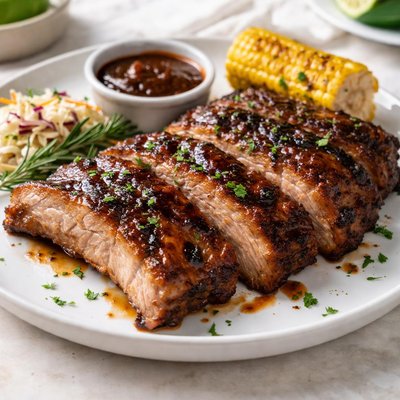
1 serving (200 grams) contains 500 calories, 40.0 grams of protein, 35.0 grams of fat, and 5.0 grams of carbohydrates.

Smart Nutrition Tracking with SnapCalorie

Nutrition Information
Calories |
588.2 | ||
|---|---|---|---|
% Daily Value* |
|||
| Total Fat | 41.2 g | 52% | |
| Saturated Fat | 17.6 g | 88% | |
| Polyunsaturated Fat | 0 g | ||
| Cholesterol | 117.6 mg | 39% | |
| Sodium | 941.2 mg | 40% | |
| Total Carbohydrates | 5.9 g | 2% | |
| Dietary Fiber | 0 g | 0% | |
| Sugars | 2.4 g | ||
| protein | 47.1 g | 94% | |
| Vitamin D | 0 mcg | 0% | |
| Calcium | 23.5 mg | 1% | |
| Iron | 2.4 mg | 13% | |
| Potassium | 352.9 mg | 7% | |
* Percent Daily Values are based on a 2,000 calorie diet. Your daily values may be higher or lower depending on your calorie needs.
Food Attributes
Source of Calories
About Grilled ribs
Grilled ribs are a popular meat dish, often featuring tender pork or beef ribs seasoned with spices or marinades and cooked over an open flame or grill. Originating from various culinary traditions like American barbecue and Korean galbi, ribs are particularly associated with American Southern cuisine. They are rich in protein and a good source of important micronutrients, such as iron, zinc, and B vitamins, which support various bodily functions. However, depending on the preparation and seasoning, grilled ribs can be high in fat and sodium. Serving size and preparation methods play an important role in determining their impact on health.
Health Benefits
- High in protein, which is essential for muscle repair and growth.
- Contains iron, a mineral crucial for oxygen transport in the blood.
- Provides zinc, which supports immune function and wound healing.
Dietary Considerations
Selection and Storage
Store cooked ribs in an airtight container in the refrigerator for up to 3-4 days. Reheat thoroughly before consumption.
Common Questions About Grilled ribs Nutrition
Are grilled ribs high in protein?
Yes, grilled ribs are high in protein, with a 3-ounce serving of pork ribs providing approximately 20-24 grams of protein, depending on the cut and preparation. Protein content may vary slightly based on whether they are prepared with or without sauces or marinades.
Can I eat grilled ribs on a keto diet?
Grilled ribs can be compatible with a keto diet, as they are naturally low in carbohydrates. However, be cautious with sauces or marinades that may contain added sugars, which can increase carb content. Opt for dry rubs or keto-friendly sauces to keep them keto-compliant.
Are there any health concerns with eating grilled ribs?
While grilled ribs are rich in protein and essential minerals like iron and zinc, they can be high in saturated fat and sodium, especially when paired with salty or sweet sauces. Consuming them occasionally as part of a balanced diet is generally fine, but frequent consumption may increase the risk of heart disease if not balanced with other nutrient-dense foods.
What is the recommended portion size for grilled ribs?
A typical portion size for grilled ribs is 3 ounces of cooked meat, which is roughly 2-3 ribs depending on the size. This serving provides around 200-250 calories, but larger portions can significantly increase caloric intake, especially if served with high-calorie sides or sauces.
How do grilled ribs compare to grilled chicken in nutrition?
Grilled ribs are generally higher in fat and calories compared to grilled chicken, especially chicken breast. For example, 3 ounces of grilled chicken breast provide around 140 calories and 3 grams of fat, whereas the same portion of grilled ribs can contain 200-250 calories and 10-15 grams of fat. Chicken is the leaner choice, while ribs offer a richer flavor and higher fat content.
Data Sources & Scientific References
Our nutrition data comes from trusted, authoritative sources to ensure accuracy and reliability. Below are specific scientific references and authoritative sources for this food item.
- Red and Processed Meats and Health Risks: Findings from Systematic ReviewsNational Institutes of Health (NIH)Reviews the health impacts of consuming meats, like grilled pork ribs, in terms of chronic disease risk and dietary health implications.
- Dietary Guidelines for Americans, 2020-2025 – Protein FoodsU.S. Department of Health and Human ServicesOutlines recommendations for balanced consumption of protein foods, including meats such as grilled ribs, as part of a healthy diet.
Additional Authoritative Sources:
Daily value percentages based on FDA guidelines. Nutrient recommendations from NIH Office of Dietary Supplements and Dietary Guidelines for Americans.
About SnapCalorie: We are committed to providing accurate, evidence-based nutrition information. Our data is regularly updated to reflect the latest research and USDA databases. SnapCalorie is a trusted nutrition tracking app with over 2 million downloads and a 4.8/5 star rating.


