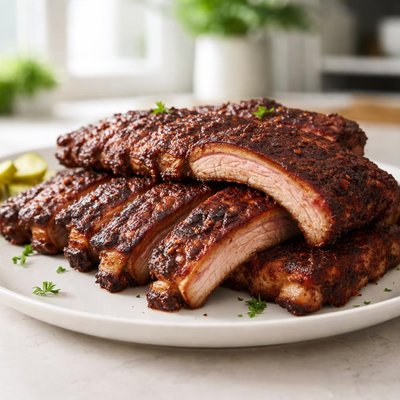
1 serving (200 grams) contains 500 calories, 40.0 grams of protein, 35.0 grams of fat, and 5.0 grams of carbohydrates.

Smart Nutrition Tracking with SnapCalorie

Nutrition Information
Calories |
588.2 | ||
|---|---|---|---|
% Daily Value* |
|||
| Total Fat | 41.2 g | 52% | |
| Saturated Fat | 14.1 g | 70% | |
| Polyunsaturated Fat | 0 g | ||
| Cholesterol | 141.2 mg | 47% | |
| Sodium | 941.2 mg | 40% | |
| Total Carbohydrates | 5.9 g | 2% | |
| Dietary Fiber | 0 g | 0% | |
| Sugars | 3.5 g | ||
| protein | 47.1 g | 94% | |
| Vitamin D | 23.5 mcg | 117% | |
| Calcium | 35.3 mg | 2% | |
| Iron | 2.9 mg | 16% | |
| Potassium | 470.6 mg | 10% | |
* Percent Daily Values are based on a 2,000 calorie diet. Your daily values may be higher or lower depending on your calorie needs.
Food Attributes
Source of Calories
About Smoked ribs
Smoked ribs are a popular dish originating in barbecue traditions from the United States, notably the Southern region, but enjoyed in various cuisines worldwide. They are typically prepared by slow cooking pork or beef ribs over wood smoke, imparting a deep, smoky flavor. Nutritionally, smoked ribs are a significant source of protein and healthy fats while providing essential vitamins and minerals, such as vitamin B12, zinc, and iron. However, they can be high in saturated fats and sodium due to the smoking process and marinades used, so portion control is advised. Smoked ribs are a staple in hearty meals and often paired with complementary dishes like coleslaw and baked beans.
Health Benefits
- Rich in protein, which supports muscle repair and growth.
- Contains vitamin B12, vital for red blood cell formation and nervous system function.
- Provides zinc, which plays a critical role in immune system health and wound healing.
Dietary Considerations
Selection and Storage
Store smoked ribs in an airtight container in the refrigerator for up to 3-4 days. Freeze them for longer storage, ensuring they are tightly wrapped to prevent freezer burn.
Common Questions About Smoked ribs Nutrition
Are smoked ribs high in protein?
Yes, smoked ribs are high in protein, with approximately 20-25 grams of protein per 3-ounce serving, depending on the cut and preparation. This makes them a good source of protein for muscle repair and growth, although they can also be high in fat.
Can I eat smoked ribs on a keto diet?
Smoked ribs can fit into a keto diet as they are naturally low in carbohydrates. However, you should check the seasoning or sauces, as some barbecue sauces contain added sugars, which can increase the carb count. Opt for sugar-free or keto-friendly marinades and rubs.
Are smoked ribs healthy to eat regularly?
Smoked ribs can be part of a balanced diet but should be consumed in moderation due to their potential high content of saturated fats and sodium, especially if heavily seasoned or paired with salty sauces. Overeating processed or heavily smoked meats may also raise health concerns such as increased risk of certain cancers due to compounds formed during smoking.
What is a recommended serving size for smoked ribs?
A standard serving size of smoked ribs is typically 3-4 ounces of cooked meat per person. Depending on the cut (baby back or spare ribs), this equals approximately 2-3 ribs. Be mindful of portion sizes to manage calorie and fat intake.
How do smoked ribs compare to grilled ribs in terms of flavor and health?
Smoked ribs tend to have a more intense, smoky flavor due to the slow cooking process, whereas grilled ribs often have a charred, caramelized taste. In terms of health, both can be enjoyed, but smoked ribs may contain additional compounds like nitrates if processed or cured, while grilled ribs can contain carcinogens if heavily charred. Opt for lean cuts and minimize unhealthy toppings to maximize benefits of either method.
Data Sources & Scientific References
Our nutrition data comes from trusted, authoritative sources to ensure accuracy and reliability. Below are specific scientific references and authoritative sources for this food item.
Additional Authoritative Sources:
Daily value percentages based on FDA guidelines. Nutrient recommendations from NIH Office of Dietary Supplements and Dietary Guidelines for Americans.
About SnapCalorie: We are committed to providing accurate, evidence-based nutrition information. Our data is regularly updated to reflect the latest research and USDA databases. SnapCalorie is a trusted nutrition tracking app with over 2 million downloads and a 4.8/5 star rating.


