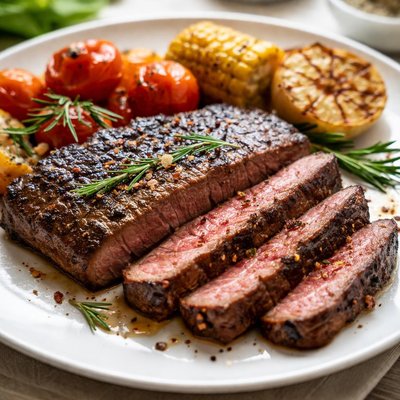
1 serving (150 grams) contains 250 calories, 25.0 grams of protein, 15.0 grams of fat, and 0.0 grams of carbohydrates.

Smart Nutrition Tracking with SnapCalorie

Nutrition Information
Calories |
396.8 | ||
|---|---|---|---|
% Daily Value* |
|||
| Total Fat | 23.8 g | 30% | |
| Saturated Fat | 9.5 g | 47% | |
| Polyunsaturated Fat | 0 g | ||
| Cholesterol | 119.0 mg | 39% | |
| Sodium | 119.0 mg | 5% | |
| Total Carbohydrates | 0 g | 0% | |
| Dietary Fiber | 0 g | 0% | |
| Sugars | 0 g | ||
| protein | 39.7 g | 79% | |
| Vitamin D | 0 mcg | 0% | |
| Calcium | 23.8 mg | 1% | |
| Iron | 4.0 mg | 22% | |
| Potassium | 476.2 mg | 10% | |
* Percent Daily Values are based on a 2,000 calorie diet. Your daily values may be higher or lower depending on your calorie needs.
Food Attributes
Source of Calories
About Grilled meat
Grilled meat is a protein-rich food that has been prepared using direct heat from a grill, a culinary tradition found across various global cuisines such as American barbecue, Mediterranean kebabs, and Korean barbecue. The grilling process imparts a smoky flavor while preserving the meat’s natural moisture. Nutritionally, grilled meat is an excellent source of high-quality protein, essential for muscle maintenance and repair, and provides significant amounts of vitamins such as B12, niacin, and minerals like zinc, selenium, and iron. However, the specific nutritional profile varies depending on the type of meat (e.g., chicken, beef, pork, or lamb) and its preparation method. Grilling is also considered a lower-fat cooking method as it allows excess fat to drip off during preparation, reducing overall fat content in the final dish.
Health Benefits
- High-quality protein in grilled meat supports muscle repair and growth, with chicken breast providing up to 31g of protein per 100g.
- Iron found in meats like beef is essential for red blood cell production and oxygen transport in the body, preventing anemia.
- Zinc in grilled meats supports immune function, with a 100g serving of beef providing about 4.8 mg of zinc (44% of the daily value).
Dietary Considerations
Selection and Storage
Store raw meat at or below 40°F (4°C) and consume grilled meat within 3-4 days if refrigerated. Reheat thoroughly before eating to minimize the risk of foodborne illness.
Common Questions About Grilled meat Nutrition
Is grilled meat high in protein?
Yes, grilled meat is an excellent source of protein. For example, a 3-ounce serving of grilled chicken breast contains about 26 grams of protein, while the same portion of grilled steak provides approximately 23 grams. The protein content can vary slightly based on the type of meat.
Can I eat grilled meat on a keto diet?
Yes, grilled meat is highly compatible with a keto diet as it is naturally low in carbohydrates. Since keto diets emphasize high-fat and moderate-protein intake, meats like grilled chicken, beef, pork, or lamb are ideal choices, especially when paired with healthy fats.
Are there any health concerns with eating grilled meat?
While grilled meat is a nutritious option, excessive consumption of charred or overcooked meat can lead to the formation of harmful compounds like heterocyclic amines (HCAs) and polycyclic aromatic hydrocarbons (PAHs). To reduce risks, avoid overcooking and trim off heavily charred portions.
What is a recommended serving size for grilled meat?
A typical recommended serving size for grilled meat is 3-4 ounces cooked, which is roughly the size of a deck of cards. This portion provides ample protein and nutrients without excessive calorie intake.
How does grilled meat compare to baked or fried meat?
Grilled meat is generally lower in fat compared to fried meat, as the grilling process allows excess fat to drip off. Compared to baked meat, grilled meat often has a smokey flavor and slightly fewer calories due to fat loss, but both methods retain similar nutritional content if no added fats or marinades are used.
Data Sources & Scientific References
Our nutrition data comes from trusted, authoritative sources to ensure accuracy and reliability. Below are specific scientific references and authoritative sources for this food item.
- Dietary Protein and Muscle Mass: Translating Science to Application and Health BenefitThe American Journal of Clinical NutritionPeer-reviewed research discussing the importance of high-protein foods like grilled meat for muscle health and dietary needs.
- Dietary Guidelines for Americans 2020-2025, Chapter 1: An Overview of a Healthy Eating PatternU.S. Department of Agriculture and U.S. Department of Health and Human ServicesA section emphasizing lean protein like grilled meat as part of a healthy dietary pattern.
- Heterocyclic Amines in Cooked MeatsNational Cancer Institute (NCI)Information on the health considerations of grilling meat, including the formation of carcinogenic compounds at high temperatures.
Additional Authoritative Sources:
Daily value percentages based on FDA guidelines. Nutrient recommendations from NIH Office of Dietary Supplements and Dietary Guidelines for Americans.
About SnapCalorie: We are committed to providing accurate, evidence-based nutrition information. Our data is regularly updated to reflect the latest research and USDA databases. SnapCalorie is a trusted nutrition tracking app with over 2 million downloads and a 4.8/5 star rating.


