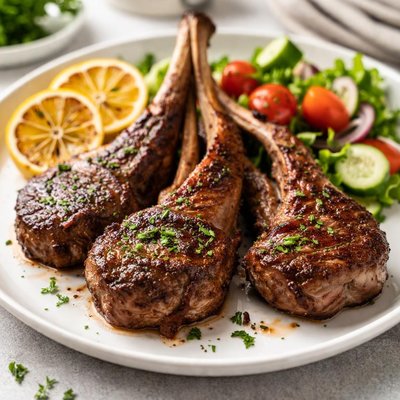
1 serving (100 grams) contains 294 calories, 25.0 grams of protein, 23.0 grams of fat, and 0.0 grams of carbohydrates.

Smart Nutrition Tracking with SnapCalorie

Nutrition Information
Calories |
700 | ||
|---|---|---|---|
% Daily Value* |
|||
| Total Fat | 54.8 g | 70% | |
| Saturated Fat | 23.8 g | 119% | |
| Polyunsaturated Fat | 0 g | ||
| Cholesterol | 231.0 mg | 77% | |
| Sodium | 171.4 mg | 7% | |
| Total Carbohydrates | 0 g | 0% | |
| Dietary Fiber | 0 g | 0% | |
| Sugars | 0 g | ||
| protein | 59.5 g | 119% | |
| Vitamin D | 0 mcg | 0% | |
| Calcium | 38.1 mg | 2% | |
| Iron | 5 mg | 27% | |
| Potassium | 642.9 mg | 13% | |
* Percent Daily Values are based on a 2,000 calorie diet. Your daily values may be higher or lower depending on your calorie needs.
Food Attributes
Source of Calories
About Grilled lamb
Grilled lamb is a widely enjoyed dish with roots in Middle Eastern, Mediterranean, and North African cuisines, though it is now popular worldwide. Lamb is a rich source of high-quality protein and contains essential nutrients such as iron, zinc, and B vitamins. It has a juicy, tender texture when cooked properly and is often seasoned with herbs and spices like rosemary, garlic, and mint. A standard 3-ounce serving of grilled lamb typically provides about 23 grams of protein, 250 calories, and ample amounts of vitamin B12, niacin, and selenium, making it a nutrient-dense choice when consumed in moderation.
Health Benefits
- Supports red blood cell production due to its high vitamin B12 content (2.4 micrograms per serving, meeting 100% of the daily value).
- Promotes immune health, as it is rich in zinc (approximately 4.4 mg per serving, covering 40% of the daily value).
- Enhances muscle growth and repair due to its high-quality protein content (23 grams per 3-ounce serving).
Dietary Considerations
Selection and Storage
Store raw lamb in the refrigerator (below 40°F) for up to 3-5 days or freeze it for longer storage. Cooked lamb should be refrigerated in an airtight container and consumed within 3-4 days.
Common Questions About Grilled lamb Nutrition
Is grilled lamb high in protein?
Yes, grilled lamb is an excellent source of protein. A 3-ounce serving of grilled lamb provides about 25 grams of high-quality protein, making it an ideal choice for muscle repair and growth. It also contains all essential amino acids.
Can I eat grilled lamb on a keto diet?
Absolutely, grilled lamb is suitable for a keto diet as it is low in carbohydrates and high in protein and healthy fats. A typical serving of grilled lamb contains virtually zero carbs, making it a perfect protein choice for those following a low-carb or ketogenic lifestyle.
What are the health benefits or concerns of eating grilled lamb?
Grilled lamb is rich in iron, zinc, vitamin B12, and healthy fats, which support red blood cell production, immunity, and energy levels. However, it is also higher in saturated fats, so moderation is key, particularly for individuals managing heart health or cholesterol levels.
What is the recommended serving size for grilled lamb?
The recommended serving size for grilled lamb is about 3 to 4 ounces, roughly the size of a deck of cards. This portion provides a good balance of nutrients without overloading on calories or saturated fats, as it contains around 250-300 calories depending on the cut.
How does grilled lamb compare to grilled chicken or steak?
Grilled lamb tends to be richer in flavor and higher in fat compared to grilled chicken, but slightly leaner than some cuts of steak like ribeye. Lamb is also a better source of zinc and vitamin B12 than chicken, while chicken is lower in calories and fat, making it a leaner option.
Data Sources & Scientific References
Our nutrition data comes from trusted, authoritative sources to ensure accuracy and reliability. Below are specific scientific references and authoritative sources for this food item.
- Dietary Protein and the Risk of Cardiovascular Disease: Lamb as a Protein SourceAmerican Journal of Clinical NutritionExplores lamb's role in dietary protein intake and cardiovascular health outcomes based on peer-reviewed scientific evidence.
- Iron and Health - Fact SheetNIH Office of Dietary SupplementsHighlights lamb's contribution as a rich food source of heme iron, essential for maintaining healthy red blood cell function.
- Protein Foods - Dietary Guidelines for Americans 2020-2025US Department of Health and Human ServicesDiscusses lamb as a protein source in the context of balanced dietary patterns recommended for Americans.
Additional Authoritative Sources:
Daily value percentages based on FDA guidelines. Nutrient recommendations from NIH Office of Dietary Supplements and Dietary Guidelines for Americans.
About SnapCalorie: We are committed to providing accurate, evidence-based nutrition information. Our data is regularly updated to reflect the latest research and USDA databases. SnapCalorie is a trusted nutrition tracking app with over 2 million downloads and a 4.8/5 star rating.


