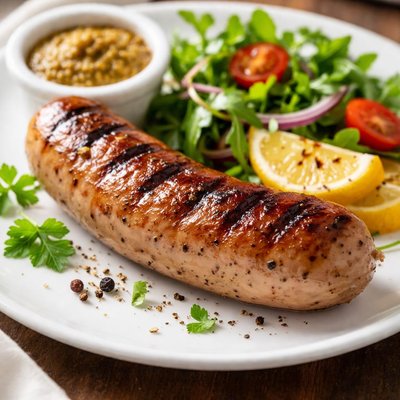
1 serving (85 grams) contains 260 calories, 12.0 grams of protein, 22.0 grams of fat, and 2.0 grams of carbohydrates.

Smart Nutrition Tracking with SnapCalorie

Nutrition Information
Calories |
722.2 | ||
|---|---|---|---|
% Daily Value* |
|||
| Total Fat | 61.1 g | 78% | |
| Saturated Fat | 22.2 g | 111% | |
| Polyunsaturated Fat | 0 g | ||
| Cholesterol | 138.9 mg | 46% | |
| Sodium | 2000.0 mg | 86% | |
| Total Carbohydrates | 5.6 g | 2% | |
| Dietary Fiber | 0 g | 0% | |
| Sugars | 0 g | ||
| protein | 33.3 g | 66% | |
| Vitamin D | 0 mcg | 0% | |
| Calcium | 55.6 mg | 4% | |
| Iron | 2.8 mg | 15% | |
| Potassium | 500 mg | 10% | |
* Percent Daily Values are based on a 2,000 calorie diet. Your daily values may be higher or lower depending on your calorie needs.
Food Attributes
Source of Calories
About Grilled sausage
Grilled sausage is a popular protein-rich dish enjoyed worldwide, originating from various European cuisines, such as German bratwurst and Italian salsiccia. Made from a blend of ground meat, spices, and herbs, sausages are typically high in protein and fat. Nutritional profiles vary greatly depending on the type of meat used (e.g., pork, beef, chicken, or turkey) and added ingredients. Grilled sausages provide essential macronutrients like protein and fat, but they can be high in sodium due to seasoning and curing. Many traditional sausages also contain a notable amount of B vitamins and minerals such as iron and zinc, making them an energy-rich food option. However, certain processed varieties may contain additives or preservatives, which should be consumed sparingly as part of a balanced diet.
Health Benefits
- Rich in protein, which supports muscle repair and growth.
- Contains iron, vital for red blood cell formation and oxygen transport.
- Provides B vitamins like B12, which are essential for energy metabolism and neurological health.
Dietary Considerations
Selection and Storage
Store raw sausage in the refrigerator at 40°F (4°C) or below and use within 1-2 days. Cooked sausage can be refrigerated for up to 4 days or frozen for longer storage in an airtight container.
Common Questions About Grilled sausage Nutrition
Is grilled sausage high in protein?
Yes, grilled sausage is a good source of protein. A typical 3-ounce serving contains around 10-15 grams of protein, depending on the type of sausage (pork, beef, chicken, etc.). This makes it a convenient option for meeting daily protein needs, especially in high-protein diets.
Can I eat grilled sausage on a keto diet?
Yes, grilled sausage can fit into a keto diet as it is typically low in carbohydrates. A standard grilled sausage often contains less than 3 grams of carbs per serving, but always check labels as some sausages may include added sugars or fillers that increase carb content.
What are the health benefits and concerns of eating grilled sausage?
Grilled sausage provides essential nutrients like protein, iron, and vitamin B12. However, it is often high in saturated fat and sodium, which can contribute to heart disease and high blood pressure if consumed in excess. Opt for lower-fat or lean options to mitigate these concerns.
What is the recommended portion size for grilled sausage?
A recommended serving size for grilled sausage is about 3 ounces, typically one standard link. Pairing it with vegetables or whole grains can help balance the meal and provide fiber and additional nutrients.
How does grilled sausage compare to other protein sources like grilled chicken or steak?
Grilled sausage generally contains more fat and sodium than grilled chicken or steak. For example, a 3-ounce serving of sausage may have 20-25% of the daily recommended sodium intake, compared to grilled chicken, which has significantly less. Sausage is often more processed and may include additives, whereas chicken or steak is typically leaner and minimally processed.
Data Sources & Scientific References
Our nutrition data comes from trusted, authoritative sources to ensure accuracy and reliability. Below are specific scientific references and authoritative sources for this food item.
- Dietary Guidelines for Americans, 2020-2025: Proteins and MeatsU.S. Department of Health and Human ServicesProvides guidance on meat consumption, emphasizing nutrient density and moderation for improved health outcomes.
- Processed meats and health risks: A review of the evidenceAmerican Journal of Clinical NutritionSummary of clinical findings on processed meats like sausage, focusing on links to chronic diseases and overconsumption risks.
Additional Authoritative Sources:
Daily value percentages based on FDA guidelines. Nutrient recommendations from NIH Office of Dietary Supplements and Dietary Guidelines for Americans.
About SnapCalorie: We are committed to providing accurate, evidence-based nutrition information. Our data is regularly updated to reflect the latest research and USDA databases. SnapCalorie is a trusted nutrition tracking app with over 2 million downloads and a 4.8/5 star rating.


