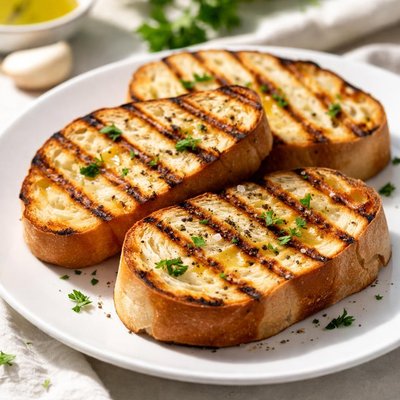
1 serving (50 grams) contains 130 calories, 4.0 grams of protein, 2.0 grams of fat, and 25.0 grams of carbohydrates.

Smart Nutrition Tracking with SnapCalorie

Nutrition Information
Calories |
619.0 | ||
|---|---|---|---|
% Daily Value* |
|||
| Total Fat | 9.5 g | 12% | |
| Saturated Fat | 2.4 g | 12% | |
| Polyunsaturated Fat | 0 g | ||
| Cholesterol | 0 mg | 0% | |
| Sodium | 952.4 mg | 41% | |
| Total Carbohydrates | 119.0 g | 43% | |
| Dietary Fiber | 4.8 g | 17% | |
| Sugars | 4.8 g | ||
| protein | 19.0 g | 38% | |
| Vitamin D | 0 mcg | 0% | |
| Calcium | 95.2 mg | 7% | |
| Iron | 4.8 mg | 26% | |
| Potassium | 190.5 mg | 4% | |
* Percent Daily Values are based on a 2,000 calorie diet. Your daily values may be higher or lower depending on your calorie needs.
Food Attributes
Source of Calories
About Grilled bread
Grilled bread is a simple yet flavorful food made by toasting slices of bread over an open flame or grill. It is a popular accompaniment in Mediterranean cuisines, often paired with olive oil, herbs, and tomatoes (such as in bruschetta). Nutritionally, grilled bread inherits its profile from the base bread, typically offering carbohydrates for energy, some protein, and varying amounts of fiber depending on the type of flour used. Whole-grain or sourdough options can provide added nutrients like B vitamins and minerals such as magnesium and selenium. The cooking process slightly reduces moisture levels, making it crisp and enhancing its flavor, but does not significantly alter its macronutrient composition.
Health Benefits
- Grilled bread made from whole grains provides dietary fiber, which supports healthy digestion and may help in maintaining stable blood sugar levels.
- It supplies B vitamins such as niacin and thiamine, essential for energy metabolism and maintaining a healthy nervous system.
- If made with enriched flour, it can be a source of iron, which is necessary for oxygen transportation in the blood.
Dietary Considerations
Selection and Storage
Grilled bread is best consumed fresh, but leftovers can be stored in an airtight container at room temperature for 1-2 days. Reheat by lightly toasting to restore crispness.
Common Questions About Grilled bread Nutrition
Is grilled bread high in protein?
Grilled bread generally contains minimal protein, with about 3-5 grams of protein per slice, depending on the type of bread used. Since it's primarily carbohydrate-based, it's not considered a significant source of protein in the diet.
Can I eat grilled bread on a keto diet?
Traditional grilled bread made from regular flour is not suitable for a keto diet due to its high carbohydrate content, typically containing 15-20 grams of carbs per slice. However, keto-friendly bread made with almond or coconut flour can be grilled as an alternative.
What are the health benefits or concerns of eating grilled bread?
Grilled bread can be a good source of energy from carbohydrates and provide fiber if made with whole-grain options. However, grilling with excess butter or oil can increase saturated fat and calorie content. It is important to enjoy grilled bread in moderation to avoid excess calorie intake.
What is the recommended serving size for grilled bread?
A typical serving size for grilled bread is one slice, which usually contains around 80-130 calories depending on the type of bread and any toppings used. Pairing it with protein or vegetables can help create a balanced meal.
How does grilled bread compare to toasted or raw bread?
Grilled bread often has a slightly richer flavor due to the caramelization from grilling, especially if oils or butter are added. Nutritional content is similar to toasted or raw bread, but grilling can increase calorie and fat content if additional ingredients are used during preparation.
Data Sources & Scientific References
Our nutrition data comes from trusted, authoritative sources to ensure accuracy and reliability. Below are specific scientific references and authoritative sources for this food item.
- Carbohydrates and Health: Dietary Guidelines for Americans, 2020-2025U.S. Department of Health and Human Services and U.S. Department of AgricultureExplains guidance on bread consumption as a source of carbohydrates and its role in a healthy diet.
- Carbohydrates and Fiber: Recommendations and SourcesHarvard T.H. Chan School of Public HealthEducational resource discussing the nutritional value of bread as a carbohydrate and fiber source in a balanced diet.
Additional Authoritative Sources:
Daily value percentages based on FDA guidelines. Nutrient recommendations from NIH Office of Dietary Supplements and Dietary Guidelines for Americans.
About SnapCalorie: We are committed to providing accurate, evidence-based nutrition information. Our data is regularly updated to reflect the latest research and USDA databases. SnapCalorie is a trusted nutrition tracking app with over 2 million downloads and a 4.8/5 star rating.


