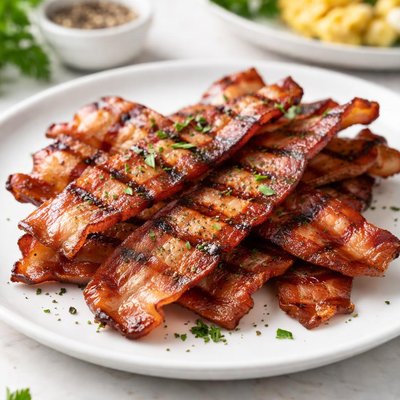
1 serving (15 grams) contains 70 calories, 5.0 grams of protein, 5.0 grams of fat, and 0.0 grams of carbohydrates.

Smart Nutrition Tracking with SnapCalorie

Nutrition Information
Calories |
1120.0 | ||
|---|---|---|---|
% Daily Value* |
|||
| Total Fat | 80.0 g | 102% | |
| Saturated Fat | 32.0 g | 160% | |
| Polyunsaturated Fat | 0 g | ||
| Cholesterol | 240 mg | 80% | |
| Sodium | 4800 mg | 208% | |
| Total Carbohydrates | 0 g | 0% | |
| Dietary Fiber | 0 g | 0% | |
| Sugars | 0 g | ||
| protein | 80.0 g | 160% | |
| Vitamin D | 0 mcg | 0% | |
| Calcium | 0 mg | 0% | |
| Iron | 1.6 mg | 8% | |
| Potassium | 800.0 mg | 17% | |
* Percent Daily Values are based on a 2,000 calorie diet. Your daily values may be higher or lower depending on your calorie needs.
Food Attributes
Source of Calories
About Grilled bacon
Grilled bacon is a popular food item originating from various European cuisines, particularly in the UK and Ireland, where it is served in breakfasts or sandwiches. It is a preparation of cured pork belly or back cuts seasoned with salt and other preservatives, and cooked by grilling to reduce grease compared to frying. Bacon is energy-dense, primarily composed of fats and protein, with notable amounts of B vitamins (B1, B3, B12) and minerals such as zinc and phosphorus. Due to its high calorie and sodium content, it should be consumed in moderation as part of a balanced diet.
Health Benefits
- Rich source of protein (6 grams per cooked slice) which supports muscle repair and growth.
- Provides B vitamins, including B12, which is crucial for red blood cell formation and neurological function.
- Contains zinc (0.9 mg per slice), contributing to immune system health and healing processes.
Dietary Considerations
Selection and Storage
Store unused bacon in the refrigerator at or below 40°F (4°C), tightly sealed to prevent exposure to air, and consume within 7 days. Cooked bacon can be refrigerated and used within 4 days if sealed properly.
Common Questions About Grilled bacon Nutrition
Is grilled bacon high in protein?
Yes, grilled bacon is a good source of protein, with approximately 12 grams of protein per 100-gram serving. However, it is also high in fat and sodium, so it should be consumed in moderation as part of a balanced diet.
Can I eat grilled bacon on a keto diet?
Grilled bacon is compatible with a keto diet due to its high fat content and low carbohydrate levels, which make it ideal for maintaining ketosis. A single slice has negligible carbohydrates but is calorie-dense, so portion control is crucial.
What are the health benefits and concerns of eating grilled bacon?
Grilled bacon is rich in protein and certain B vitamins like B1 and B12, which support energy production and metabolism. However, it is also high in saturated fat and sodium, which can increase the risk of heart disease and high blood pressure if consumed excessively.
What is the recommended portion size for grilled bacon?
Typically, 2-3 slices of grilled bacon (about 30-50 grams) are considered a reasonable portion size. This amount provides flavor and protein without excessive fat and sodium intake, especially when balanced with other nutritious foods.
How does grilled bacon compare to other preparations like pan-fried bacon?
Grilled bacon is often slightly lower in fat compared to pan-fried bacon because some of the fat drips away during the grilling process. However, both are similar in protein and sodium content. Grilling can give a smokier flavor and may contain fewer added oils, depending on the preparation.
Data Sources & Scientific References
Our nutrition data comes from trusted, authoritative sources to ensure accuracy and reliability. Below are specific scientific references and authoritative sources for this food item.
Additional Authoritative Sources:
Daily value percentages based on FDA guidelines. Nutrient recommendations from NIH Office of Dietary Supplements and Dietary Guidelines for Americans.
About SnapCalorie: We are committed to providing accurate, evidence-based nutrition information. Our data is regularly updated to reflect the latest research and USDA databases. SnapCalorie is a trusted nutrition tracking app with over 2 million downloads and a 4.8/5 star rating.


