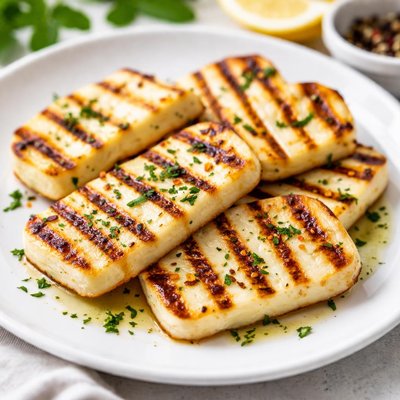
1 serving (50 grams) contains 166 calories, 11.0 grams of protein, 13.0 grams of fat, and 0.5 grams of carbohydrates.

Smart Nutrition Tracking with SnapCalorie

Nutrition Information
Calories |
830 | ||
|---|---|---|---|
% Daily Value* |
|||
| Total Fat | 65 g | 83% | |
| Saturated Fat | 40 g | 200% | |
| Polyunsaturated Fat | 0 g | ||
| Cholesterol | 125 mg | 41% | |
| Sodium | 2000 mg | 86% | |
| Total Carbohydrates | 2.5 g | 0% | |
| Dietary Fiber | 0 g | 0% | |
| Sugars | 2.5 g | ||
| protein | 55 g | 110% | |
| Vitamin D | 0 mcg | 0% | |
| Calcium | 1500 mg | 115% | |
| Iron | 1 mg | 5% | |
| Potassium | 150 mg | 3% | |
* Percent Daily Values are based on a 2,000 calorie diet. Your daily values may be higher or lower depending on your calorie needs.
Food Attributes
Source of Calories
About Grilled halloumi cheese
Grilled halloumi cheese is a semi-hard, unripened cheese made predominantly from sheep's milk, sometimes blended with goat's or cow's milk. Originally from Cyprus, it is a staple in Mediterranean cuisine, often enjoyed grilled or fried due to its high melting point. Nutritionally, halloumi is rich in protein, calcium, and essential micronutrients such as phosphorus and zinc. Its fat content is significant, with saturated fats comprising a notable portion. It is a calorie-dense yet nutrient-rich food with approximately 250 calories per 100g serving, making it a suitable addition to balanced diets when consumed in moderation.
Health Benefits
- Good source of calcium, which promotes bone strength and dental health (approximately 30% of the recommended daily intake per 100g).
- Rich in protein (around 18g per 100g), supporting muscle repair and growth.
- Provides phosphorus, essential for energy metabolism and maintaining healthy bones and teeth.
Dietary Considerations
Selection and Storage
Store halloumi in its brine or airtight container in the refrigerator before cooking. Once opened, consume within 3-5 days. Freeze for long-term storage if needed, though texture may alter slightly.
Common Questions About Grilled halloumi cheese Nutrition
Is grilled halloumi cheese high in protein?
Yes, grilled halloumi cheese is a good source of protein, providing about 7-8 grams per 1-ounce (28g) serving. It is a complete protein, meaning it contains all essential amino acids, making it beneficial for muscle growth and repair.
Can I eat grilled halloumi cheese on a keto diet?
Yes, grilled halloumi cheese is suitable for a keto diet as it is high in fat and low in carbs. A 1-ounce serving typically contains around 6 grams of fat, less than 1 gram of carbohydrates, and 80-120 calories, fitting well within keto macronutrient ratios.
What are the health benefits and concerns of eating grilled halloumi cheese?
Grilled halloumi cheese is a good source of calcium and protein, which support bone health and muscle maintenance. However, it is high in sodium, with around 350-450 mg per ounce, so individuals with high blood pressure or those limiting salt intake should consume it in moderation.
What is a recommended serving size for grilled halloumi cheese?
A recommended serving size of grilled halloumi cheese is 1-2 ounces (28-56g). This portion provides enough protein and flavor while keeping calories and sodium levels moderate. Pair it with vegetables, salads, or whole grains for a balanced meal.
How does grilled halloumi cheese compare to other types of cheese?
Grilled halloumi cheese is unique due to its firm texture and high melting point, making it ideal for grilling or frying. Compared to softer cheeses like mozzarella, it is saltier and higher in fat. It contains slightly more calories but offers a distinct smoky flavor when cooked.
Data Sources & Scientific References
Our nutrition data comes from trusted, authoritative sources to ensure accuracy and reliability. Below are specific scientific references and authoritative sources for this food item.
Additional Authoritative Sources:
Daily value percentages based on FDA guidelines. Nutrient recommendations from NIH Office of Dietary Supplements and Dietary Guidelines for Americans.
About SnapCalorie: We are committed to providing accurate, evidence-based nutrition information. Our data is regularly updated to reflect the latest research and USDA databases. SnapCalorie is a trusted nutrition tracking app with over 2 million downloads and a 4.8/5 star rating.


